Category Reimagining Disability   Show all

  • That's a Wrap - QDRN 2025 End of Year Final Events

    supporting image

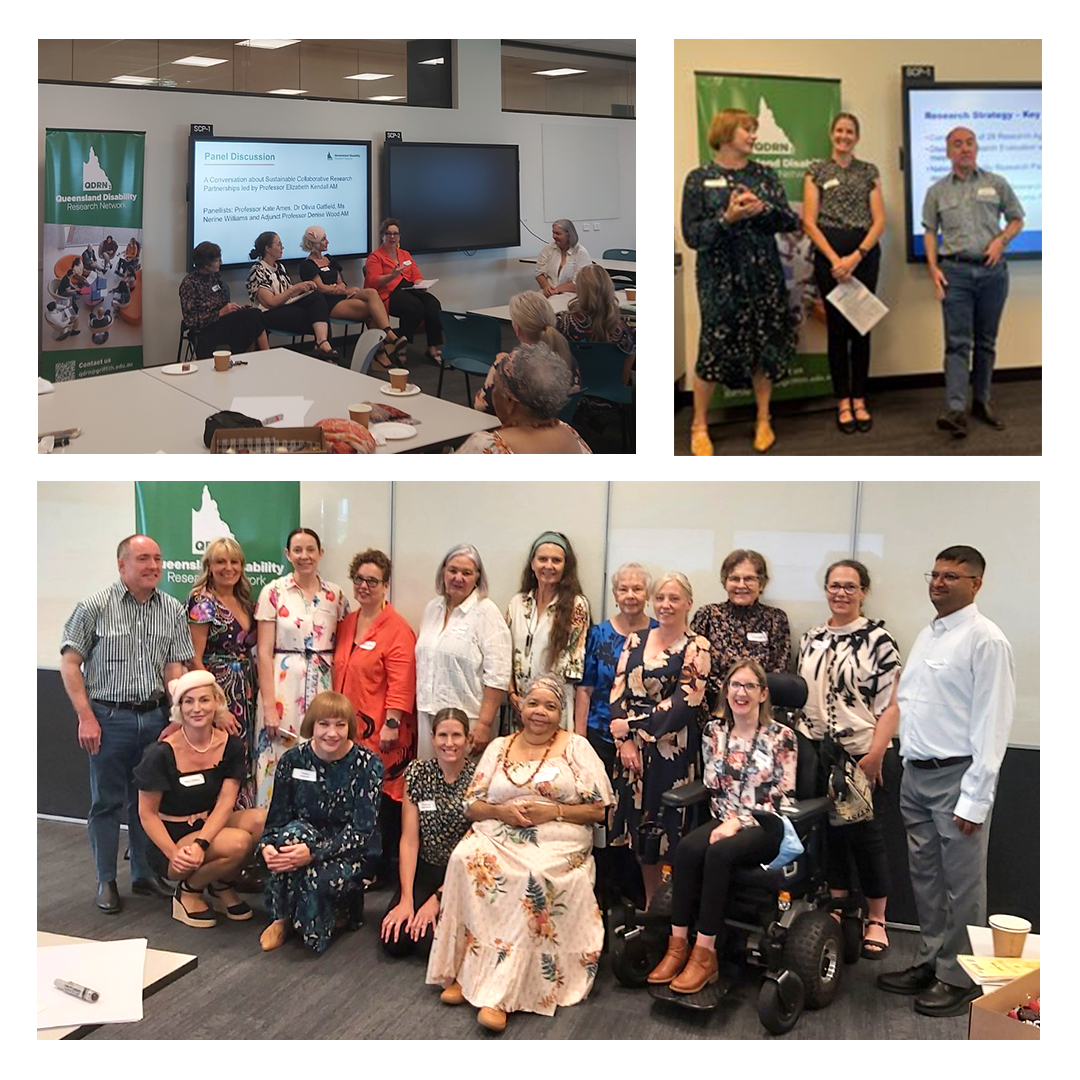
    Last week, Queensland Disability Research Network (QDRN) stakeholders came together for our final catch-up of the year at the University of the Sunshine Coast’s Petrie campus.

    In just a few years, early discussions led by Prof. Elizabeth Kendall AM GAICD, Charlotte Brownlow, and Ruth Barker have grown into a network making a real impact, supported by Inclusive Futures: Reimagining Disability and the leadership of Dr Talitha Kingsmill.

    From 2024 co-design workshops for DCSSDS that shaped the Queensland Disability Research Agenda (https://inclusivefutures.griffith.edu.au/queensland-disability-research-agenda), to recent presentations by Dr Rebecca Shipstone and panel discussions featuring Denise Wood AM, Nerine Williams, and Dr Olivia Gatfield, QDRN is influencing policy and projects across Queensland.

    With representation from eight universities, QDRN continues to demonstrate a truly collaborative approach. We extend our heartfelt thanks to our 2025 QDRN Advisory Group and Sector Stakeholder Committee members. The QDRN unites researchers, advocates, and stakeholders to advance inclusive research through quality co-design and collaboration across universities, government, and community sectors.

    Our vision: to improve the lives and participation of people with disability through sustainable, impactful research partnerships.

    Stay tuned for updates throughout the new year!

    To learn more or get involved, email us at qdrn@griffith.edu.auor connect with Dr Talitha Kingsmill directly at t.kingsmill@griffith.edu.au.

    Let’s make 2026 a year of transformative progress for disability inclusion and research!

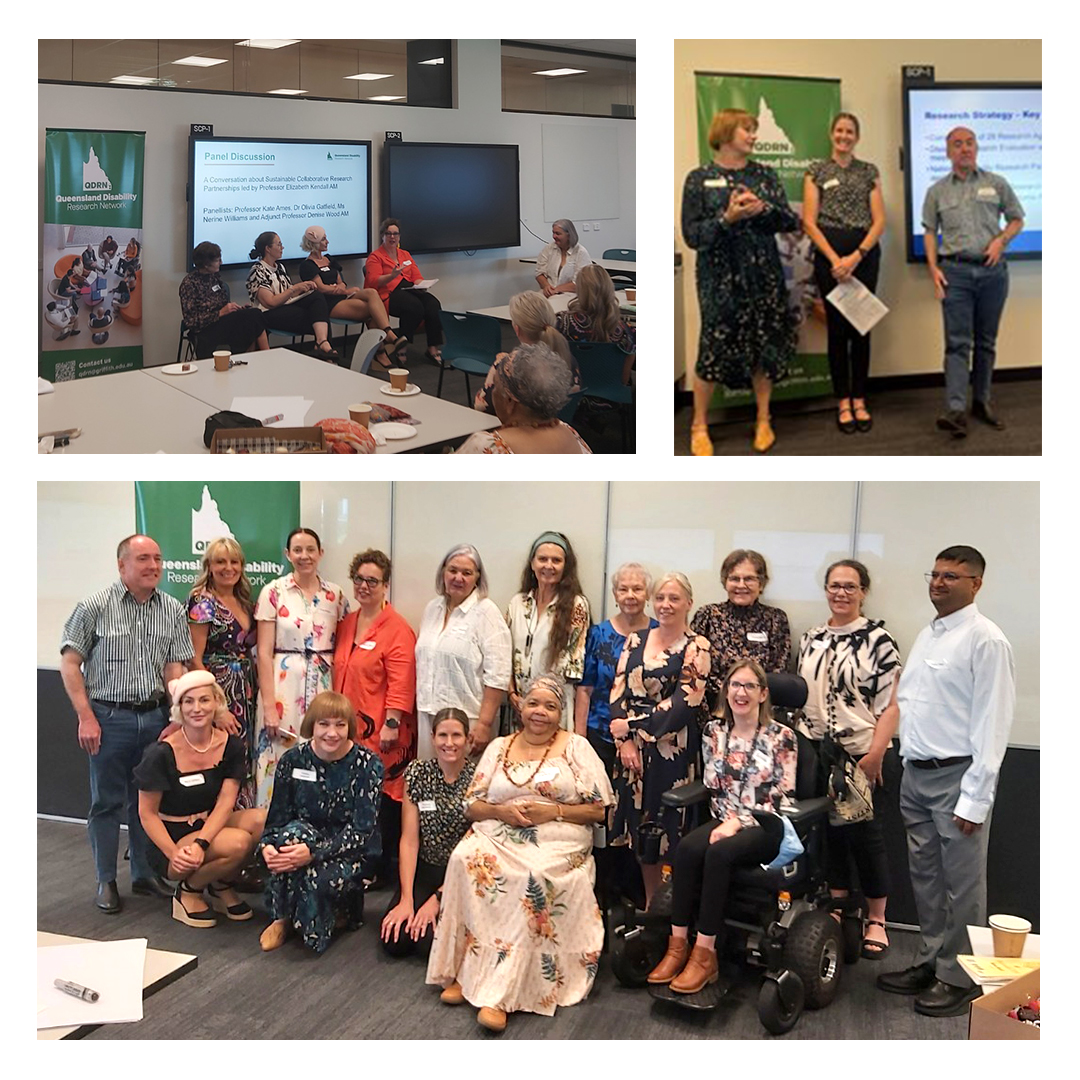
    A collage of photos showcasing the diverse membership of the Queensland Disability Research Network (QDRN).


  • IDPwD 2025: Fostering disability-inclusive societies for advancing social progress (online panel)

    supporting image

    Post-IDPwD 2025 Wrap-Up

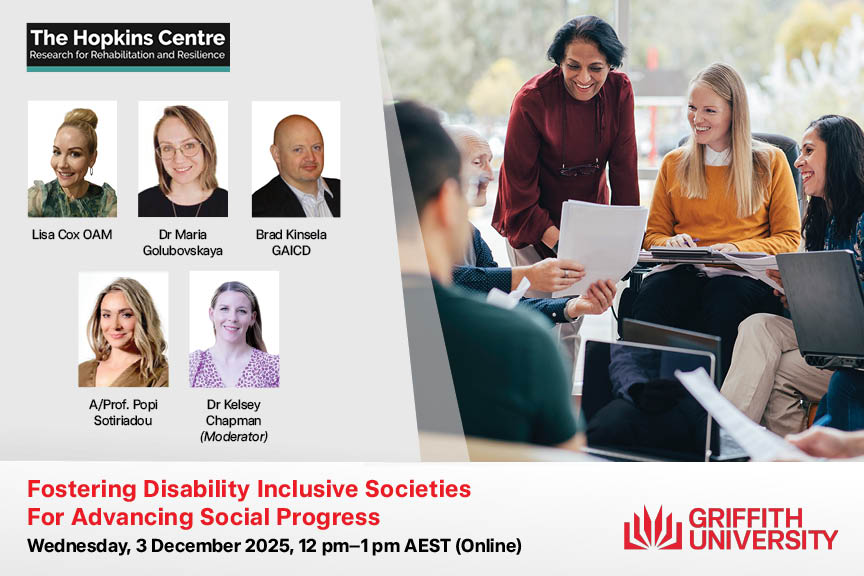
    Thank you to everyone who joined us to mark International Day of People with Disability (IDPwD 2025). Our online forum—co-hosted by The Hopkins Centre, Inclusive Futures: Reimagining Disability, and the Griffith Business School—brought together an outstanding panel: Lisa Cox OAM, Dr Maria Golubovskaya, Brad Kinsela GAICD and A/Prof Popi Sotiriadou, moderated by Dr Kelsey Chapman.

    Our speakers unpacked this year’s theme, Fostering disability-inclusive societies for advancing social progress, exploring opportunities for education, employment, business and community inclusion as we look ahead to Brisbane 2032.

    If you missed the event, you can now watch the accessible recording and read the full transcript: https://youtu.be/1CtIb3MjHd0?si=dwtxovMtF3_I4Ffl

    We also invite you to explore our HDR Scholars with Disability blog, showcasing lived-experience research shaping more inclusive futures at Griffith. https://inclusivefutures.griffith.edu.au/news/news_feed/idpwd-celebrating-our-griffith-university-hdr-disability-scholars

    👉 View the video, transcript, and event recap: https://www.hopkinscentre.edu.au/news-view/international-day-of-persons-with-disabilities-538

    More information:

    Inclusive Futures: Reimagining Disability
    inclusivefutures@griffith.edu.au


    Fostering disability inclusive societies
    for advancing social progress

    Join us to mark the United Nations International Day of Persons with Disabilities on Wednesday, 3 December 2025 (12:00–1:00pm AEST) in our online forum hosted by Griffith Business School’s Equity, Diversity and Inclusion Committee, Inclusive Futures Reimagining Disability, and The Hopkins Centre.

    This year’s theme Fostering disability inclusive societies for advancing social progress, offers an important opportunity to explore how we can create more inclusive communities as we head towards the Brisbane 2032 Olympic and Paralympic Games.

    In Australia, one in five people experience disability and related barriers to meaningful employment. In this discussion, our panel will consider both the opportunities and challenges of fostering disability inclusion in Southeast Queensland—particularly in the areas of education, employment, volunteering, and business. We’ll also explore how mega-sporting events like Brisbane 2032 can be leveraged as tools for long-term social and economic progress, rather than producing only short-term, event-based opportunities.

    You will hear from:

    Lisa Cox OAM is an author, university researcher, TEDx speaker and internationally awarded thought leader. Her work is focused on epistemic disruption, leveraging the power and influence of industries like media and advertising to change social attitudes about disability while positively impacting social outcomes, like employment.

    Dr. Maria Golubovskaya, Lecturer, Griffith Business School – researching youth and disability employment, hospitality work, and service worker wellbeing.

    Brad Kinsela GAICD brings an extensive background as disability and social inclusion champion, qualified access consultant and board member/company director, Adjunct Industry Fellow at Griffith University, as well as an extensive career as a 'former' senior executive in the Government for over 26 years, including the Games Independent Infrastructure and Coordination Authority. Coming from a background of disability and human rights advocacy, lobbying, and community-based human services and practice, it is not surprising that Brad has maintained his connections, profile, and commitment to living in a society that values, services and embraces all members of community

    Separate from his public policy life, his love for family and friends and embracing the outdoor wonders of the world has seen Brad take his passion to have accessibility and inclusion as the 'norm' rather than the exception has taken him to many places, most notably Barcelona and Paris in 2025 during the Paralympic Games.

    Associate Professor Popi Sotiriadou is a lecturer and researcher with the Griffith Business School and a distinguished international expert in managing high-performance sport and sports education. Her work focuses particularly on advancing women in sport, accessibility, and inclusive practices that ensure equitable participation and representation. Popi is the founder of Vision for Motion, an innovative app that promotes physical activity, wellbeing, and community connection for people with visual impairments.

    The discussion will be moderated by Dr Kelsey Chapman, Research Fellow with Inclusive Futures: Reimagining Disability, whose work explores effective service delivery for people with disability, particularly in transport and health.

    Accessibility will be a priority, with live captions available throughout the session. This event will also be recorded and shared post-event, along with a full transcript for those who could not attend via YouTube and our website.

    More information

    Inclusive Futures: Reimagining Disability
    inclusivefutures@griffith.edu.au

    Dr Millicent Kennelly – Griffith Business School
    m.kennelly@griffith.edu.au


  • Celebrating our HDR Disability Scholars

    supporting image

    Building inclusive research pathways at Griffith University

    Education is more than a privilege—it’s a pathway to possibility.

    At Inclusive Futures: Reimagining Disability, we’re proud to support Higher Degree by Research (HDR) students with disability to reach their goals and contribute to bold, innovative research that reimagines inclusion in action.

    Since launching in 2023, our HDR Disability Scholars Program has grown into a thriving community of ten (10) diverse researchers at different stages of their PhD journeys. The program provides more than just academic support—it builds meaningful connections through peer learning, mentoring, and shared experience in an environment where accessibility and inclusion are built into everything we do.

    This thriving community is championed by Professor Rebecca Ford, Dean of the Griffith Graduate Research School, and Dr Lisa Stafford, ARC Future Fellow—both strong advocates and mentors for the Scholars, in addition to their supervisors. Julia Robertson, newly appointed Co-Chair of the Higher Degree Research Candidate Representative Consultant Committee (HDRCRCC)—a sub-committee of the Board of Graduate Research (BGR)—also plays a key role in championing inclusive research pathways and student representation. Together, their leadership and commitment to accessibility and inclusion have been instrumental in creating an environment where our scholars can thrive.

    Last week, we celebrated this community at the Disability Scholars Day 2025: A Showcase of Excellence, held at Griffith University’s Logan campus and online. The hybrid event brought together students, supervisors, and researchers for a day of inspiration and connection.

    Highlights included milestone presentations from Lisa Cox OAM, Aron Mercer, and Samantha Cronin (Early Career Research Milestones), and Ali Khan (Thesis Confirmation Research Milestone). Their presentations sparked lively discussion and showcased the breadth of disability-focused research being undertaken at Griffith—research that’s challenging assumptions and creating real-world impact. Events like this highlight the incredible progress and potential of our HDR scholars. They remind us that when we design for inclusion, we enable excellence.

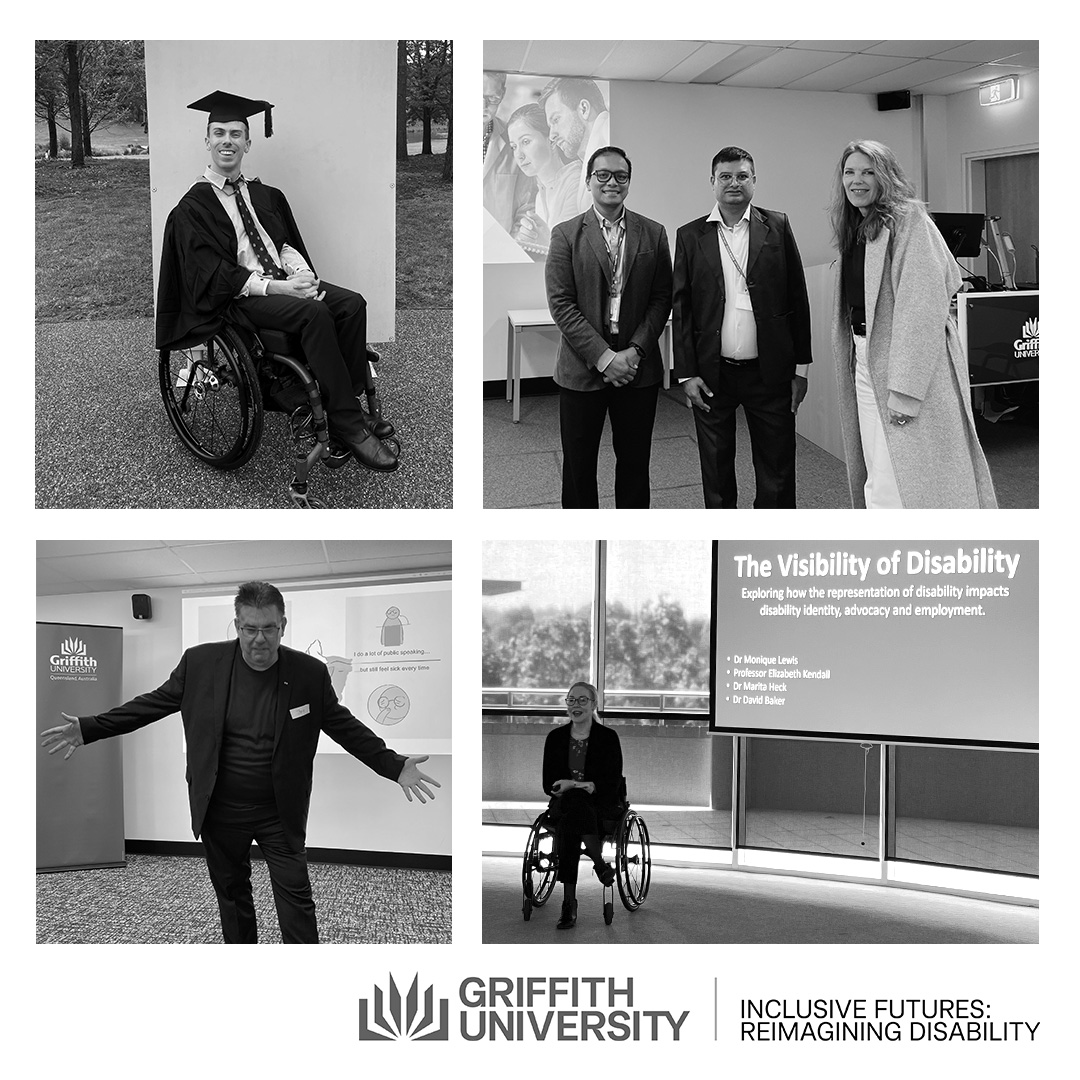
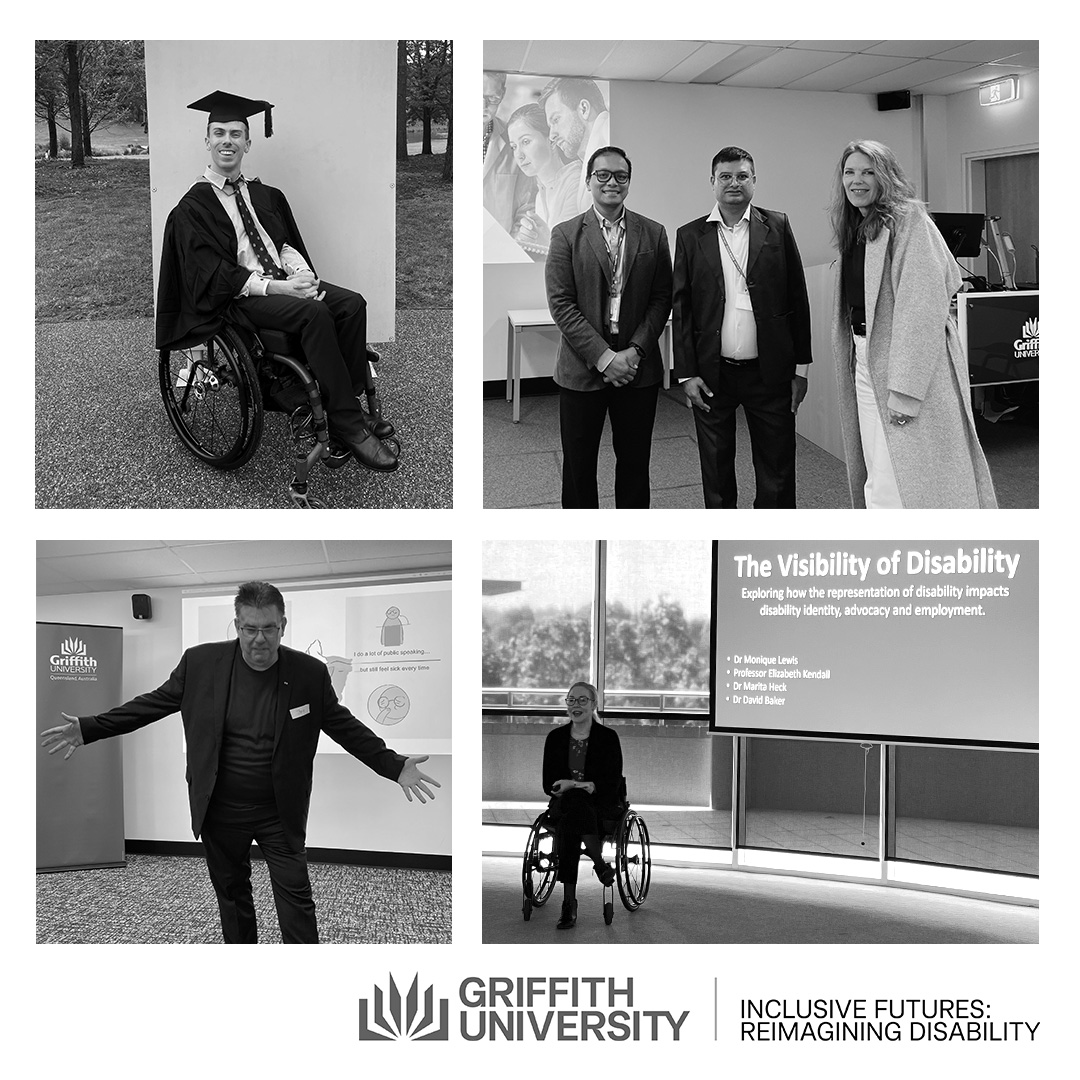
    A montage of four images in black and white. Griffith University HDR Students with Disability (Clockwise from top left) - Daniel Clark; Pallav Pant (middle age man with black hair) standing together with his supervisors Dr Feb Dwirahmadi (middle aged man with short dark hair and glasses) and Dr Monique Lewis (middle aged woman with mid length wavy hair wearing a long coat); Lisa Cox (a young woman and wheelchair user with long blonde hair in a pony tail); and Jim Hogan (middle age man with short hair standing with arms outstretched.Griffith University HDR Students with Disability (Clockwise from top left) - Daniel Clark; Pallav Pant together with his supervisors Dr Feb Dwirahmadi and Dr Monique Lewis; Lisa Cox; and Jim Hogan.

    We’re also excited to offer HDR Disability Scholarships for future students. These scholarships provide financial support, research allowances, and flexibility for candidates with a permanent disability who demonstrate exceptional research potential. Multiple scholarships will be available in 2026, with announcements coming at the end of the year. It’s one more way we’re ensuring talented researchers have the opportunity to thrive and lead change.

    If you’re a person with disability interested in pursuing higher degree research, we’d love to hear from you. Join a growing network of passionate scholars who are shaping the future of inclusive research.

    📩 Contact us: inclusivefutures@griffith.edu.au


    🌐 Follow us on LinkedIn, subscribe to our eNews or become a member of our Inclusive Futures community to stay updated on scholarship announcements, research highlights, codesign and citizen science opportunities and upcoming events.

  • Inclusive Futures Book Club Wrap-Up: A Conversation with Ken Brandt

    supporting image

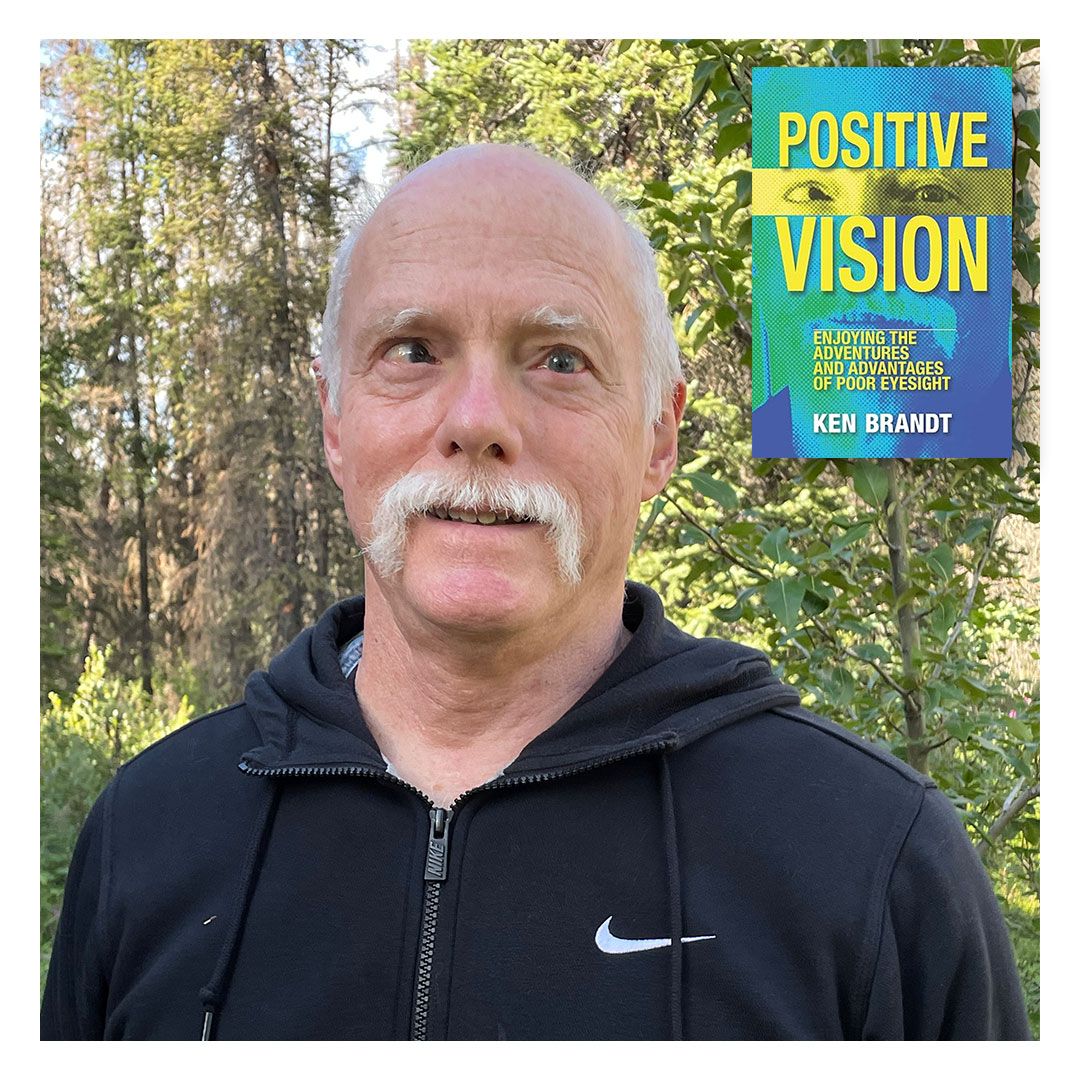
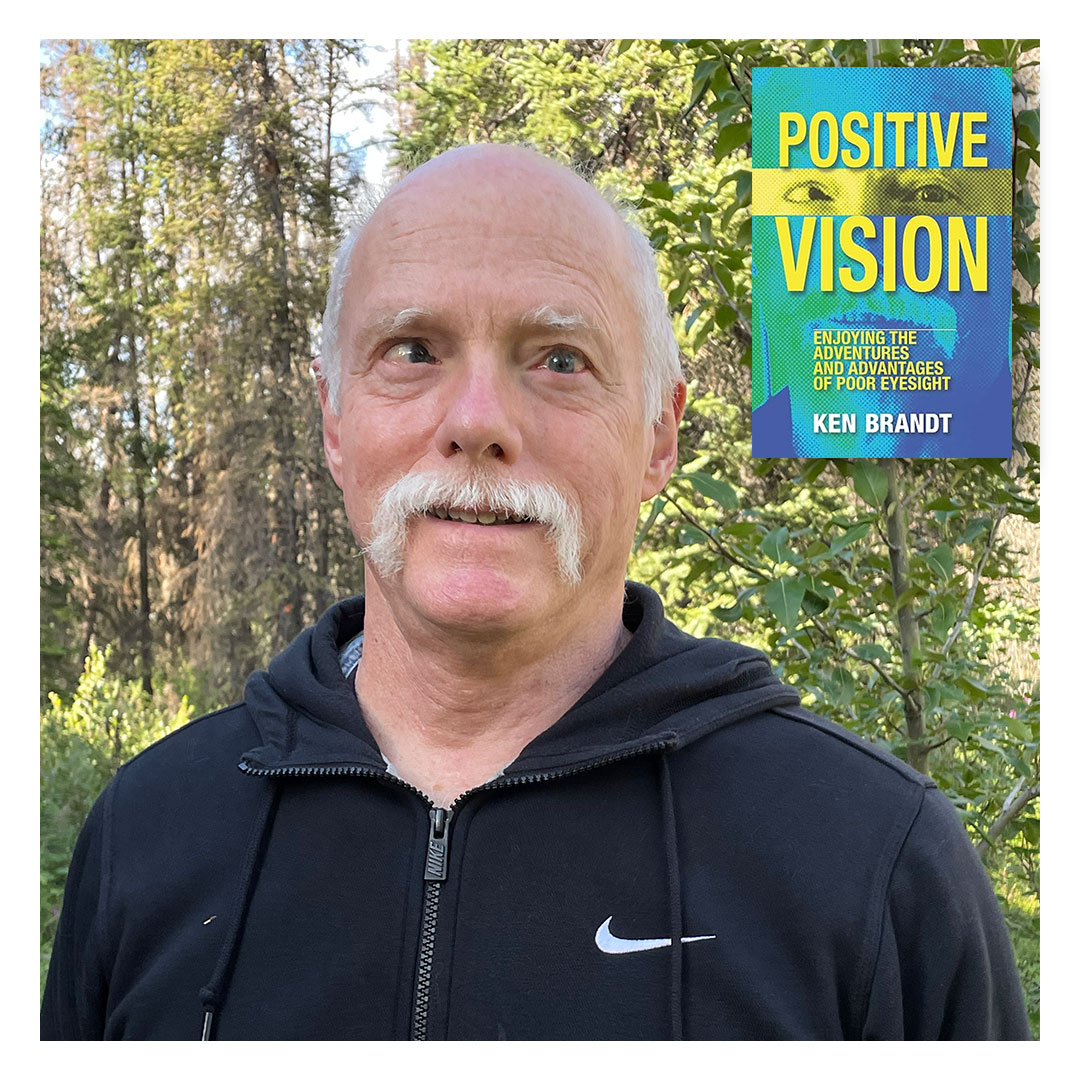
    Photo of Ken Brandt, a bald man with a white moustache, standing outdoors in front of green trees, wearing a black Nike zip-up hoodie. In the top right corner is the cover of his book Positive Vision: Enjoying the Adventures and Advantages of Poor Eyesight by Ken Brandt. Ken Brandt, author of 'Positive Vision'.

    It was a delight to host Ken Brandt, author of Positive Vision: Enjoying the Adventure and Advantages of Poor Eyesight, at our recent Inclusive Futures Book Club event.

    Ken opened with a powerful reflection on how medical advances at the time of his premature birth allowed him to retain some vision—an outcome shaped by the evolving understanding of oxygen therapy in newborns.

    Ken’s story is one of courage, humour, and a zest for life. He shared how his mother’s unwavering support instilled in him an attitude to give anything a go, encouraging him to pursue adventure while being kind to himself when things didn’t go as planned. From learning to parachute to navigating life with low vision, Ken offered a refreshing perspective on how disability can shape, but not limit, one’s experiences.

    Attendees were clearly engaged, asking thoughtful questions about community perceptions of disability. Ken responded with insight and warmth, furthering our collective understanding of how embracing diversity leads to a more inclusive world.

    Ken’s book Positive Vision is available in hard copy, electronic, and audio formats at many online and physical bookstores. He is also available for public speaking engagements. For more information, visit www.kenbrandt.com.

    A heartfelt thank you to Ken for sharing his story and helping us continue the conversation around disability, inclusion, and positive living.

    Read more: https://inclusivefutures.griffith.edu.au/news/news_feed/inclusive-futures-book-club-ken-brandt-author-of-positive-vision

    View on YouTube: https://youtu.be/XWfJiHEZFTw?si=fYJWO5Ej9O45n-ca

  • Inclusive Futures Book Club: Ken Brandt author of Positive Vision

    supporting image

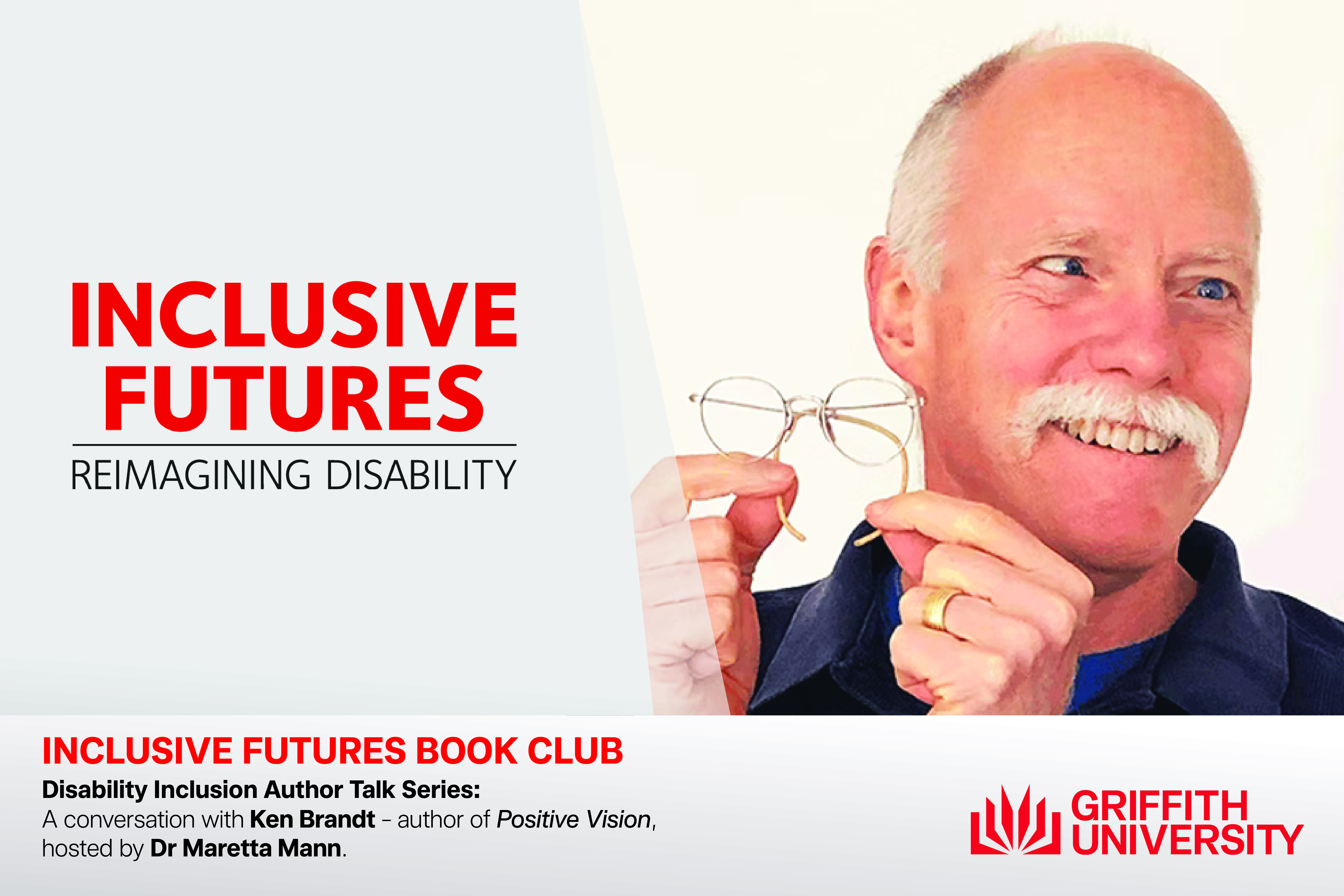
    Photo of Ken Brandt, a bald man with a white moustache, smiling and holding a pair of spectacles. Text - Inclusive Futures Reimagining Disability. Inclusive Futures Book Club. Disability Inclusion Author Talk Series: A conversation with Ken Brandt - author of Positive Vision, hosted by Dr Maretta Mann.

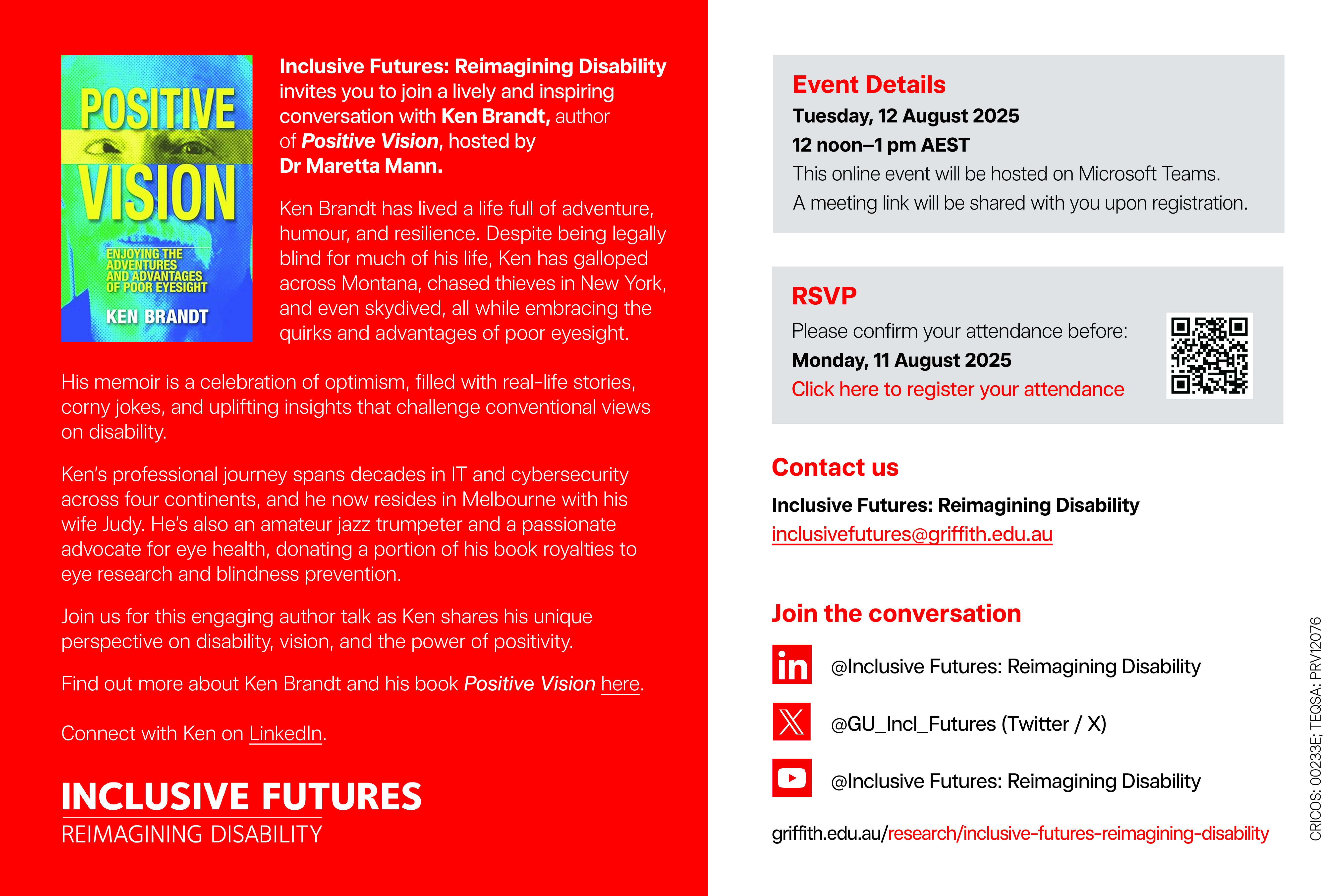
    Inclusive Futures: Reimagining Disability invites you to join a lively and inspiring conversation with Ken Brandt, author of Positive Vision, hosted by Dr Maretta Mann.

    Ken Brandt has lived a life full of adventure, humour, and resilience. Despite being legally blind for much of his life, Ken has galloped across Montana, chased thieves in New York, and even skydived, all while embracing the quirks and advantages of poor eyesight. His memoir is a celebration of optimism, filled with real-life stories, corny jokes, and uplifting insights that challenge conventional views on disability.

    Ken’s professional journey spans decades in IT and cybersecurity across four continents, and he now resides in Melbourne with his wife Judy. He’s also an amateur jazz trumpeter and a passionate advocate for eye health, donating a portion of his book royalties to eye research and blindness prevention.

    Join us for this engaging author talk as Ken shares his unique perspective on disability, vision, and the power of positivity.

    This event was held on:

    Tuesday 12th August 2025, 12:00pm – 1:00pm AEST

    Online via Microsoft Teams

    View the Recording on YouTube:

    https://youtu.be/XWfJiHEZFTw


    All text included in the caption / text above.


  • Exciting Start to 2025 with QDRN!

    supporting image

    A collage of photos showcasing the diverse membership of the Queensland Disability Research Network (QDRN).

    Happy New Year! We're thrilled to bring you the first Queensland Disability Research Network (QDRN) update for 2025.


    A big thank you to everyone who expressed interest in serving on the 2025 QDRN Advisory Group and Sector Stakeholder Committee. Your support drives our mission to foster impactful disability research and inclusive collaboration.


    We’re proud to announce the members of these groups, representing diverse expertise and lived experience:


    2025 QDRN Advisory Group


    2025 QDRN Sector Stakeholder Committee


    The QDRN unites researchers, advocates, and stakeholders to advance inclusive research through quality co-design and collaboration across Queensland universities, government, and community sectors.


    Our vision? To improve the lives and participation of people with disability through sustainable, impactful research partnerships.


    Stay tuned for updates on our work throughout the year!


    To learn more or get involved, reach out to us at qdrn@griffith.edu.au or connect directly with Dr. Talitha Kingsmill at t.kingsmill@griffith.edu.au.


    Let’s make 2025 a year of transformative progress for disability inclusion and research.

    QDRN Logo: A green background featuring a white map of Queensland with location dots representing universities involved in research. Below, the text reads 'Queensland Disability Research Network' and 'Dr. Talitha Kingsmill, email: qdrn@griffith.edu.au.

  • Inclusive Futures Disability Research Writing Competition 2024

    supporting image

    🌟 Celebrating Inclusive Futures and Outstanding Research! 🌟

    On this International Day of People with Disability, we’re thrilled to announce the winner of the Inclusive Futures Disability Research Writing Competition 2024—a celebration of research that reimagines a world where disability is no barrier.

    Text in the caption below.

    Judges' Choice Winner:

    Ms Casey Doherty, University of Nevada, Reno, USA
    Her paper, Reimagining Protest: Artivism in the Myalgic Encephalomyelitis (ME) Community, demonstrates how art and activism intersect to drive inclusion and understanding. Casey’s compelling narrative and accessible communication earned her the AUD$500 prize and a feature in our annual digital compendium.


    Text in the caption below.

    Short-listed entrants:

    • Mrs Rhonda Beggs, Metro South Health
    • Ms Belinda Coleman, RMIT / Aurecon
    • Sarah Fulton, Redland Hospital, Metro South Health
    • Dr Catherine Maitland, Australian Disability Network
    • Mrs Laura Ryan, University of Queensland
    • Dr Rebecca Soole, University of Queensland
    • Ms Jane Wardlaw, University of Tasmania
    • Mrs Louise White, Autism Centre of Excellence, Griffith University

    Communicating complex research in an accessible way, is a challenging but essential skill. This competition highlights the importance of not only advancing academic knowledge, but also ensuring it reaches those who can benefit most.

    We encourage all participants to continue honing their communication skills alongside their research. Accessible storytelling is a powerful tool for driving understanding and advancing disability inclusion.

    A heartfelt thank you to all entrants for their impactful contributions. Together, we’re breaking barriers and building a more inclusive future. 💡

    We would like to thank our sponsor The Hopkins Centre, who kindly donated the prize money, and our esteemed judges Dr Talitha Kingsmill, Dr Monique Lewis, Dr Faith Valencia-Forrester, Lisa Cox, Sara Shams and our moderator Delena Amsters.

    Interested in next year’s competition? Learn more about how your research could make a difference!

    Follow us on social media and join our Inclusive Futures Mailing List for updates:
    https://inclusivefutures.griffith.edu.au

    Visit our Inclusive Futures Hub to read the Judges’ Choice and short listed entries.

    https://inclusivefutures.griffith.edu.au/inclusive-futures-research-writing-competition

    For more information email: inclusivefutures@griffith.edu.au


  • Disability Action Week 2024 – Accessible communication: connect, include and empower

    supporting image

    Griffith University: Inclusive Futures: Reimagining Disability. Disability Action Week - Accessible Communication. Connect. Include. Empower. Cartoon graphics of diverse people standing above the Hopkins Centre Logo.

    🎉 It’s Disability Action Week 2024 (24 Nov – 1 Dec)! This year’s theme is Accessible Communication: Connect, Include, Empower.

    Join us in celebrating inclusive communication for everyone! We’re excited to share some of the effective strategies and creative solutions we use at Inclusive Futures: Reimagining Disability and The Hopkins Centre, Griffith University, to make communication more accessible for all.

    Social Media Tile - Text in the caption.

    Did you know?

    More than 1.3 billion people worldwide–including 21.4% of Australians–live with a disability or chronic health condition?

    Disability results from the interaction between people with impairments and attitudinal and environmental barriers that impacts full participation in society on an equal basis with others.


    Disability: The Statistics

    • 16% of the world’s population or over 1.3 billion people experience some form of disability.[1]
    • 21.4% of Australians or 5.5 million people experience disability and live with an impairment.[2]
    • 7.6% of Australian children <15 experience some form of disability.[3]
    • 650,000 people in Australia are active NDIS participants with approved plans.[4]

    Social Media Tile - Text in the caption.


    Accessible Communication for Everyone
    Accessible communication is essential for creating a society that connects and includes everyone, regardless of ability. Clear, inclusive communication helps to ensure that information, services, and opportunities are available to all people, breaking down barriers and fostering genuine engagement in every aspect of life.


    Social Media Tile - Text in the caption.


    Consider your Audience
    When creating content, consider the divers learning and communication needs of your audience. Accessible technologies and inclusive communication materials are essential to effectively reach and support people with disability, with approximately half of all Australians with disability reported to use some form of aid or assistive device. Further, almost 1 in 10 have experienced discrimination or unfair treatment because of their disability needs.


    Social Media Tile - Text in the caption.


    Accessibility for the d/Deaf and signing community
    Approximately 466 million people (or 6.1% of the world’s population) are living with hearing loss. In Australia, one in six people are affected by a variety of forms of hearing loss. There are 30,000 Australian Sign Language (Auslan) users.[5]

    Some ways of supporting the d/Deaf and the signing community include:

    • Use subtitles and captions – preferably live captions where possible
    • Use the services of an Auslan interpreter (where needed)
    • Provide verbatim transcripts of live events, meetings and events
    • Enable technology access
    • Facilitate the use of online chats in virtual meetings (as an option) – NB: lipreading, captioning and Auslan interpreting is preferred
    • Use digital whiteboards, this is especially helpful in medical settings or emergencies.

    Social Media Tile - Text in the caption.


    Accessibility for blind, low vision and other vision impairments

    • Use large, scalable, legible fonts – preferably sans serif, upper and lower case, with high contrast such as bold and normal text
    • Avoid the use of all caps, italics and underline (unless a hyperlink)
    • Use clear, high contrast colours – use an accessibility colour checker
    • Ensure your communication is screen reader accessible
    • Use alternative (Alt) text on images and label decorative objects as such
    • Use braille where possible, especially on signage in public spaces
    • Provide multiple / alternate formats
    • Use pattern, texture, shapes and labels rather than colour, especially on graphs, charts and diagrams
    • Do not use too much red or colour, just for the sake of using colour – this is not helpful for individuals with low vision or those who are colour blind.

    Social Media Tile - Text in the caption.


    Communication accessibility for mobility disability

    • Use accessible spaces and conduct site visits where possible
    • Offer hands-free options such as lapel microphones
    • Offer multiple formats e.g. print, written, audio, video and digital, depending on your target audience and their requirements
    • Use assistive technologies such as speech-to-text, eye-tracking systems, adaptive keyboards, headsets and mounted devices.

    Social Media Tile - Text in the caption.


    Cognitive considerations

    • Visual Aids – Provide visual aids, step-by-step instructions, or prompts for individuals with cognitive impairments
    • Be Patient – Be patient with slower or non-verbal communicators; confirm understanding with repetition or paraphrasing
    • Assistive Technologies – Use apps or devices that facilitate simple, customisable communication (e.g., ACC or communication boards)
    • Avoid Special Effects – Avoid the heavy use of effects such as animation, transition, flickering or strobing in multimedia
    • Use Plain Language – Use plain, straightforward language to reduce cognitive load for individuals with brain injury / processing difficulties
    • Easy Read & Visual Aids – Incorporate gestures, visual aids and easy read formats to supplement standard verbal and written communication.

    Social Media Tile - Text in the caption.


    Design for equal access
    By embracing accessible designs and tools, we create environments where everyone has equal opportunities to connect, understand, and participate fully.

    • Design for accessibility and inclusion
    • Use inclusive language
    • Apply universal design principals
    • Embrace co-design
    • Test your content
    • Facilitate inclusion training for your staff.

    Our Commitment at Inclusive Futures and The Hopkins Centre
    At Inclusive Futures: Reimagining Disability and The Hopkins Centre at Griffith University, we’re dedicated to leading the way in accessible practices. Here’s a look at some of the ways we’re advancing inclusion and accessibility:

    Together, we are building a world where everyone can connect, be included, and feel empowered. Discover how you can integrate accessible communication practices into your workplace, starting with small, impactful steps.

    Thank you for committing to a future where communication is accessible to all.

    MORE INFORMATION For more information, collaborate or to partner with us in creating inclusive accessible content, research, projects or events, please email: inclusivefutures@griffith.edu.au or hopkinscentre@griffith.edu.auMORE INFORMATION

    For more information, collaborate or to partner with us in creating inclusive accessible content, research, projects or events, please email: inclusivefutures@griffith.edu.au or hopkinscentre@griffith.edu.au


    DISCLAIMER
    We use person-first language and follow the definition provided by the CRPD. However, we fully respect and support each individual’s right to use language and describe their identity in ways that feel authentic to them.


    REFERENCES

    [1] The World Health Organisation, 2024.

    [2] Australian Bureau of Statistics, 2022.

    [3] Queensland Government, 2024.

    [4] NDIS, 2024.

    [5] Australian Bureau of Statistics, 2022.

  • Inclusive Futures: Welcoming Dr. Lisa Stafford, ARC Future Fellow

    supporting image


    A montage of three photos of Dr Lisa Stafford, a wheelchair user and middle age white woman with long blonde hair.Dr. Lisa Stafford, ARC Future Fellow

    Griffith University researchers have secured over $8.5 million in funding for eight out of 22 projects announced in the latest Australian Research Council (ARC) Future Fellowship round. With eight fellowships granted, totalling $8,587,849, Griffith achieved an 36.4% success rate—one of the highest in the country.

    Among these outstanding researchers, we’re excited to welcome Dr. Lisa Stafford to the Inclusive Futures: Reimagining Disability team. Dr. Stafford has been awarded $1,052,822 for her project, "Transport Equity for All".

    This project builds on Lisa’s existing body of work and aims to enhance how transport equity is understood, included, and applied in transport planning. Through a collaborative approach with people with disability and transport planners, the project will co-design a practice framework and tools to guide more inclusive decision-making. By co-creating this knowledge and developing practical methods, the project seeks to significantly advance transport equity for people with disability across Australia.

    About Dr. Lisa Stafford

    Lisa is passionate about inclusive sustainable communities and transport equity. With over 25 years of experience as a researcher, educator, and planner across government, non-government, and university sectors, Lisa continues to lead change at the intersection of disability participation, urban planning and transport. Her work also champions inclusive participatory and co-creation methods to ensure the ‘voices’ of all people, particularly children and people with complex communication needs are heard in research and public planning.

    Lisa has lead research, practice and strategic transformation in inclusive community planning and mobility/transport equity to improve social-economic participation of people with disabilities. Her recent work has included:

    Lisa brings valuable insights from her lived experience as a woman with disability. Lisa lives with multiple autoimmune diseases and uses a walking stick and power wheelchair for daily mobility. Additionally, her leadership experience across various boards and committees continues to be instrumental in advancing inclusive communities and cities, systems, transport, and disability rights for all Australians. Currently Lisa serves as an Australian Human Rights Commission Includeability Ambassador and recent appointment as Chair of Disability-Informed Ethical Oversight Panel for National Disability Data Asset. Lisa is also a member of the Transport Australia Society (TAs), Disability Leadership Institute, and the Planning Institute of Australia (MPIA).

    She will join us in 2025 to begin the next chapter of her important work on transport equity.

    A group of attendees and panellists at the Transport Conference 2024 including Dr Lisa Stafford, a wheelchair user who is seated front right. This image is courtesy of Justin Cooper Photography.Photo credit: Justin Cooper Photography, Transport Conference 2024.


    How Lisa’s project will benefit Australians

    Better ways of planning transport to ensure its fair and accessible for all Australians is a significant need.

    Transport is essential to everyday life yet remains one of the most reported forms of discrimination experienced by Australian with disabilities.

    Every Australian will have an experience of disability in their lifetime, and transport equity is a way of ensuring access needs are met for the most disadvantage to ensure same level of services as everyone.

    Problems persist due to little knowledge and practice know how, and gaps in existing national standards. Without fit-for-purpose knowledge to guide planners, applying equity in transport will remain makeshift.

    This research will work directly with Australian transport planners and people with disabilities to co-create new knowledge and practice tools, and will be freely available on public website, public information hubs, professional bodies magazines, and through free professional seminars. Applying the new knowledge will inform better planning of transport for everyone, removal of barriers to social-economic participation, and creating fairer access and increased opportunities to work, education, health, recreation, and family/friends critical to everyday life.

    An inclusive fit-for-purpose transport systems will reduce spending on expensive disability transport support for some due to improved access to public and active transport, as well as lowering emissions with mode shift and increase usage.

    Transport Equity for All – Project Summary
    Read more: https://dataportal.arc.gov.au/NCGP/Web/Grant/Grant/FT240100262

    More information

    inclusivefutures@griffith.edu.au

    lisa.stafford@griffith.edu.au


  • Disability Inclusion Author Talk Series: Dr Sarah Brooker

    supporting image

    INCLUSIVE FUTURES BOOK CLUB

    A Conversation with Dr Sarah Brooker - Neuroscientist, teacher and author of My Lucky Stroke.

    Inclusive Futures: Reimagining Disability invites you to attend our Author Talk with esteemed guest Dr Sarah Brooker (author of My Lucky Stroke), hosted by Dr Maretta Mann.

    In 2002 Sarah Brooker was only 20 years old and on the brink of realising her dreams. She had graduated from Monash University and was about to become a neuroscientist. Then, a series of catastrophic events – a stroke, a car accident, a coma – and she was robbed of that life forever.

    I woke up in her place. I was a broken body, with little memory of who I had been, and little understanding of the world I was in. I have spent the past 22 years trying to put my life back together. In that time, I have had to learn to walk, talk, and eat again. That was easy.

    I have completed several University degrees, including returning to Neuroscience to complete my PhD. That was easy too. What has been difficult has been learning and re-learning my place in the world, and what it means to live with an acquired brain injury.

    I have been a rehabilitation counsellor, a radio DJ, a student support officer and have finally found my place as a teacher. I am Dr Sarah Brooker and I have come along today to share the story of my recovery with you.

    Find out more about Dr Sarah Brooker and her book “My Lucky Stroke” here.

    EVENT DETAILS

    Tuesday, 13 August 2024
    12 noon–1 pm AEST | 11.30 am–12.30 pm ACST

    This online event will be hosted on Microsoft Teams. A meeting link will be shared with you upon registration.

    RSVP

    Please register your attendance before Thursday, 9 August here or via the QR code.

    MORE INFORMATION
    inclusivefutures@griffith.edu.au

    THIS WILL BE AN ACCESSIBLE EVENT WITH LIVE CAPTIONS AND A TRANSCRIPT AVAILABLE POST EVENT.