Category Spinal Cord Injury   Show all

  • Disability Action Week: Sleep and Spinal Cord Injury: What You Need to Know

    supporting image

    Social media tile for The Hopkins Centre - Disability Action Week 2025: 23-30 November | Communicate. Connect. Create. Research Spotlight: Sleeping better after Spinal Cord Injury – Dr Emily Bray. Vector illustration of a woman with long hair asleep in a bed with her head resting on the pillow. Footer: Our partners Spinal Life Australia and the Institute of Breathing and Sleep. Tagline: Bold ideas. Better solutions.

    Good sleep is vital for health and wellbeing—yet research shows that two in three people living with a spinal cord injury (SCI) experience poor sleep, and most haven’t sought support.

    As part of Disability Action Week, we’re highlighting important work led by Dr Emily Bray and her team at The Hopkins Centre, who have partnered with clinicians, researchers, and people with lived experience to explore this issue and bridge the information gap.

    Together, they’ve co-developed new, evidence-based resources to help people with SCI better understand sleep changes and find strategies that work for them.

    View the graphics below to learn more about this important research and how it supports the SCI community.

    We would like to thank our partners Spinal Life Australia, Institute for Breathing and Sleep and the Queensland Spinal Cord Injuries Service (QSCIS) for their support.

    Contact Dr Emily Bray for more information:
    https://www.hopkinscentre.edu.au/people-view/emily-bray-177

    Visit our website to find out more: https://www.hopkinscentre.edu.au/project/seed-project-sleep-disturbances-following-spinal-163


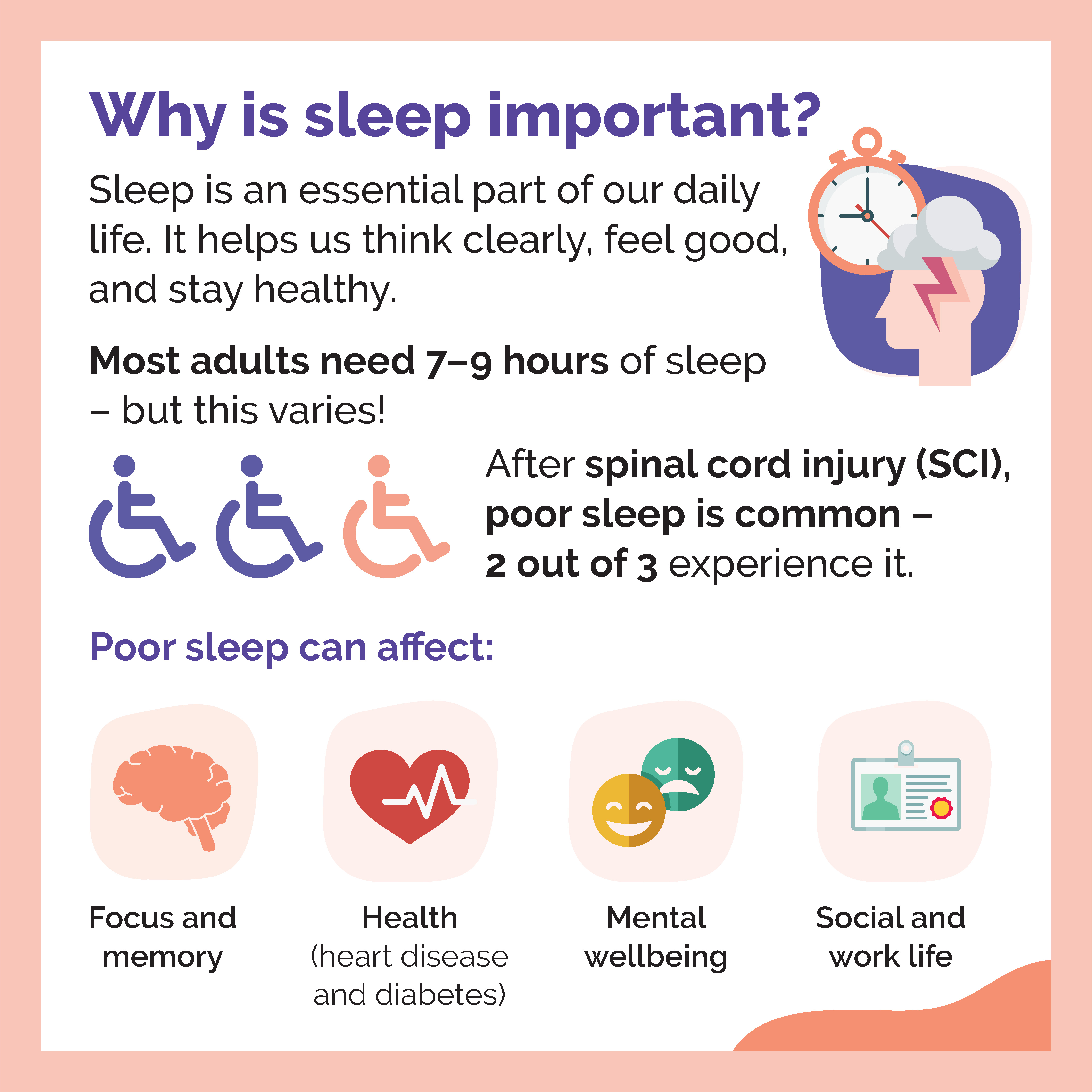
    Infographic titled “Why is sleep important?” It explains that sleep helps us think clearly, feel good, and stay healthy. Most adults need 7–9 hours of sleep, but this varies. After spinal cord injury (SCI), poor sleep is common — 2 out of 3 experience it. Poor sleep can affect focus and memory, health (heart disease and diabetes), mental wellbeing, and social and work life.

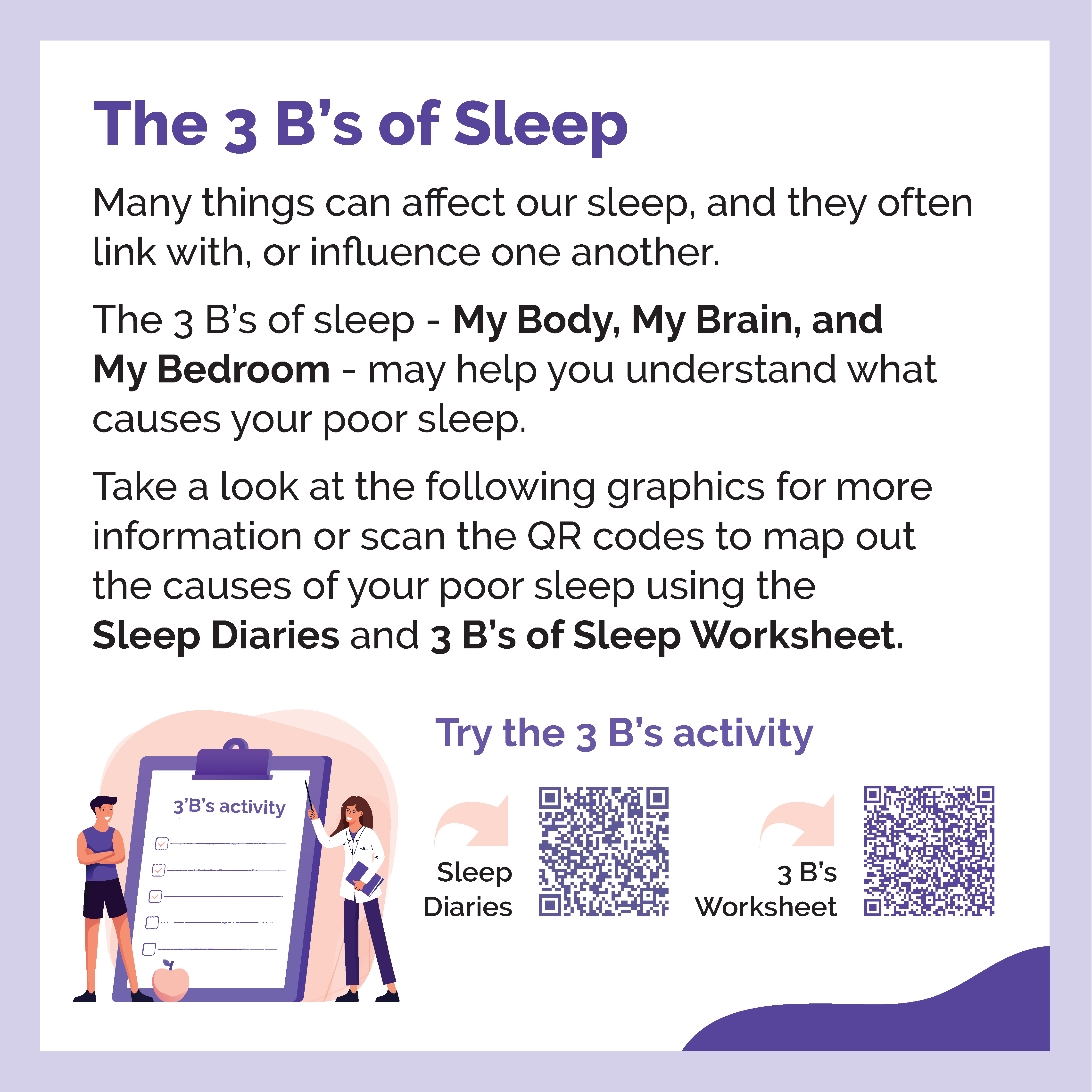
    Infographic titled “The 3 B’s of Sleep.” It explains that many factors can affect sleep and influence one another. The 3 B’s — My Body, My Brain, and My Bedroom — may help identify causes of poor sleep. The text encourages readers to explore more graphics or scan QR codes to complete the Sleep Diaries and 3 B’s of Sleep Worksheet. At the bottom, there’s an illustration of two people beside a large clipboard labelled “3 B’s activity” and two QR codes labelled “Sleep Diaries” and “3 B’s Worksheet.”

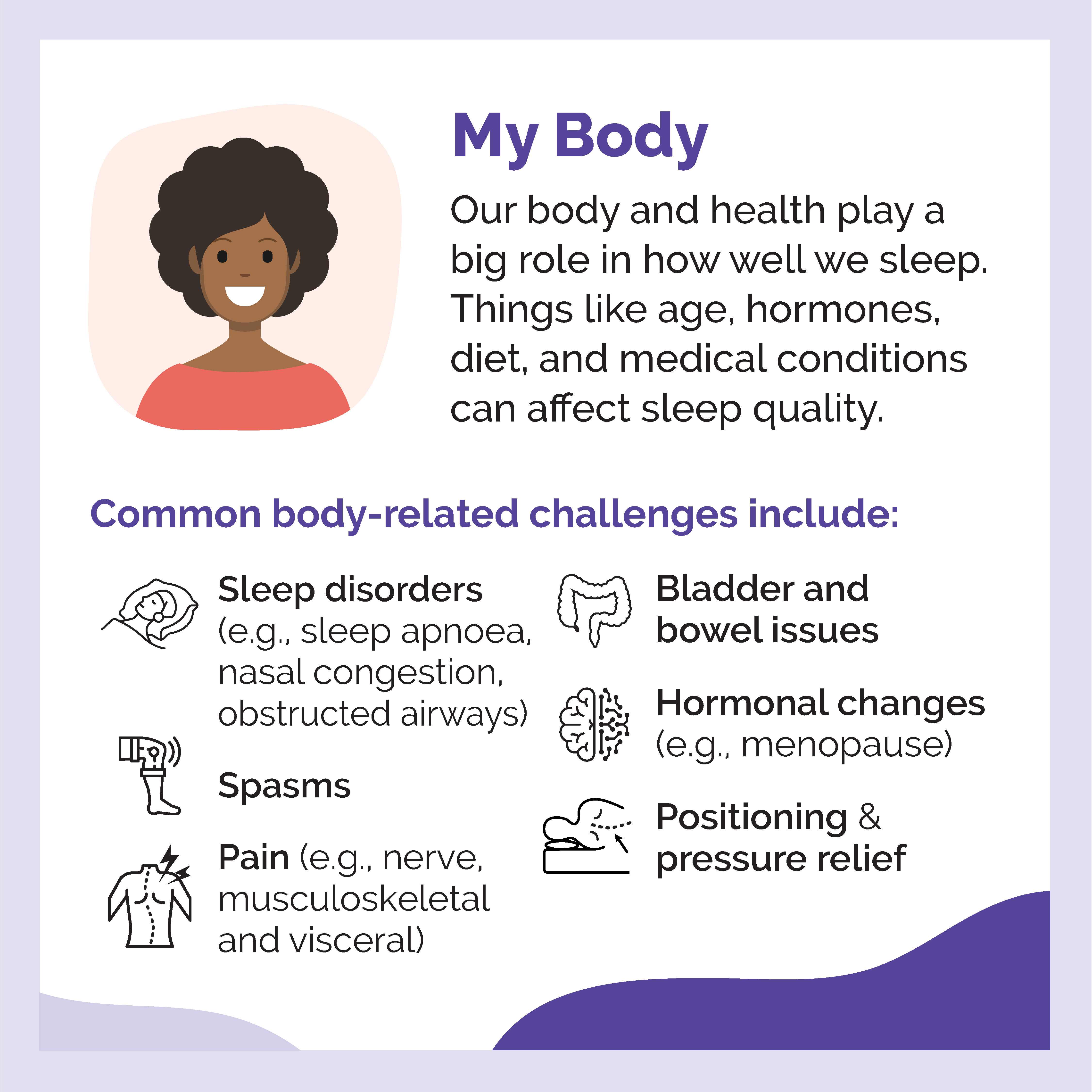
    Infographic titled “My Body.” It explains that our body and health play a big role in how well we sleep. Factors such as age, hormones, diet, and medical conditions can affect sleep quality. Common body-related challenges include sleep disorders (e.g., sleep apnoea, nasal congestion, obstructed airways), spasms, pain (nerve, musculoskeletal, visceral), bladder and bowel issues, hormonal changes (e.g., menopause), and positioning and pressure relief. The design features a smiling person illustration and icons beside each challenge.

    Infographic titled “My Bedroom.” It explains that a calm, safe bedroom helps your mind and body relax for better sleep. Things to check within your sleep environment include: Bright lights and loud noises, equipment comfort (e.g., bed, mattress, pillows, splints), room temperature (too hot or cold), Distractions (screens and devices), physical safety, overnight help and support, family routines (e.g., co-sleeping, shift work). The design features an illustration of a bed and icons beside each point.

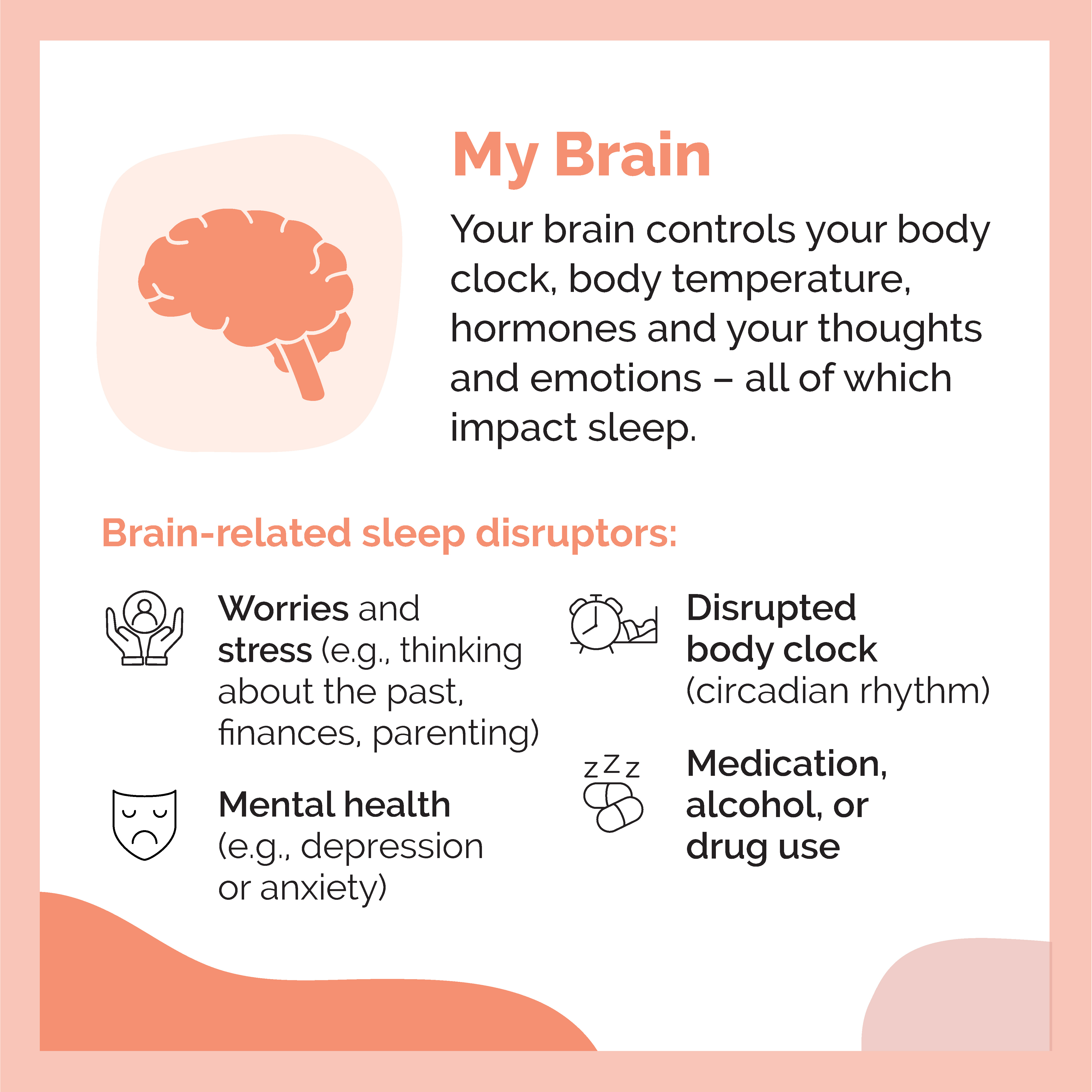
    Infographic titled “My Brain.” It explains that your brain controls your body clock, body temperature, hormones, thoughts and emotions – all of which impact sleep. Brain-related sleep disruptors include - Worries and stress (e.g., thinking about the past, finances and parenting), mental health (e.g., depression or anxiety), disrupted body clock (circadian rhythm), and medication, alcohol or drug use. The design features an illustration of a brain and icons beside each point.

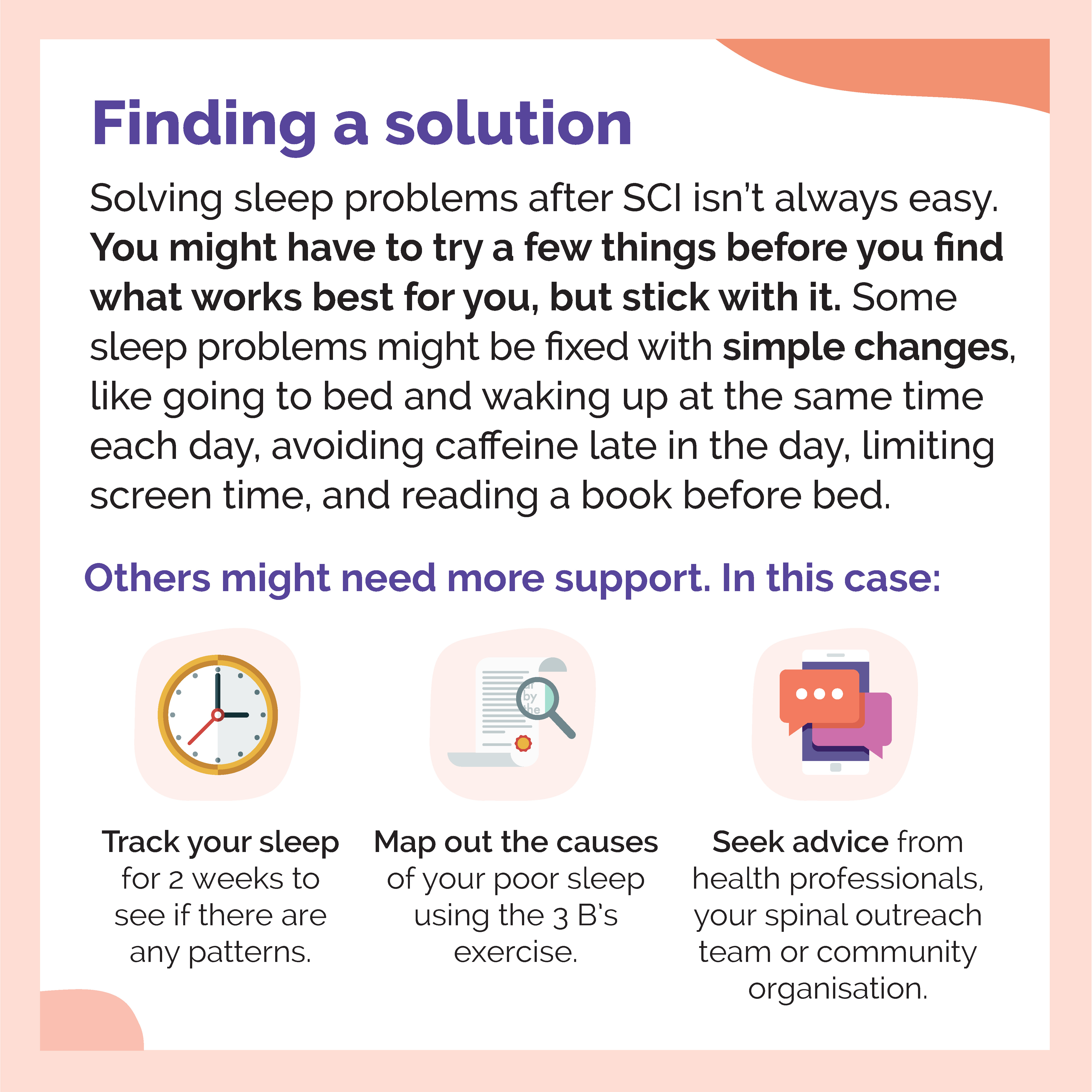
    An infographic titled: Finding a solution. Solving sleep problems after SCI isn’t always easy. You might have to try a few things before you find what works best for you, but stick with it. Some sleep problems might be fixed with simple changes, like going to bed and waking up at the same time each day, avoiding caffeine late in the day, limiting screen time, and reading a book before bed. Others might need more support. In this case: Track your sleep for 2 weeks to see if there are any patterns; map out the causes of your poor sleep using the 3 B’s exercise; seek advice from health professionals, your spinal outreach team or community organisation. The design features illustrations of a clock, document with a magnifying glass and a mobile device with speech bubbles.

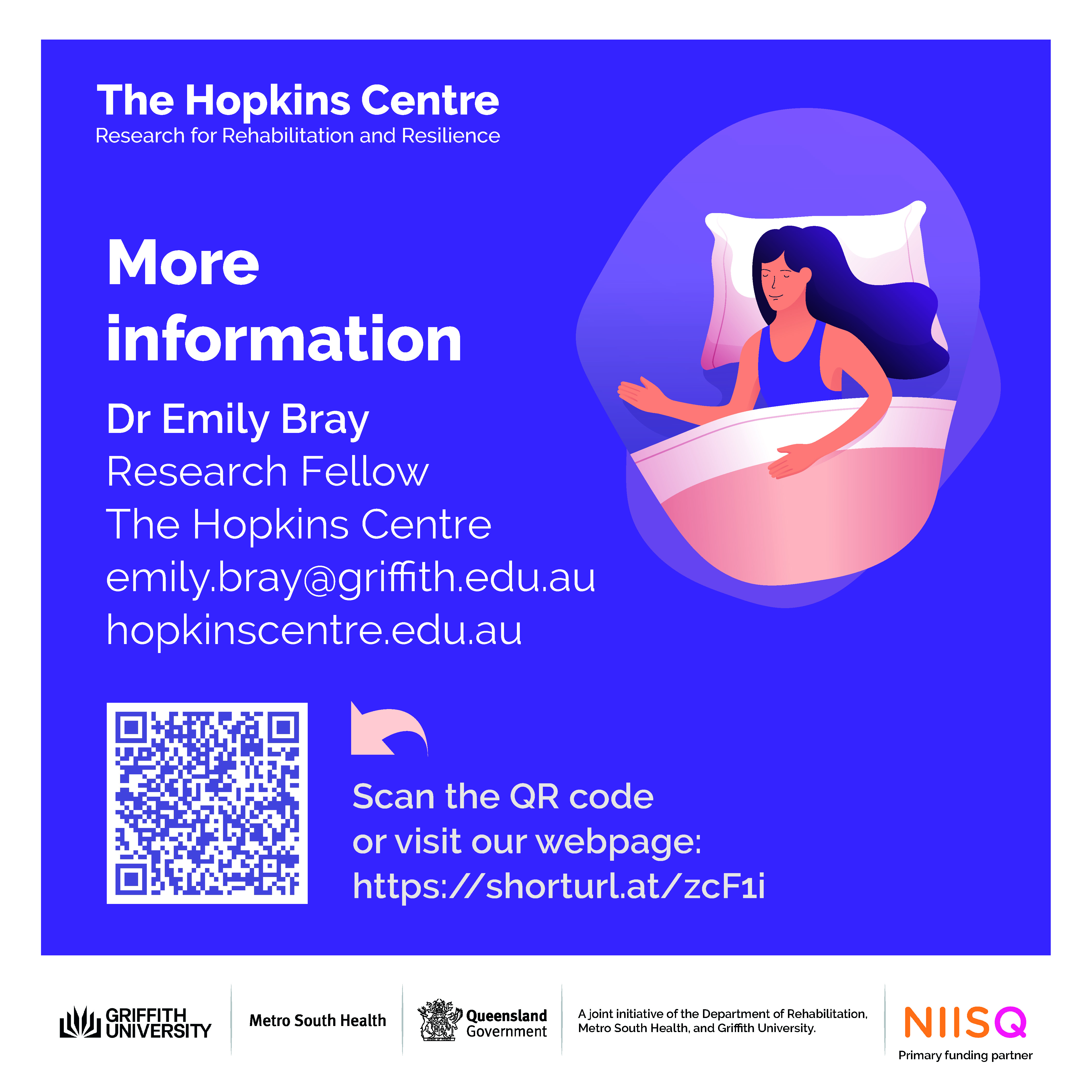
    More information: Dr Emily Bray, Research Fellow, The Hopkins Centre. Email: Emily.bray@griffith.edu.au or visit our website http://www.hopkinscentre.edu.au – Scan the QR code or visit our project page at https://shorturl.at/zcF1i.The design features an illustration of a woman with long hair sleeping with her head on a pillow.


  • Two New Ways to Support Wellbeing After Spinal Cord Injury

    supporting image

    Dr Marita Heck, Adjunct Research Fellow at The Hopkins Centre, has two exciting new contributions aimed at enhancing the lives of people living with spinal cord injury (SCI)—from evidence-based research to practical guidance on intimacy and pleasure.

    1. New insights into sexual rehabilitation support after spinal cord injury

    In “Sexual rehabilitation support experiences of Australian adults living with a spinal cord injury” (Allen, Heck, Doig, Cudmore, Lawrence & Mason, 2025), the team explored the lived experiences of nine Australian adults (8 men; 1 woman) with spinal cord injury (SCI). Guided by Material–Discursive–Intrapsychic Theory, the study revealed how physical functioning, relational identity and broader disability-stigma discourses combine to shape sexual quality of life after SCI.

    Key findings:

    • Rehabilitation tends to focus strongly on physical function (e.g., erection, ejaculation) while giving less attention to emotional, relational and identity-aspects of sexuality.
    • Participants described loss of autonomy, feelings of shame or stigma, and challenges in partner communication / relational connection as major influences on sexual wellbeing.
    • When sexual rehabilitation support attends to emotional connection, personalised equipment and partner-/relationship-oriented goals, outcomes for sexual wellbeing improve.

    Why it matters:

    • Because sexuality is a fundamental component of wellbeing, addressing it in rehabilitation is critical — yet often under-addressed for people with SCI.
    • By broadening support beyond just “physical functioning” to include relational, psychological and identity dimensions, clinicians and services can help people living with SCI experience fuller, more meaningful sexual lives.

    Practical tip:
    If you work in rehabilitation (or support someone who does), embed a simple “relationship check-in” into the routine: ask “How has your /intimacy /connection changed since the injury?” and then include a follow-up question “What aspect of this would you like to change/restore?” Use that to guide discussion of equipment, partner communication, self-identity and expectations — not just physical sexual function.

    📄 Citation:
    Allen, A., Heck, M., Doig, C., Cudmore, T., Lawrence, K., & Mason, J. (2025). Sexual rehabilitation support experiences of Australian adults living with a spinal cord injury. The Journal of Spinal Cord Medicine, 1–10.
    https://doi.org/10.1080/10790268.2025.2496567

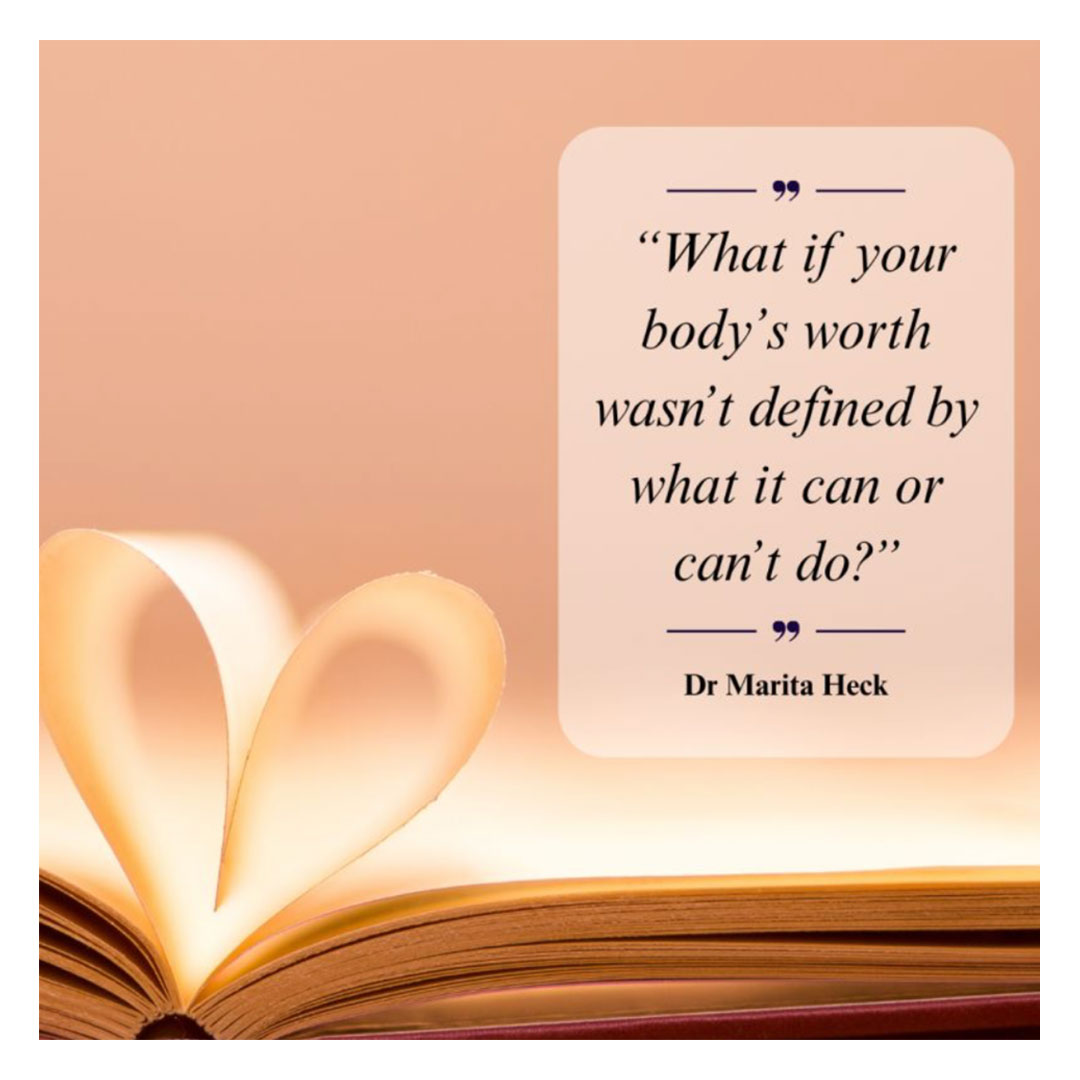
    Photo of an open hard cover book, with middle pages forming the shape of a heart, with the quote “What if your body’s worth wasn’t defined by what it can or can’t do?” Dr Marita Heck.

    2. Exploring Intimacy and Pleasure

    Off the back of research findings and clinical work, Dr Heck has also released The Sensuality of Connection: An Erotic Playbook to Intimacy After Spinal Cord Injury, to bridge the gap. Whilst the guide is designed for people living with SCI—it is truly suitable for everyone! This resource encourages exploring connection, intimacy, and pleasure in new, playful ways.

    Whether you’re a researcher, clinician, or someone interested in living well after SCI, Dr Heck’s latest work offers insights and practical tools to support recovery, wellbeing, and connection.

    Get in touch / learn more:

    Dr Marita Heck
    The Hopkins Centre
    marita.heck@griffith.edu.au