Category Metro South Health   Show all

  • Disability Action Week: Sleep and Spinal Cord Injury: What You Need to Know

    supporting image

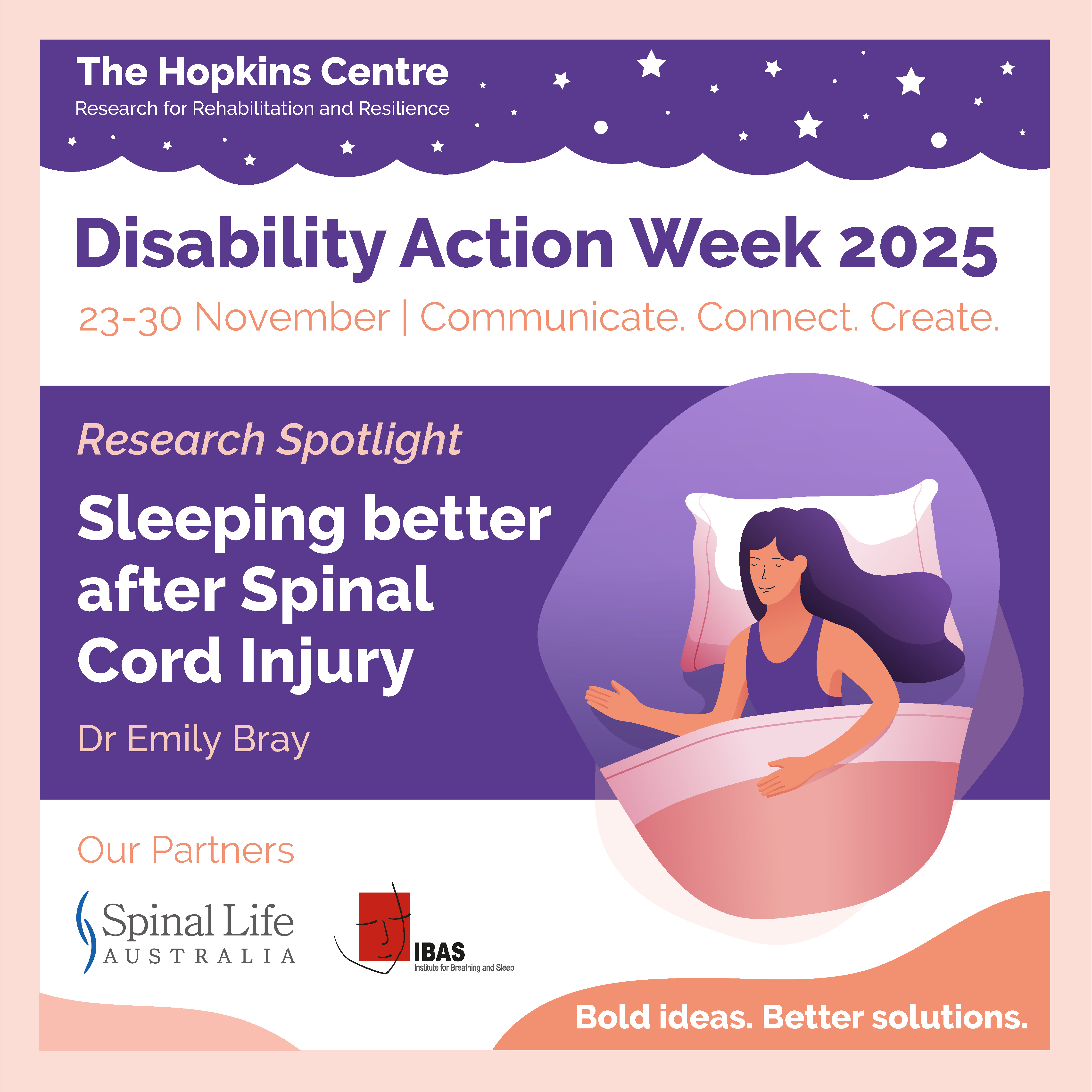
    Social media tile for The Hopkins Centre - Disability Action Week 2025: 23-30 November | Communicate. Connect. Create. Research Spotlight: Sleeping better after Spinal Cord Injury – Dr Emily Bray. Vector illustration of a woman with long hair asleep in a bed with her head resting on the pillow. Footer: Our partners Spinal Life Australia and the Institute of Breathing and Sleep. Tagline: Bold ideas. Better solutions.

    Good sleep is vital for health and wellbeing—yet research shows that two in three people living with a spinal cord injury (SCI) experience poor sleep, and most haven’t sought support.

    As part of Disability Action Week, we’re highlighting important work led by Dr Emily Bray and her team at The Hopkins Centre, who have partnered with clinicians, researchers, and people with lived experience to explore this issue and bridge the information gap.

    Together, they’ve co-developed new, evidence-based resources to help people with SCI better understand sleep changes and find strategies that work for them.

    View the graphics below to learn more about this important research and how it supports the SCI community.

    We would like to thank our partners Spinal Life Australia, Institute for Breathing and Sleep and the Queensland Spinal Cord Injuries Service (QSCIS) for their support.

    Contact Dr Emily Bray for more information:
    https://www.hopkinscentre.edu.au/people-view/emily-bray-177

    Visit our website to find out more: https://www.hopkinscentre.edu.au/project/seed-project-sleep-disturbances-following-spinal-163


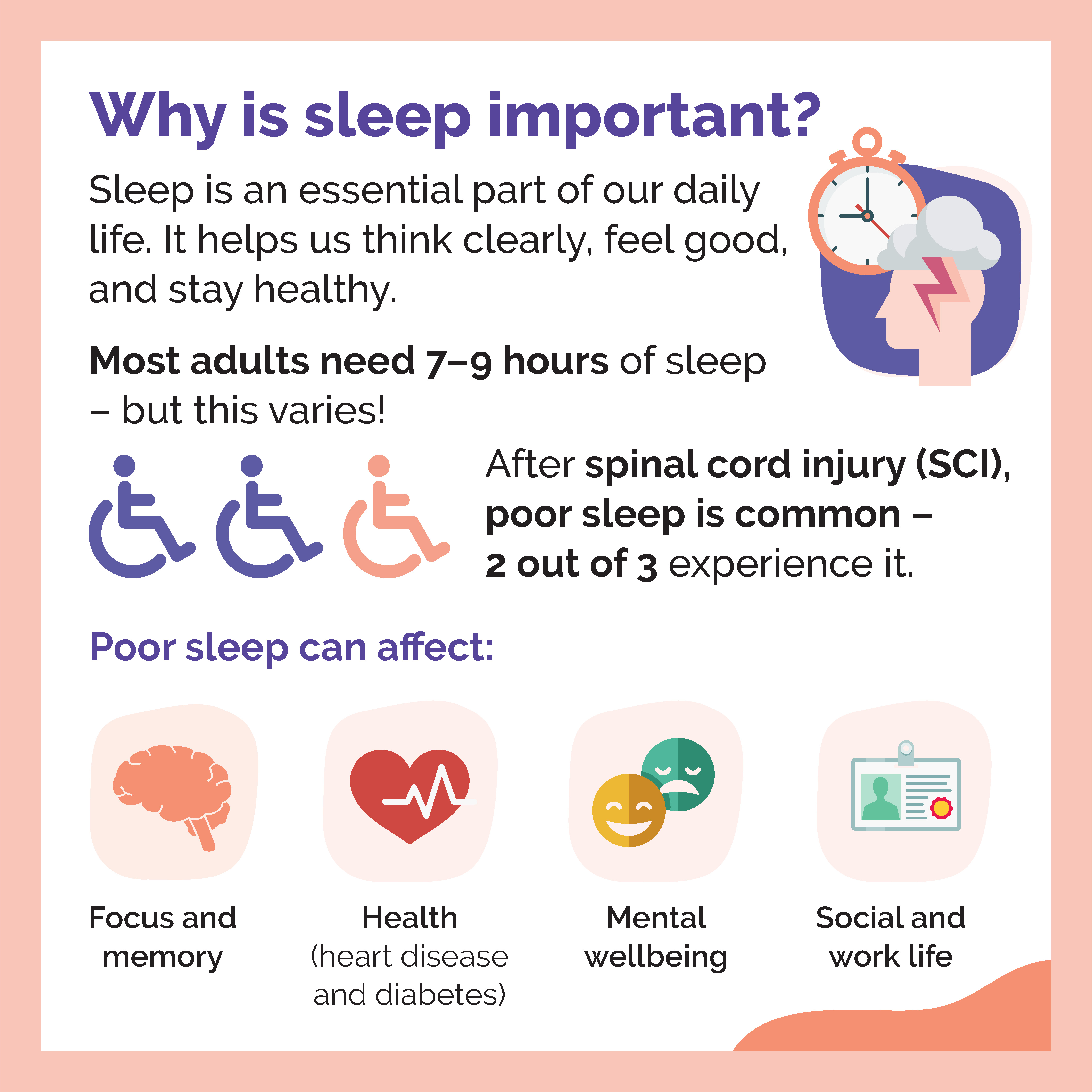
    Infographic titled “Why is sleep important?” It explains that sleep helps us think clearly, feel good, and stay healthy. Most adults need 7–9 hours of sleep, but this varies. After spinal cord injury (SCI), poor sleep is common — 2 out of 3 experience it. Poor sleep can affect focus and memory, health (heart disease and diabetes), mental wellbeing, and social and work life.

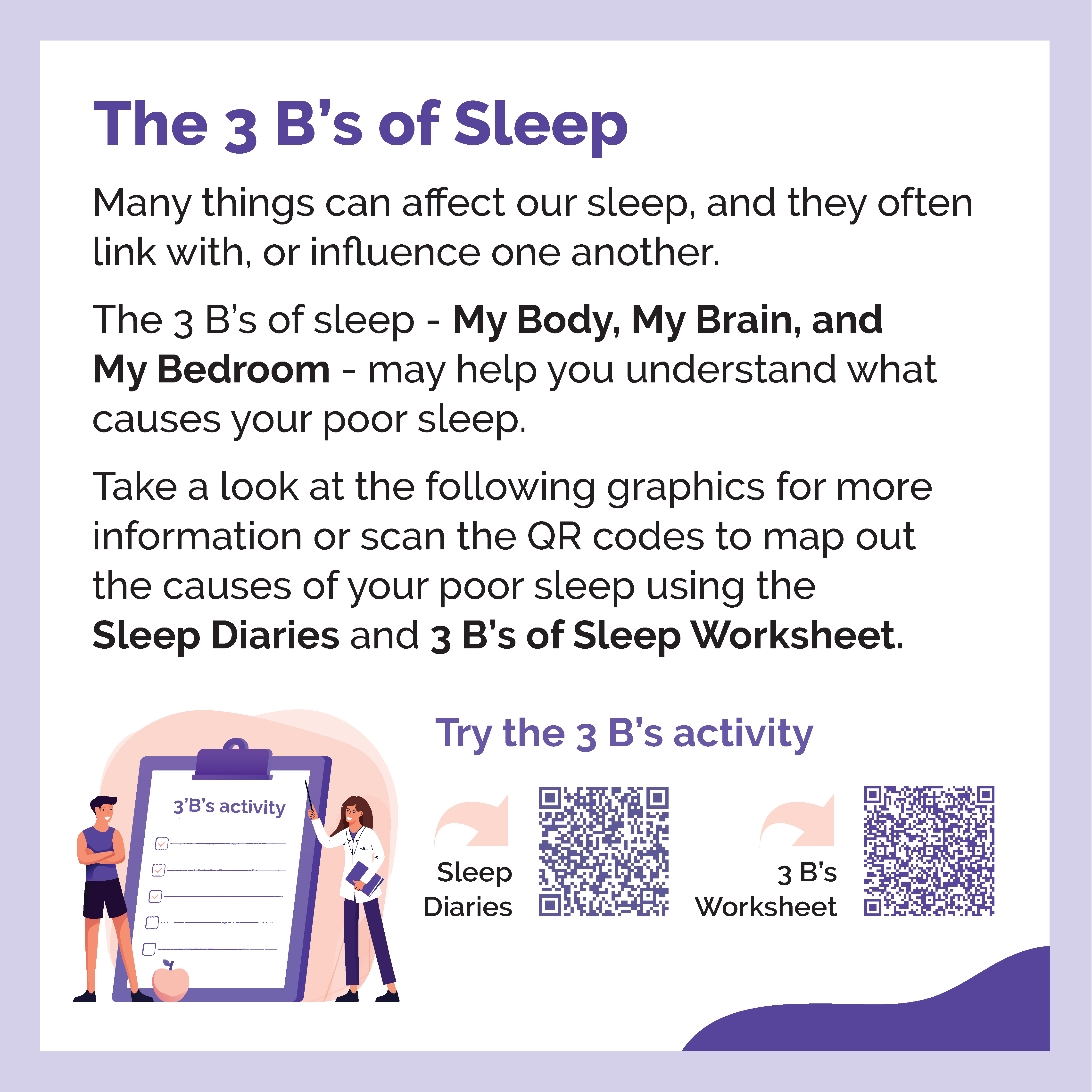
    Infographic titled “The 3 B’s of Sleep.” It explains that many factors can affect sleep and influence one another. The 3 B’s — My Body, My Brain, and My Bedroom — may help identify causes of poor sleep. The text encourages readers to explore more graphics or scan QR codes to complete the Sleep Diaries and 3 B’s of Sleep Worksheet. At the bottom, there’s an illustration of two people beside a large clipboard labelled “3 B’s activity” and two QR codes labelled “Sleep Diaries” and “3 B’s Worksheet.”

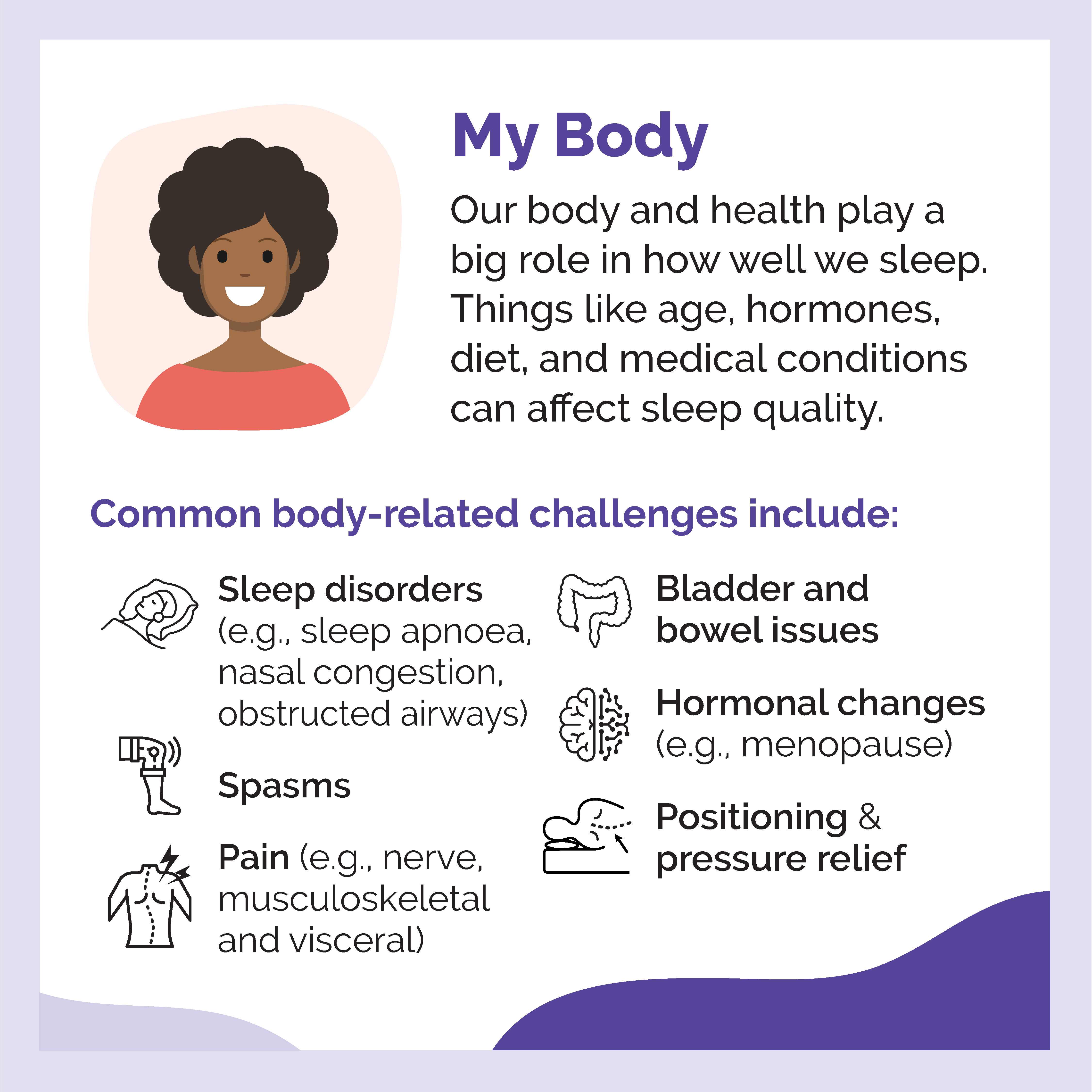
    Infographic titled “My Body.” It explains that our body and health play a big role in how well we sleep. Factors such as age, hormones, diet, and medical conditions can affect sleep quality. Common body-related challenges include sleep disorders (e.g., sleep apnoea, nasal congestion, obstructed airways), spasms, pain (nerve, musculoskeletal, visceral), bladder and bowel issues, hormonal changes (e.g., menopause), and positioning and pressure relief. The design features a smiling person illustration and icons beside each challenge.

    Infographic titled “My Bedroom.” It explains that a calm, safe bedroom helps your mind and body relax for better sleep. Things to check within your sleep environment include: Bright lights and loud noises, equipment comfort (e.g., bed, mattress, pillows, splints), room temperature (too hot or cold), Distractions (screens and devices), physical safety, overnight help and support, family routines (e.g., co-sleeping, shift work). The design features an illustration of a bed and icons beside each point.

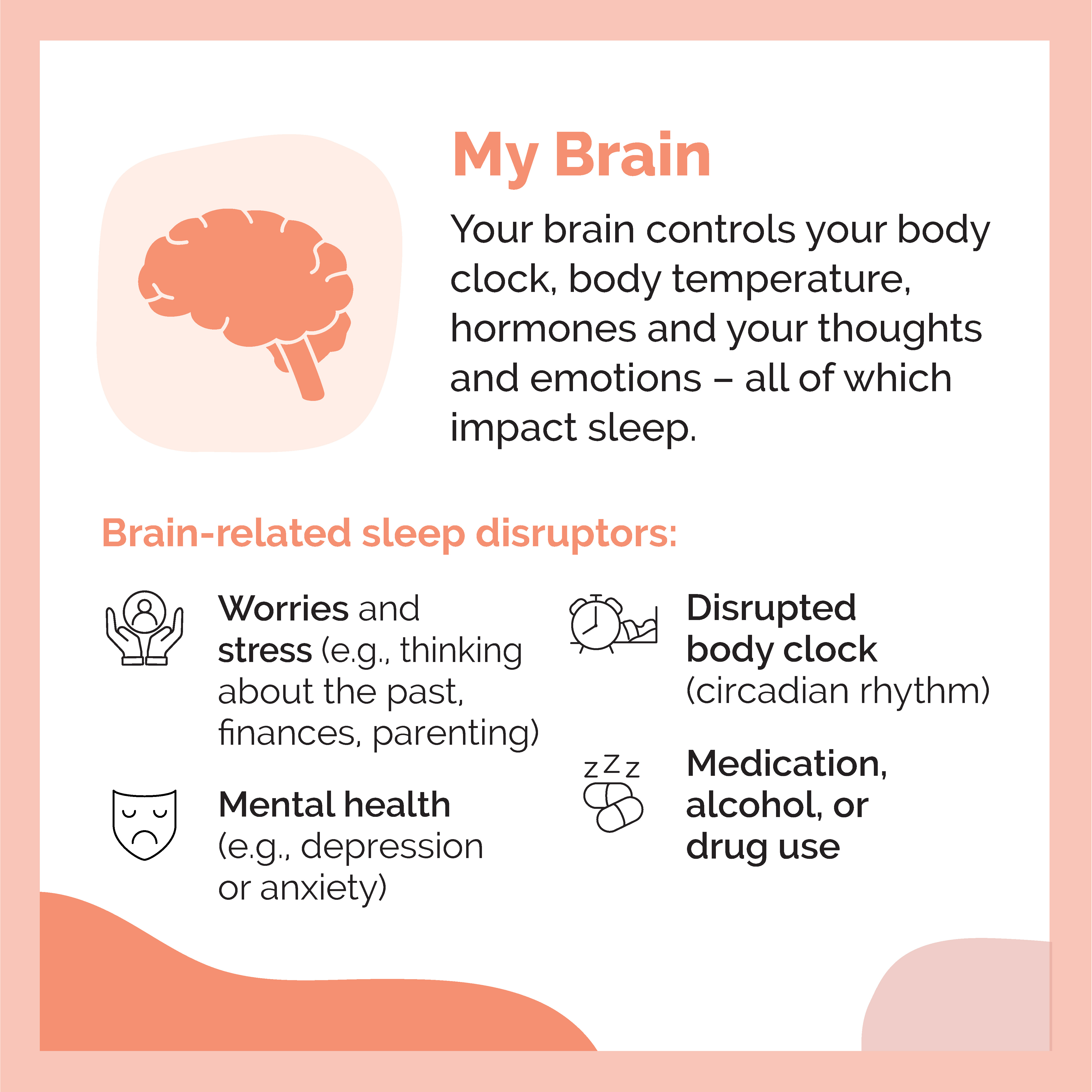
    Infographic titled “My Brain.” It explains that your brain controls your body clock, body temperature, hormones, thoughts and emotions – all of which impact sleep. Brain-related sleep disruptors include - Worries and stress (e.g., thinking about the past, finances and parenting), mental health (e.g., depression or anxiety), disrupted body clock (circadian rhythm), and medication, alcohol or drug use. The design features an illustration of a brain and icons beside each point.

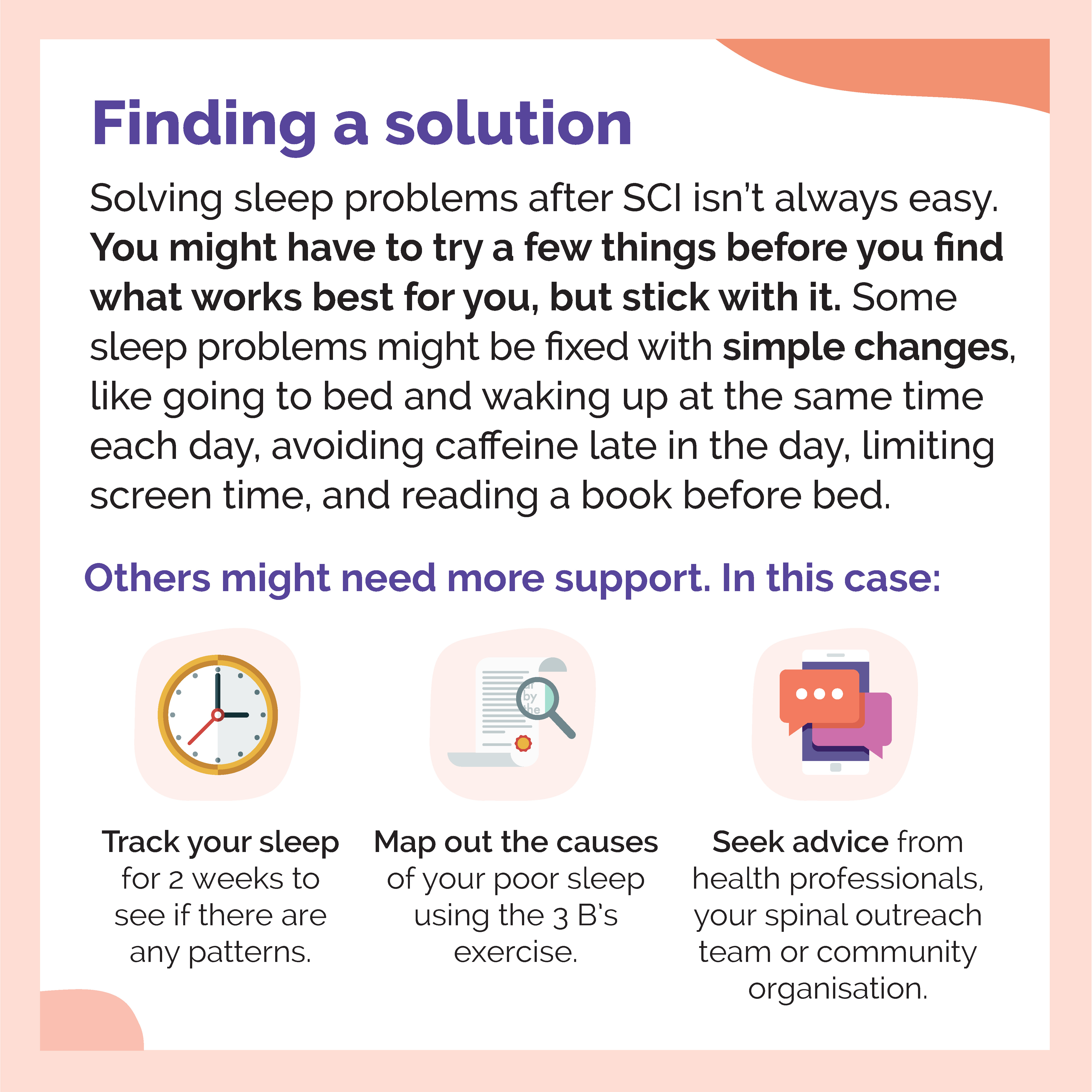
    An infographic titled: Finding a solution. Solving sleep problems after SCI isn’t always easy. You might have to try a few things before you find what works best for you, but stick with it. Some sleep problems might be fixed with simple changes, like going to bed and waking up at the same time each day, avoiding caffeine late in the day, limiting screen time, and reading a book before bed. Others might need more support. In this case: Track your sleep for 2 weeks to see if there are any patterns; map out the causes of your poor sleep using the 3 B’s exercise; seek advice from health professionals, your spinal outreach team or community organisation. The design features illustrations of a clock, document with a magnifying glass and a mobile device with speech bubbles.

    More information: Dr Emily Bray, Research Fellow, The Hopkins Centre. Email: Emily.bray@griffith.edu.au or visit our website http://www.hopkinscentre.edu.au – Scan the QR code or visit our project page at https://shorturl.at/zcF1i.The design features an illustration of a woman with long hair sleeping with her head on a pillow.


  • Financial Toxicity and Quality of Life

    supporting image

    Brain Cancer and the Hidden Cost Financial Toxicity and Quality of Life. A powerful graphic of a brain with symbolic financial icons—e.g., coins, receipts, stress symbols and magnifying glass over a brain cancer. The Griffith University logo features at the top.May is Brain Cancer Awareness Month Let’s talk about more than just treatment. Brain tumour survivors face a hidden toll: financial toxicity. Vector image of a man with magnifying glass looking inside a brain which has an illuminated light globe with a dollar sign. Griffith University logo bottom leftMay marks Brain Cancer Awareness Month—a time to spotlight not only the medical but also the financial and emotional toll of brain tumours.

    New honours research by Jasmine Luttrell reveals that over half of brain tumour survivors report significant financial hardship, which is closely linked to increased anxiety and reduced quality of life.

    This study, led by Prof. Tamara Ownsworth was a NHMRC funded collaboration between Griffith University, Metro South Health (Radiation Oncology) and the Cancer Council Queensland.

    Over 50% of survivors report significant financial hardship— linked to higher anxiety and lower quality of life. An infographic image to show "50%" visually, with 5/10 figures shaded. And a woman sitting looking worried, with a chain anchoring her to a brain graphic. There are red lightening bolts coming from her head and a speech bubble with red dollar signs. Griffith University logo bottom left.

    What is financial toxicity? Illustrations for each point. 💸 Out-of-pocket costs (bag of money) 🚌 Transport, parking (plane, train, taxi, car) 🕒 Lost income from caregiving (wallet with a magnifying glass) 🏦 Depleted savings or debt (debt cycle image with red and black arrows with a pile of dollar notes and coins).

    What we found: • People with more aggressive tumours reported more financial distress • Greater financial burden = higher anxiety • Anxiety partially explains reduced quality of life Simple flow diagram with text and arrows to show the relationships. Accompanied with a vector image of a brain and hand holding a magnifying glass to show a brain cancer.


    We need action. Early screening for financial strain and tailored financial advice and support could improve wellbeing. It’s time to treat the whole person—not just the tumour. Vector image showing two women talking. Griffith University logo in bottom right corner.

    🔍 Read the full study In the Journal of Cancer Survivorship By Jasmine Luttrell, Prof. Tamara Ownsworth and colleagues Griffith University | Metro South Health | Cancer Council QLD (Logos) https://link.springer.com/article/10.1007/s11764-025-01814-4


    Find out more:

    https://www.hopkinscentre.edu.au/news-view/brain-cancer-financial-toxicity-and-quality-of-503


    Read the full paper in the Journal of Cancer Survivorship.

    https://link.springer.com/article/10.1007/s11764-025-01814-4

    Citation

    Luttrell, J., Lion, K., Pinkham, M. B., Collins, L. G., Ownsworth, T. The impact of financial toxicity on quality of life for survivors of primary brain tumour. Journal of Cancer Survivorship (2025).


    More Information Contact: Professor Tamara Ownsworth Research Director, The Hopkins Centre School of Applied Psychology Griffith University t.ownsworth@griffith.edu.au https://www.hopkinscentre.edu.au/news-view/brain-cancer-financial-toxicity-and-quality-of-503

  • Disability Reform Summit: Moving from recommendations to evidence-based solutions

    supporting image

    The Disability Reform Summit was hosted by the Dignity Project and funded by an Engaging Science Grant from the Department of Environment and Science.

    The Summit brought together a diverse group of citizen scientists, Queensland disability researchers and academics, and key disability persons and advocacy organisations for a collaborative agenda-setting workshop.

    The workshop sought to co-create priorities for research based on the NDIS Review recommendations, Disability Royal Commission recommendations, and the Voice of Queenslanders with Disability report recommendations, while moving towards evidence-based solutions that will directly contribute to government and service responses.

    Twenty-one attendees worked collaboratively over a 4-hour workshop and identified key priorities, much of which was focused on improving disability data collection, better implementation of consistent disability flags across mainstream services, and increasing sustainable long-term partnerships and funding.

    Workshop attendees wanted to prioritise projects that focus on building evidence for knowledge and evidence gaps, although 50% of participants also wanted to examine existing interventions to evaluate and improve them.

    L-R: Dr Kelsey Chapman; Dr Talitha Kingsmill and Sharon White; and Nerine Williams.

    TOPICS AND INSIGHTS

    Health and Wellbeing:

    • Promoting health consumerism principles and access for all.
    • Shifting from reactive to pre-emptive health strategies.
    • Addressing disparities in health equity and access.
    • Campaigns like 'Hear Me, See Me, Understand Me' and involving lived experiences in decisions.
    • Potential research includes integrating health awareness into education and enhancing professional understanding of diverse needs.

    Employment and Financial Security:

    • Psychological safety and accommodations in the workplace.
    • Inclusive recruitment, onboarding, and raising employment expectations.
    • Examining current inclusive policies and staff training in unconscious bias.
    • Potential research includes building inclusive research teams and understanding confidence in disability-related conversations.

    Top: Panelists Prof. Elizabeth Kendall AM, Dr Talitha Kingsmill, Sharon White and Prof. David Trembath. Bottom: Dr Kelsey Chapman leads the summit workshop activities. Inclusive Education and Learning:

    • Need for inclusive school rules and evolving educational practices.
    • Redesigning assessment methods and promoting reasonable adjustments.
    • Potential research focuses on leadership attitudes and diverse perspectives in education, reassessing student success metrics.

    Inclusive and Accessible Communities:

    • Evaluating compliance vs. actual accessibility and inclusion.
    • Measuring community inclusion and the impact of co-design.
    • Opportunities like Brisbane 2032 for updating infrastructure and promoting universal accessibility.

    Disability Data:

    • Enhancing researcher capability and implementing consistent disability data flags.
    • Prioritising projects to build evidence and evaluate existing interventions.
    • Balancing academic interest with immediate social needs through co-design and sustainable partnerships.

    Top L-R: Sharon White and Prof. David Trembath; Julia Robertson.
    Bottom L-R: Dr Eloise Hummell and Nerine Williams; Geoff Trappett; Dr Maretta Mann.
    We extend our gratitude to the Queensland Government Department of Environment and Science for their support of this research. Our deepest thanks also go to Dr. Kelsey Chapman, Lead Researcher, and the Griffith University's Inclusive Futures: Reimagining Disability team, including Rebekah Barker, Joe-Anne Kek-Pamenter, Dr. Maretta Mann, and Professor Elizabeth Kendall AM, for their invaluable assistance in organising this event. Additionally, we appreciate the continuous dedication and support of our Summit participants and the wider Dignity Project team.

    Special thanks to Eric Tram, our videographer, illustrators Holly Bryant & Cate Withers and the team at Griffith University Live Worm (Libbi Reed, Jacqui Hancox and Sharon Searle) for their engaging Sketch Notes that beautifully captured the topics and insights of the Summit.

    Top L-R: Prof David Trembath; Dr Kelsey Chapman; Dr Eloise Hummell.
    Bottom L-R: Summit Participants; Prof. Elizabeth Kendall AM.

    Top L-R: Dr Talitha Kingsmill and Karin Swift.
    Bottom: Dr Maretta Mann and Dr Kelsey Chapman lead discussion amongst their group.


    Acknowledgement

    The Disability Reform Summit was funded by an Engaging Science Grant from the Queensland Department of Environment and Science and the Office of the Chief Scientist.


    Watch the Disability Reform Summit highlights on YouTube: https://youtu.be/Wz2UJ08xOP0?si=xIu1T75BSAVJTm58 (Videographer: Eric Tram).


    Join us in moving from recommendations to real change!

    More information: Dr Kelsey Chapman, Research Fellow and Citizen Science Manager k.chapman@griffith.edu.au

    SKETCH NOTES

    For an accessible / alternate format of our sketch notes, please email inclusivefutures@griffith.edu.au