Articles
Category HDR Scholars Show all
-
IDPwD: Celebrating Our Griffith University HDR Disability Scholars
Share IDPwD: Celebrating Our Griffith University HDR Disability Scholars on Facebook Share IDPwD: Celebrating Our Griffith University HDR Disability Scholars on X (formerly Twitter) Share IDPwD: Celebrating Our Griffith University HDR Disability Scholars on Linkedin Email IDPwD: Celebrating Our Griffith University HDR Disability Scholars link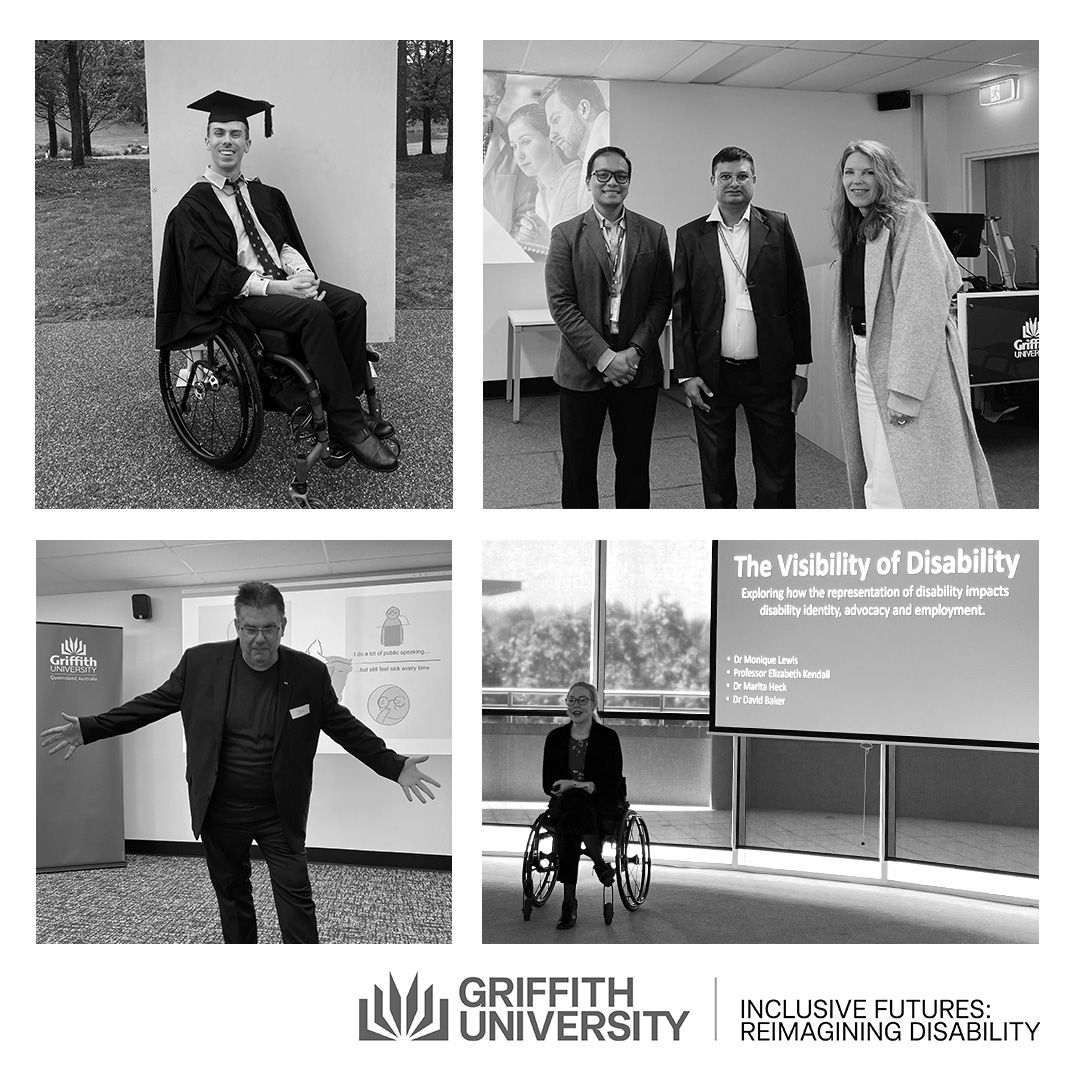
INTERNATIONAL DAY OF PEOPLE WITH DISABILITY 2025
Celebrating Our Griffith University HDR Disability Scholars
Fostering disability-inclusive societies for advancing social progress
Every year, the International Day of People with Disability (IDPwD) calls us to imagine what our communities could look like if inclusion wasn’t an afterthought, but the foundation of progress.
At Griffith University, we see this future every day in the work of our HDR Disability Scholars—researchers with disability who are reshaping how society thinks, designs, and acts. These scholars lead research that challenges outdated systems, advances accessibility, and centres lived experience as a vital source of knowledge.
INTERNATIONAL DAY OF PEOPLE WITH DISABILITY 2025
Celebrating Our Griffith University HDR Disability Scholars
Fostering disability-inclusive societies for advancing social progress
Every year, the International Day of People with Disability (IDPwD) calls us to imagine what our communities could look like if inclusion wasn’t an afterthought, but the foundation of progress.
At Griffith University, we see this future every day in the work of our HDR Disability Scholars—researchers with disability who are reshaping how society thinks, designs, and acts. These scholars lead research that challenges outdated systems, advances accessibility, and centres lived experience as a vital source of knowledge.
Launched in 2023 through Inclusive Futures: Reimagining Disability and supported by The Hopkins Centre, the HDR Disability Scholars Program now supports a dynamic, growing cohort of talented PhD candidates across fields including health, technology, media, mental health, workplace equity, disaster communication, and identity studies.
The program complements the Griffith University Disability Scholars Research Scholarship (GUDSRS)—co-developed and administered by Professor Rebecca Ford, Dean of the Griffith Graduate Research School—which enhances opportunities for emerging researchers with disability by providing dedicated support for accessible and inclusive research pathways.
With mentorship, peer learning, accessibility support and a thriving community, the program reflects Griffith’s commitment to building disability-inclusive research environments—spaces where scholars not only participate, but lead.
As the world celebrates IDPwD 2025 and its theme Fostering disability-inclusive societies for advancing social progress, we proudly showcase the remarkable researchers driving this mission forward.
Watch on YouTube: https://youtu.be/1CtIb3MjHd0Download a copy of the Transcript: https://www.hopkinscentre.edu.au/news-view/international-day-of-persons-with-disabilities-538
Read more in the Griffith News: https://news.griffith.edu.au/2025/11/26/a-thriving-community-is-driving-inclusive-research-at-griffith/
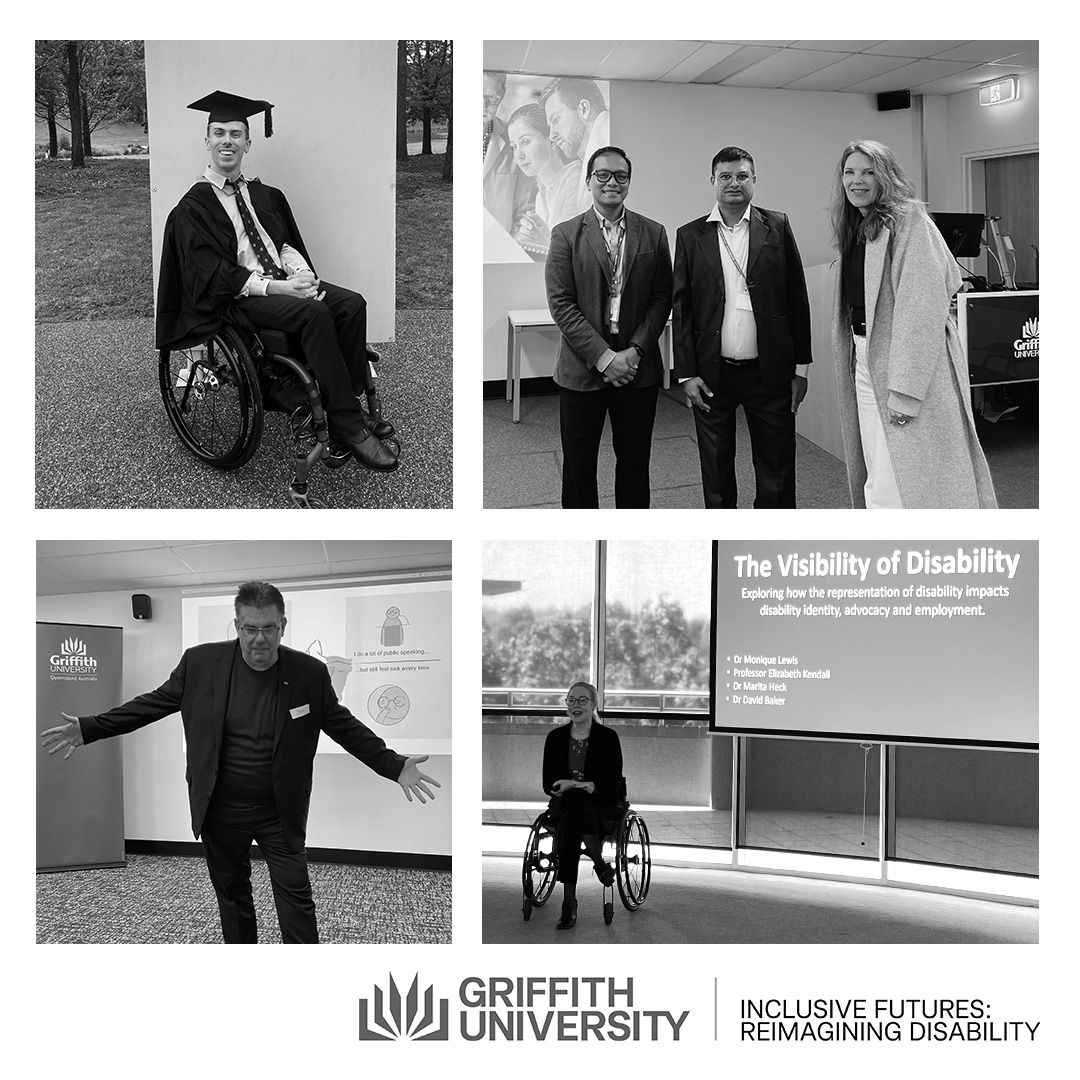 From top left to right: Daniel Clarke; Pallav Pant (Middle) together with his PhD supervisors Dr Feb Dwirahmadi and Dr Monique Lewis; Lisa Cox; and Jim Hogan.
MEET OUR SCHOLARS
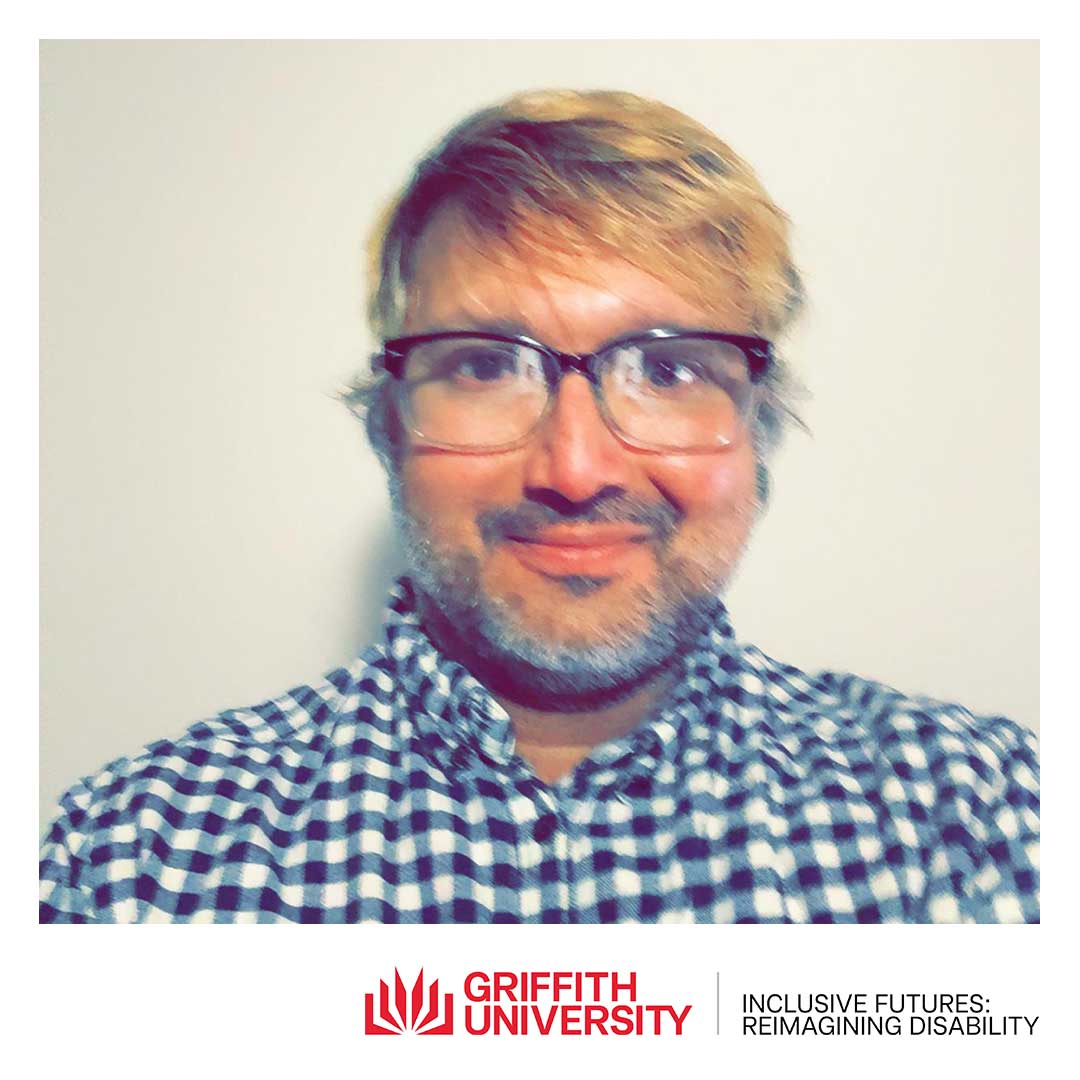 Allan (Ali) Khan
Allan (Ali) Khan
Topic: Mental Health Distress and Disability Adjustments for PhD Students with Psychosocial Disabilities
Ali’s research shines a light on the mental health challenges faced by PhD students—particularly depression, anxiety, and suicidality—and how structural issues such as funding insecurity, academic culture and institutional policy can exacerbate distress. His work seeks to co-design stronger disability adjustments and support systems across Australian universities.
Ali says:
“PhD students are the backbone of Australia’s university workforce… Universities must provide inclusive structures that support students and researchers with disabilities, ensuring all PhD students can thrive.”
His research directly contributes to disability-inclusive learning environments—an essential foundation for social progress.
Find out more: https://www.hopkinscentre.edu.au/project/mental-health-distress-and-disability-adjustments-178
 Aron Mercer
Aron Mercer
Topic: Neurodivergent Employees, Workplace Disclosure and Belonging
Aron explores the workplace experiences of neurodivergent employees, particularly the complexities of disclosure and the impact on belonging, career pathways and wellbeing. With 15–20% of people being neurodivergent, his research addresses one of the most significant—and least understood—equity challenges in employment.
Aron shares:
“It was daunting at first, but I could not recommend the Griffith University HDR program strongly enough… I have valued the support and connections with other doctoral candidates.”
His work advances the IDPwD theme by advocating for workplaces where neurodivergent employees can contribute without fear or stigma.
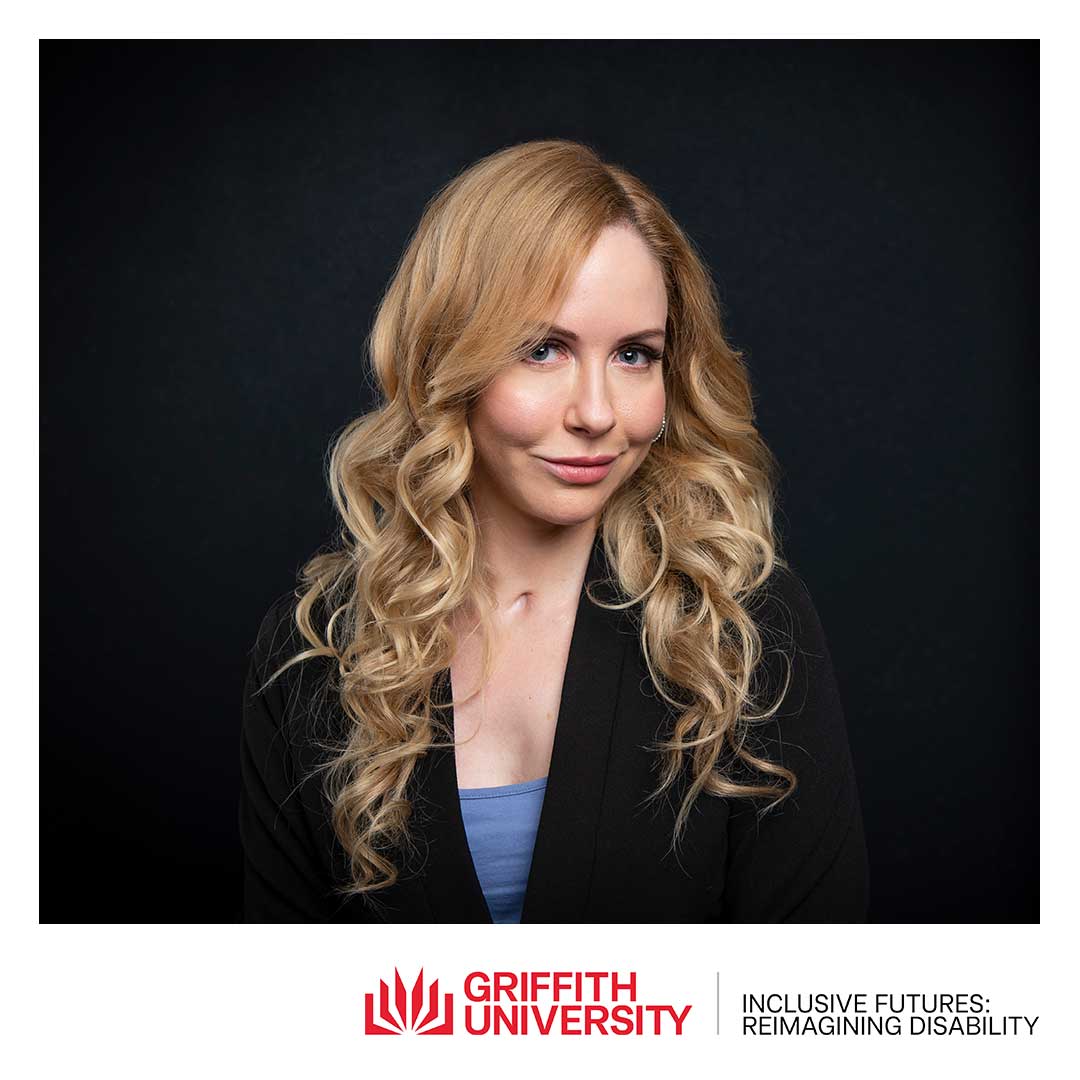 Lisa Cox OAM
Lisa Cox OAM
Topic: The Visibility of Disability — Representation, Identity and Advocacy
Award-winning author, advocate and media professional Lisa Cox OAM is investigating how representation shapes disability identity, advocacy, and employment. Through a practice-led approach combining memoir writing, critical disability studies and media analysis, she explores the tension between visibility and invisibility—and why the risk of being unseen is far greater.
Her research challenges industries to adopt inclusive, authentic representation that supports both social and economic participation.
Find out more: https://inclusivefutures.griffith.edu.au/news/news_feed/celebrating-lisa-cox-oam-advocate-changemaker-and-trailblazer
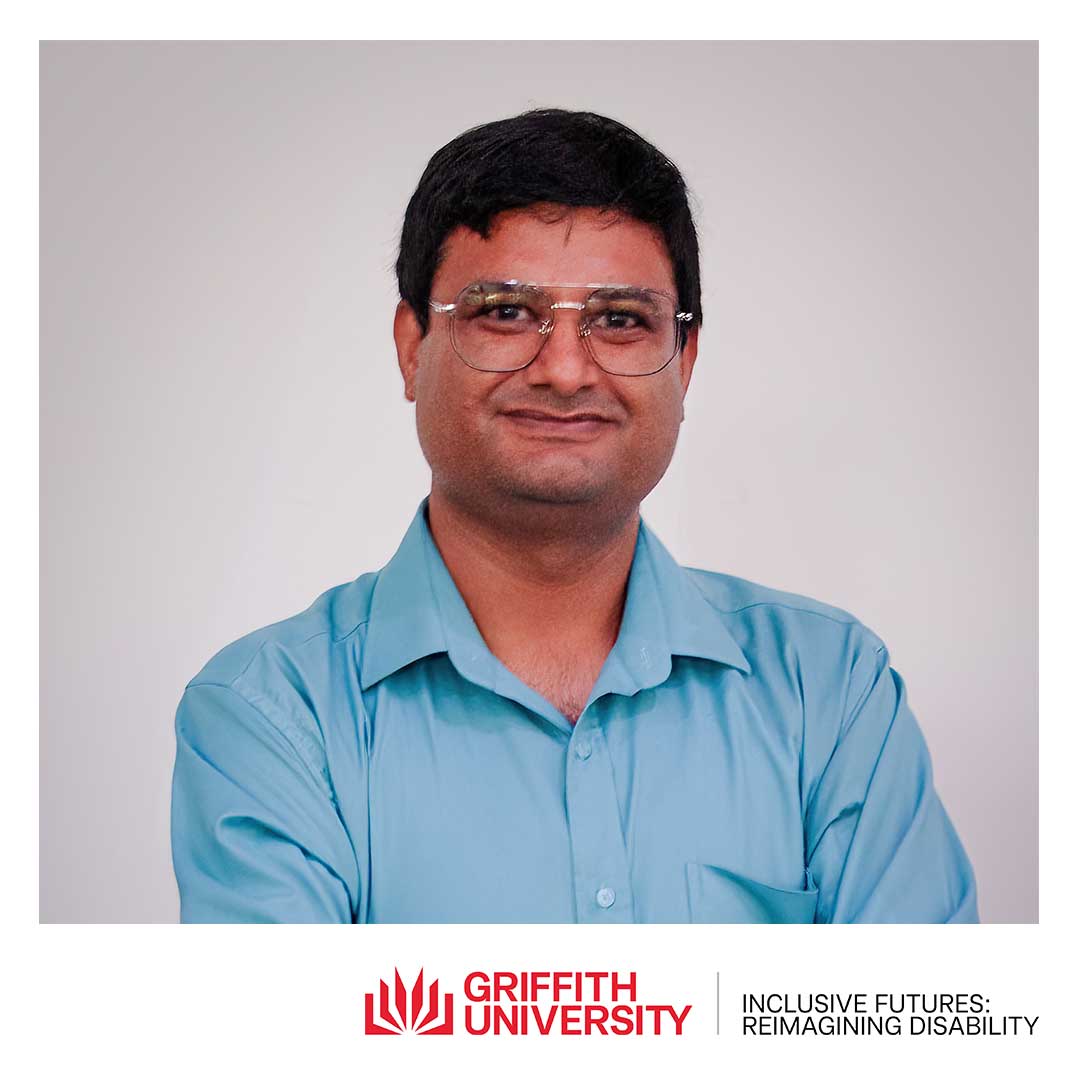 Pallav Pant
Pallav Pant
Topic: Advancing Accessible Emergency Communication for Deaf and Hard of Hearing Communities
Pallav’s internationally recognised work tackles one of the most urgent equity issues in disaster response: inaccessible emergency communication. His research co-designs digital, two-way communication tools with Deaf and Hard of Hearing communities and emergency services to ensure no one is left behind in a crisis.
This research exemplifies disability-inclusive innovation and has the potential to save lives across Australia and globally.
Find out more: https://inclusivefutures.griffith.edu.au/news/news_feed/congratulations-to-pallav-pant-on-his-phd-confirmation-seminar
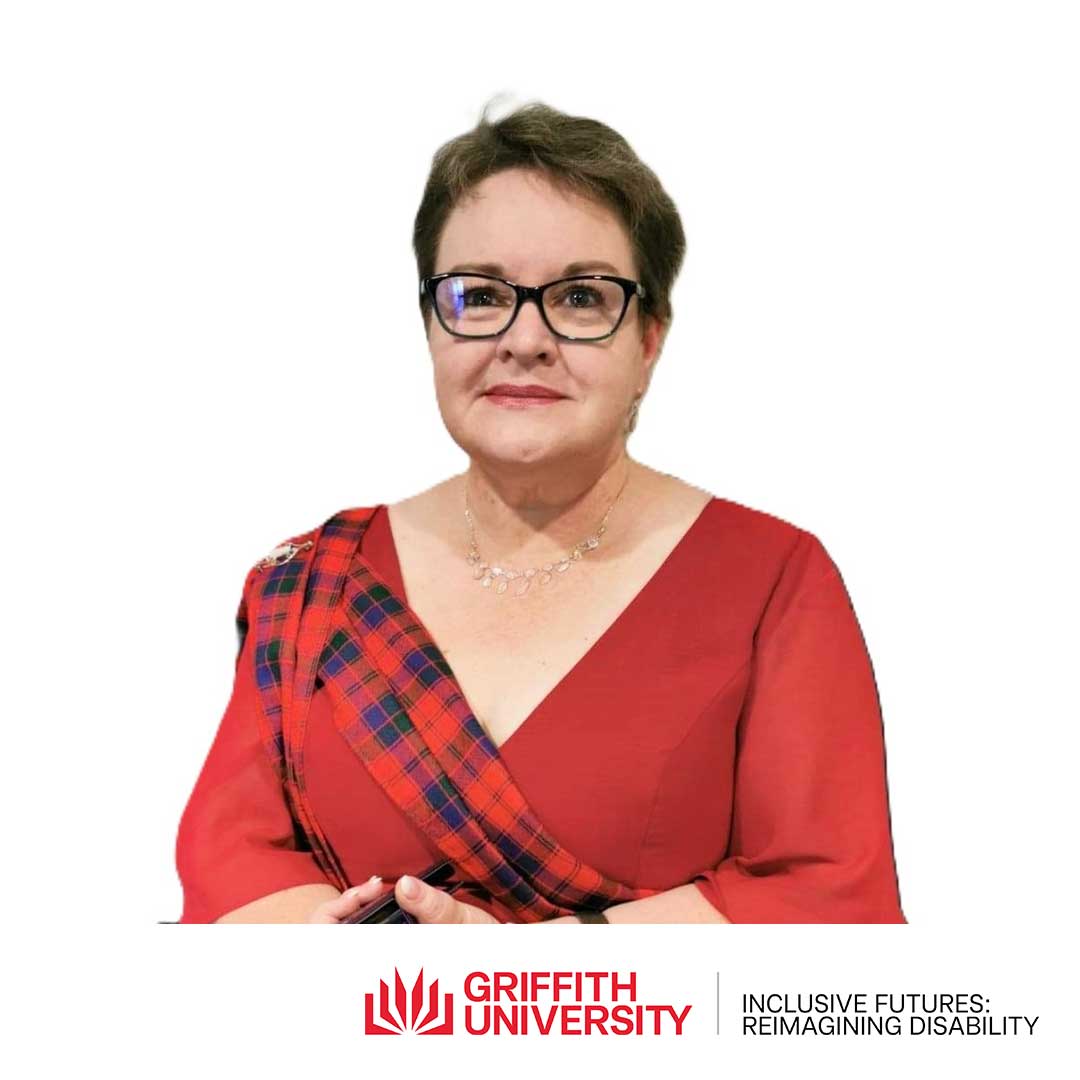 Julia Robertson
Julia Robertson
Topic: WATCH — Wearable AI Technology for Cognitive Health
Julia examines how wearable AI technologies can support real-time mental health monitoring for people with brain tumours—populations with significantly elevated risks of depression and suicidality. Her framework integrates biometric data, AI prediction models and patient-reported outcomes to create proactive, personalised mental health care.
Julia reflects:
“The unwritten rules of academia… are often inaccessible by design. When you live with disability, you learn to navigate these spaces creatively.”
Her work pushes the boundaries of inclusive digital health and human-centred AI.
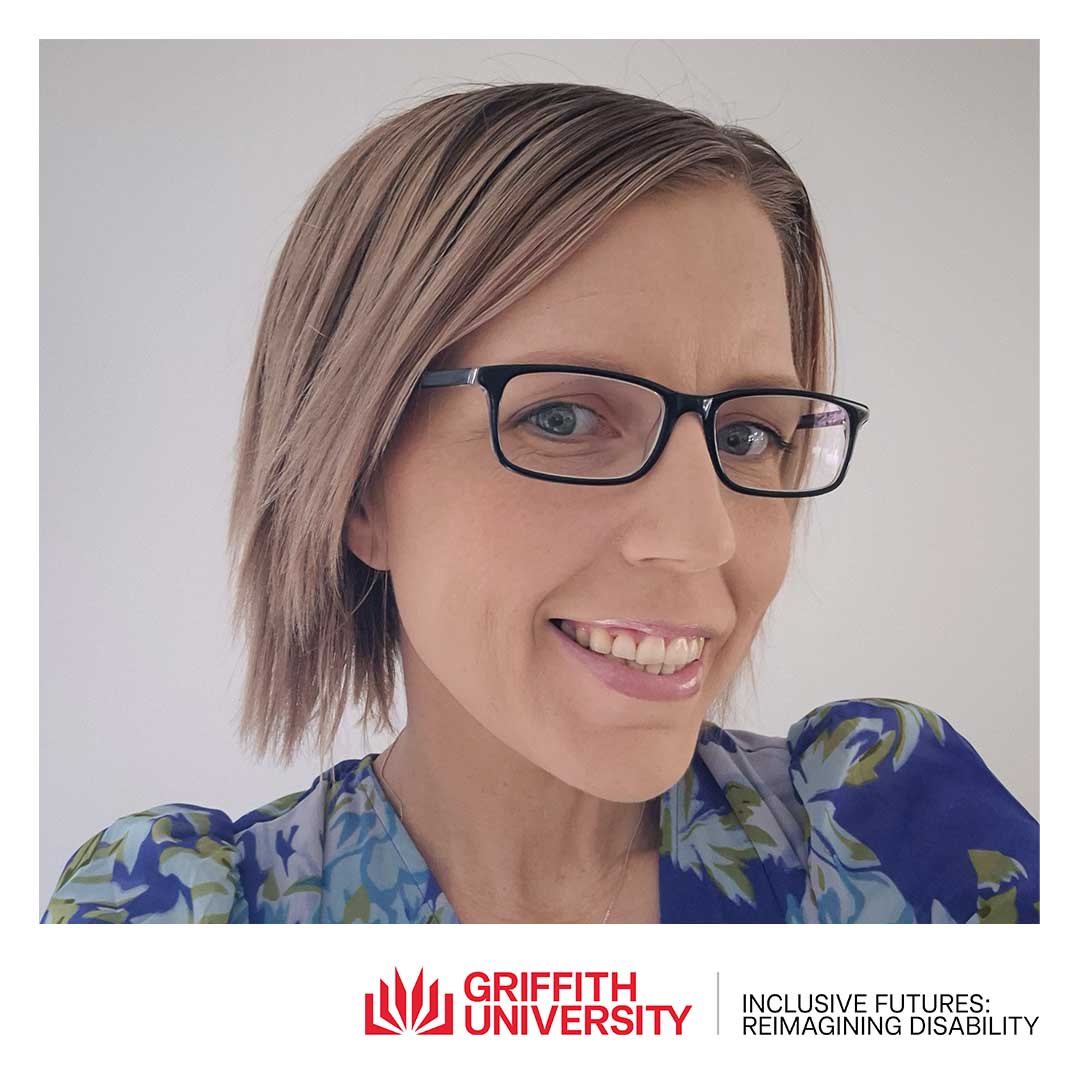 Samantha Cronin
Samantha Cronin
Topic: Undiagnosed Neurodiversity in Australian Defence Force Medical Transitions
Samantha’s research investigates whether undiagnosed neurodiversity contributes to the challenges veterans face when transitioning from the ADF to civilian life. Her work connects military culture, mental health, disability identity and reintegration—areas historically overlooked.
Samantha says:
“Griffith’s HDR program empowers researchers with disability to turn lived experience into leadership.”
Her research supports more responsive, neuroinclusive veteran services.
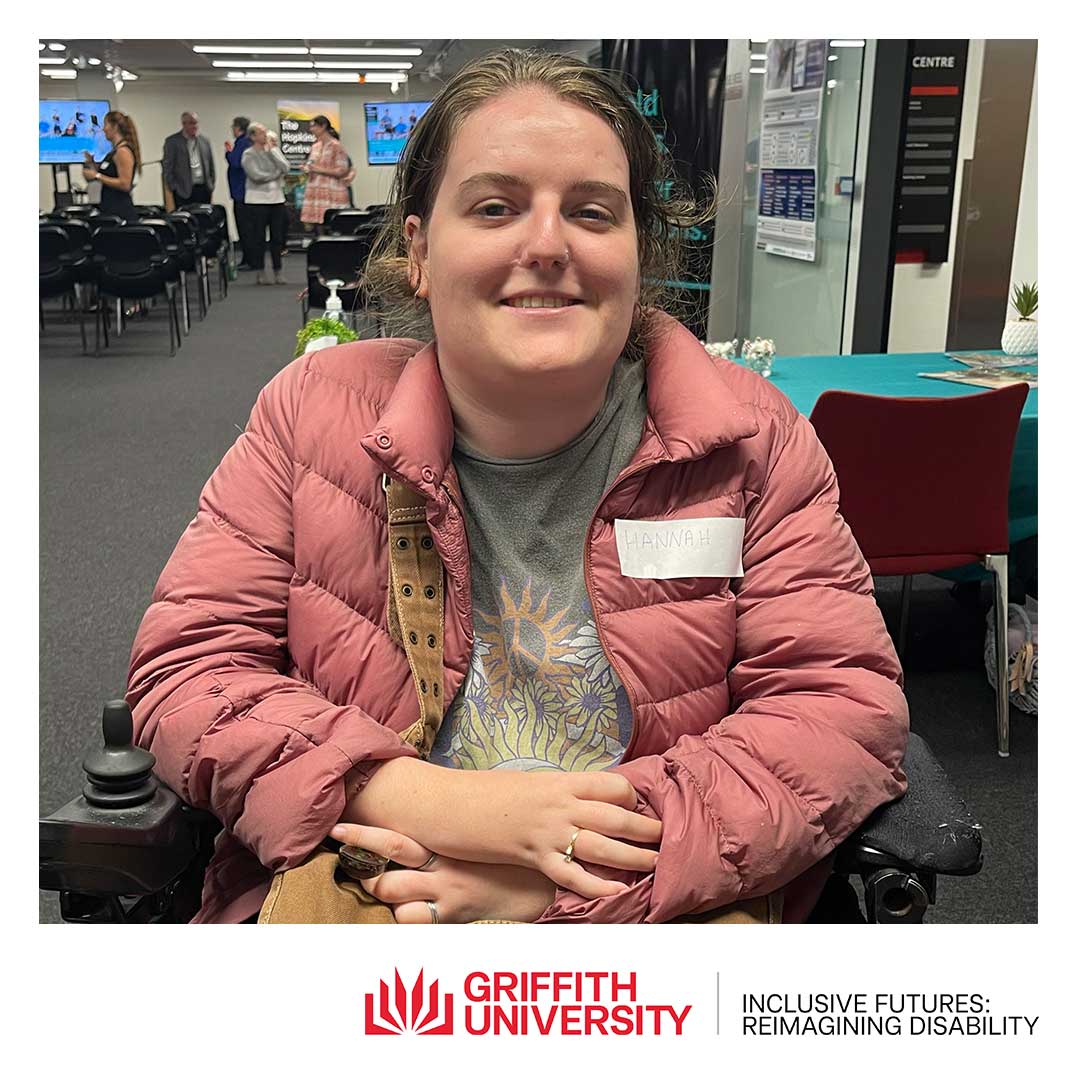 Hannah Simmonds
Hannah Simmonds
Topic: Leisure Access and Social Inclusion for Young People with Disability
Hannah explores how young people with disability experience leisure spaces, what barriers they face, and what inclusive design looks like from their perspective. Her work informs future planning for accessible, welcoming, community-building leisure environments.
Hannah shares:
“I love learning and feel like I am contributing with my lived experience expertise.”
Her research highlights that inclusion is not only a right—it enriches community life.
Find out more: https://www.hopkinscentre.edu.au/project/social-access-and-social-inclusion-outcomes-for-179
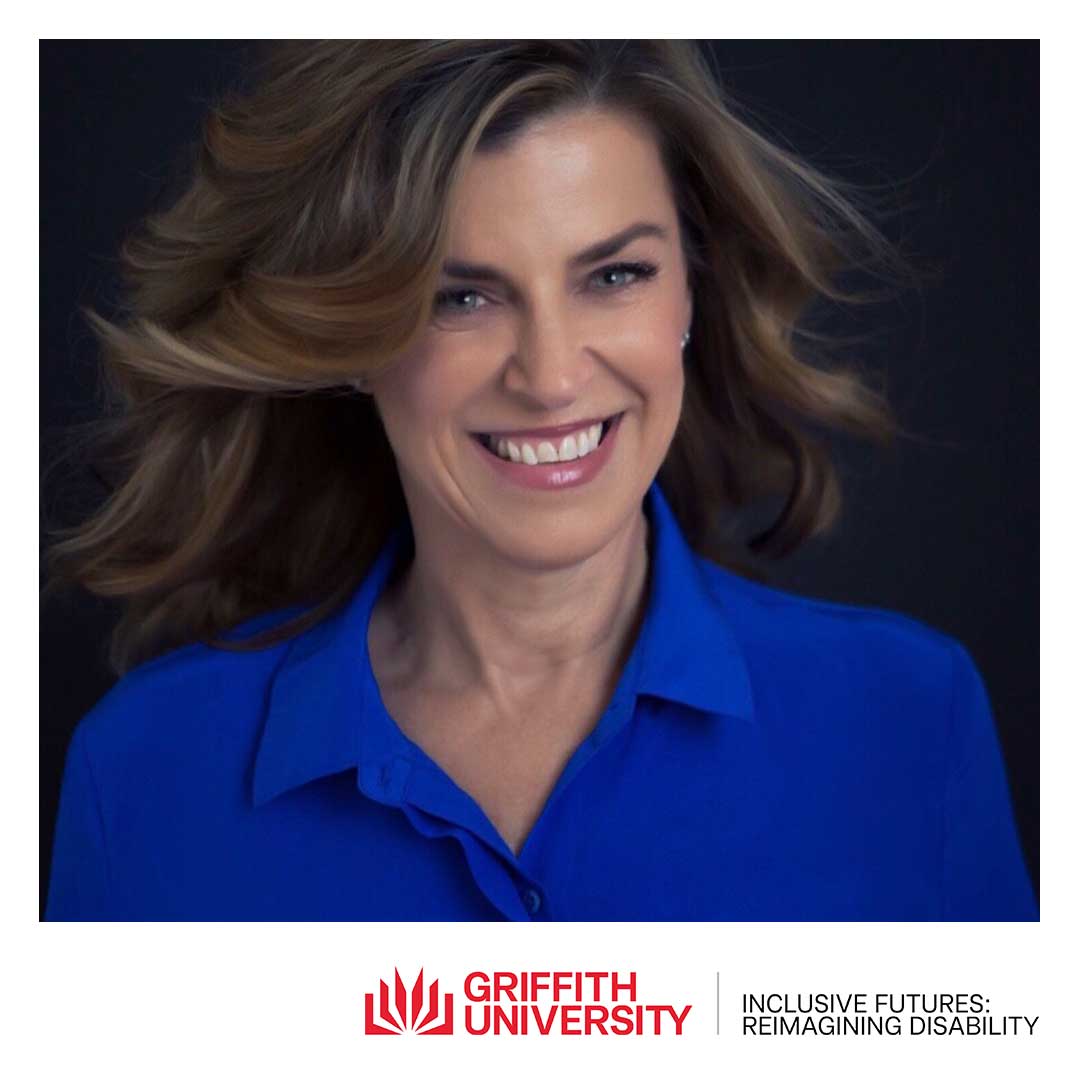 Janine Shepherd AM
Janine Shepherd AM
Topic: Narratives in Liminal Spaces — Identity, Disability and Resilience
Janine’s autoethnographic research introduces Conscious Liminality™, a framework for using personal narrative as a tool for rebuilding identity and resilience after trauma. Her work demonstrates how lived experience can reshape scholarly knowledge and challenge dominant assumptions about disability.
Janine says:
“As a disabled scholar, I’ve learned that research is not separate from lived experience—it’s born through it.”
She represents the power of storytelling in advancing social understanding and change.
Find out more: https://janineshepherd.com/conscious-liminality/
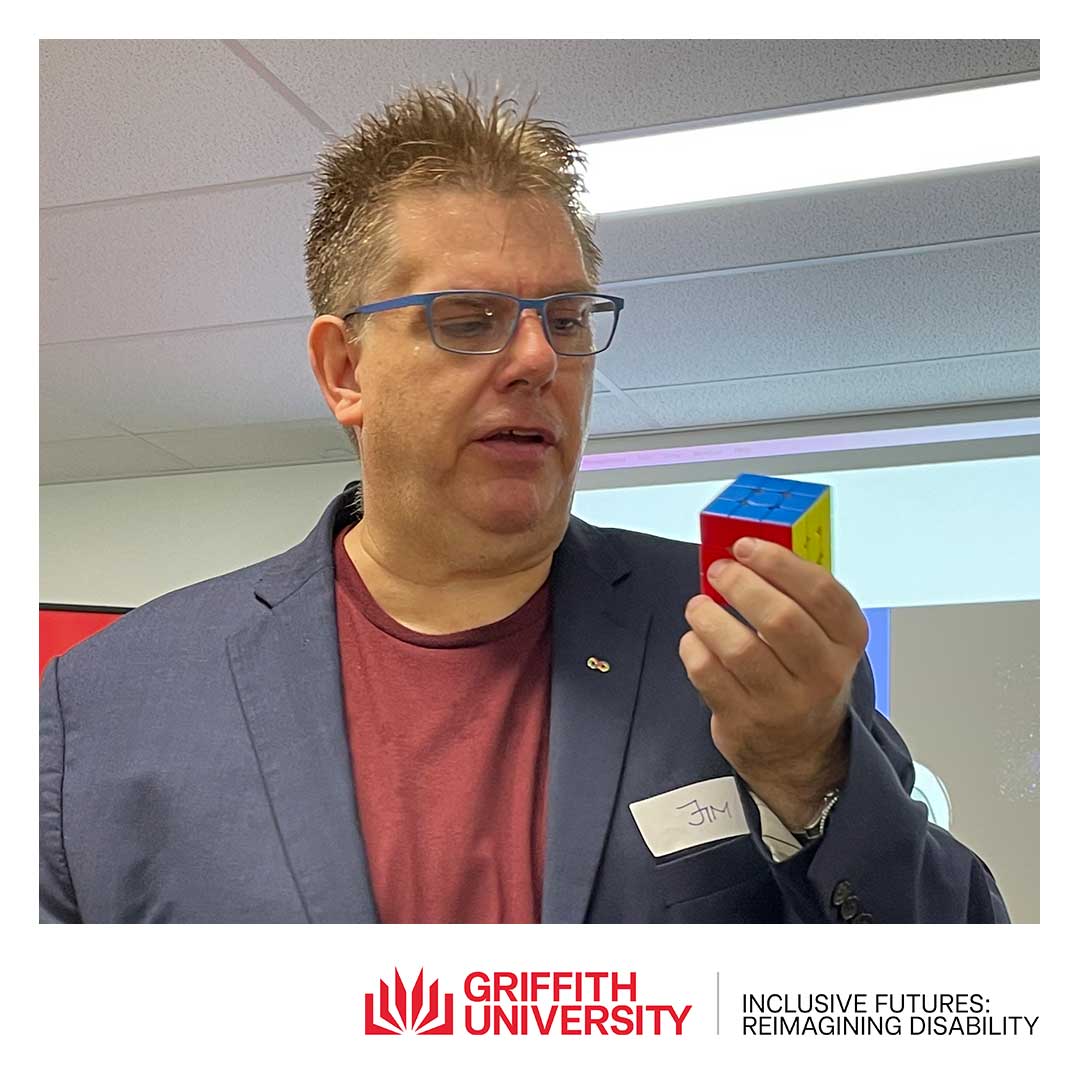 Jim Hogan
Jim Hogan
Topic: Reimagining Agile for Neuroinclusion
Jim is developing a new neuroinclusive “Agile” playbook—one that centres epistemic justice, inclusive collaboration, and innovation. His work challenges traditional organisational structures and opens new pathways to accessible, creative, high-performing workplaces.
Find out more: https://tedxbrisbane.com.au/our-talks/jim-hogan/
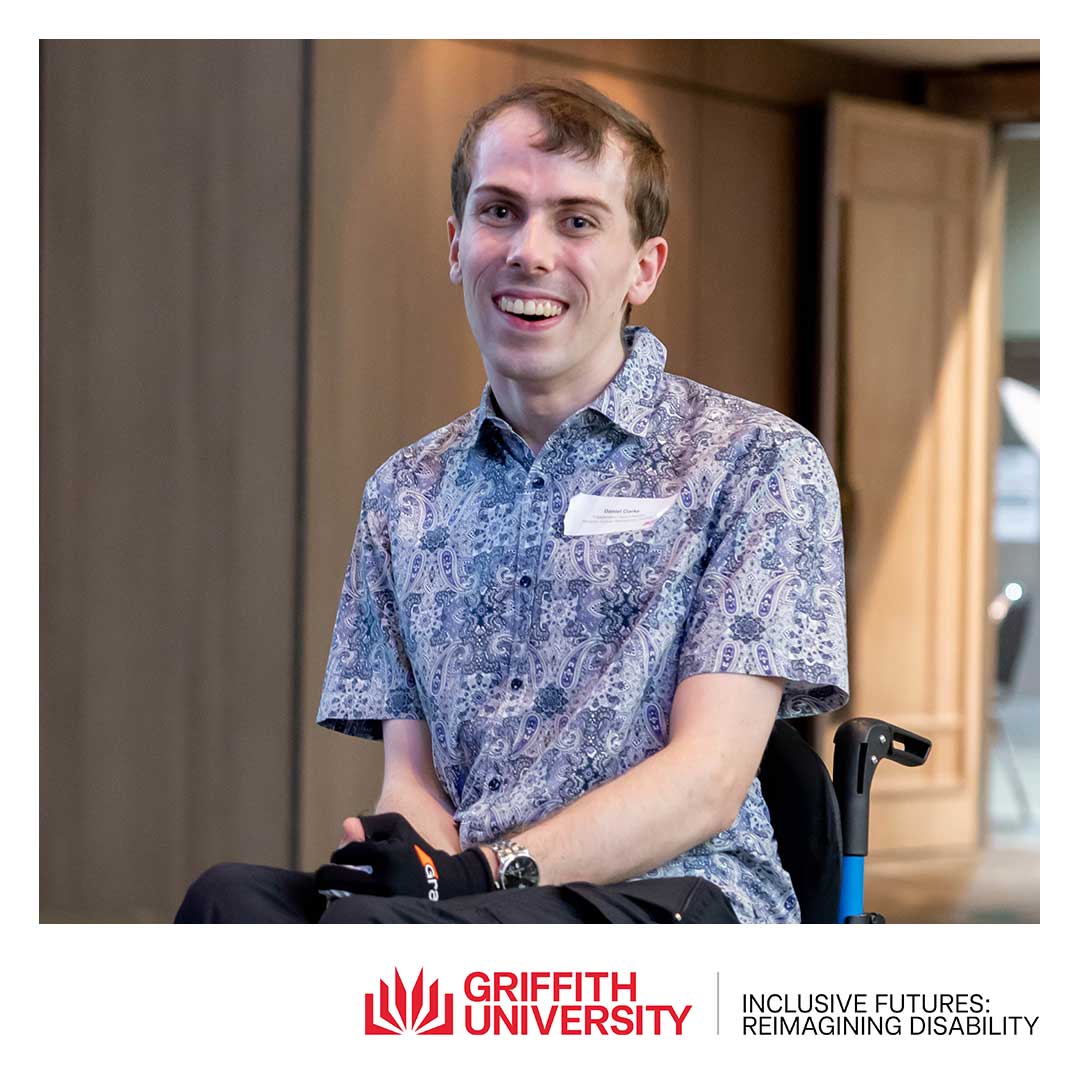 Daniel Clarke
Daniel Clarke (HDR Applicant for 2026)
Topic: Transforming Community Transport
Daniel, 2021 Queensland Young Australian of the Year and co-founder of Tears in the Jungle, has completed influential research on community transport, revealing how funding models and system gaps create barriers for people with mobility challenges.
He has applied to join the HDR Disability Scholars Program in 2026, proposing a PhD on transport disadvantage and the economic and social costs of inadequate accessible transport. With Transitcare as an industry partner, his future research aims to drive large-scale change across Queensland and beyond.
Find out more: https://inclusivefutures.griffith.edu.au/have-your-say-in-transforming-community-transport
WHY THIS WORK MATTERS FOR IDPWD 2025
The theme of IDPwD 2025—Fostering disability-inclusive societies for advancing social progress—is not just a goal. It is the everyday practice of our scholars.
Their research:
- redesigns unjust systems
- expands accessibility
- amplifies lived experience
- challenges stereotypes
- innovates new technologies
- builds more inclusive policy and practice.
Their leadership shows that when people with disability lead research—not just participate in it—societies advance.
LOOKING AHEAD: HDR DISABILITY SCHOLARSHIPS 2026
We are excited to announce that multiple 2026 HDR Disability Scholarships will open soon. These scholarships provide financial support, research allowances, and inclusive flexibility for PhD candidates with disability.
More information will be released at the end of the year—follow us to stay updated.
BE PART OF THIS MOVEMENT
If you're a person with disability interested in pursuing research, we would love to hear from you. Join a growing network of scholars driving change locally, nationally, and internationally.
Together, we’re building a future where inclusion drives progress—and where researchers with disability shape the world we all share.
📩 Contact: inclusivefutures@griffith.edu.au
🌐 Follow us on LinkedIn: https://www.linkedin.com/showcase/inclusive-futures-reimagining-disability/?viewAsMember=true
📰 Subscribe to our eNews: https://inclusivefutures.griffith.edu.au/monthly-roundup📰 Subscribe to The Hopkins Centre Wrap Up: https://www.hopkinscentre.edu.au/wrapup
🤝 Join the Inclusive Futures community: https://inclusivefutures.griffith.edu.au -
Celebrating our HDR Disability Scholars
Share Celebrating our HDR Disability Scholars on Facebook Share Celebrating our HDR Disability Scholars on X (formerly Twitter) Share Celebrating our HDR Disability Scholars on Linkedin Email Celebrating our HDR Disability Scholars link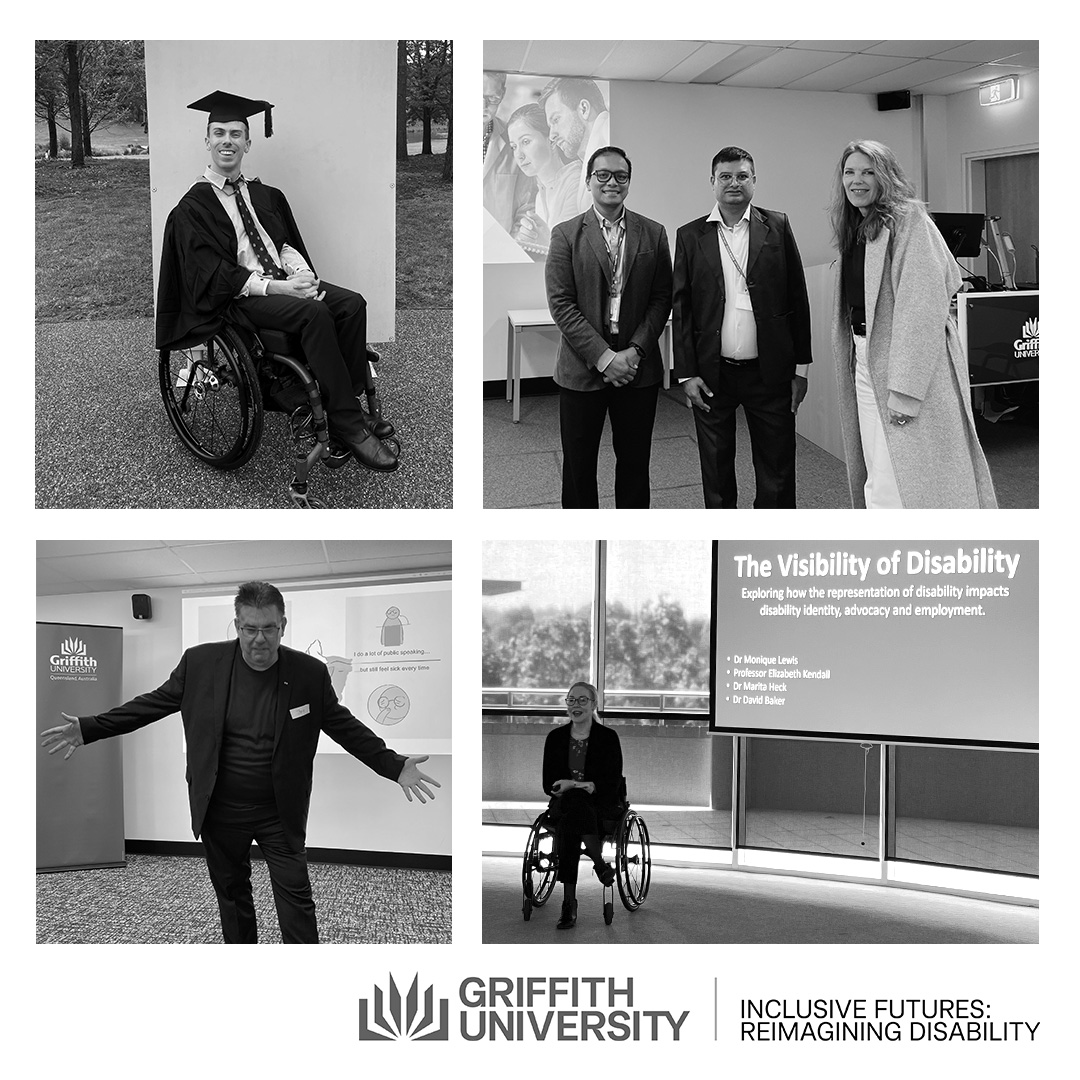
Building inclusive research pathways at Griffith University
Education is more than a privilege—it’s a pathway to possibility.
At Inclusive Futures: Reimagining Disability, we’re proud to support Higher Degree by Research (HDR) students with disability to reach their goals and contribute to bold, innovative research that reimagines inclusion in action.
Since launching in 2023, our HDR Disability Scholars Program has grown into a thriving community of ten (10) diverse researchers at different stages of their PhD journeys. The program provides more than just academic support—it builds meaningful connections through peer learning, mentoring, and shared experience in an environment where accessibilityContinue reading
Building inclusive research pathways at Griffith University
Education is more than a privilege—it’s a pathway to possibility.
At Inclusive Futures: Reimagining Disability, we’re proud to support Higher Degree by Research (HDR) students with disability to reach their goals and contribute to bold, innovative research that reimagines inclusion in action.
Since launching in 2023, our HDR Disability Scholars Program has grown into a thriving community of ten (10) diverse researchers at different stages of their PhD journeys. The program provides more than just academic support—it builds meaningful connections through peer learning, mentoring, and shared experience in an environment where accessibility and inclusion are built into everything we do.
This thriving community is championed by Professor Rebecca Ford, Dean of the Griffith Graduate Research School, and Dr Lisa Stafford, ARC Future Fellow—both strong advocates and mentors for the Scholars, in addition to their supervisors. Julia Robertson, newly appointed Co-Chair of the Higher Degree Research Candidate Representative Consultant Committee (HDRCRCC)—a sub-committee of the Board of Graduate Research (BGR)—also plays a key role in championing inclusive research pathways and student representation. Together, their leadership and commitment to accessibility and inclusion have been instrumental in creating an environment where our scholars can thrive.
Last week, we celebrated this community at the Disability Scholars Day 2025: A Showcase of Excellence, held at Griffith University’s Logan campus and online. The hybrid event brought together students, supervisors, and researchers for a day of inspiration and connection.
Highlights included milestone presentations from Lisa Cox OAM, Aron Mercer, and Samantha Cronin (Early Career Research Milestones), and Ali Khan (Thesis Confirmation Research Milestone). Their presentations sparked lively discussion and showcased the breadth of disability-focused research being undertaken at Griffith—research that’s challenging assumptions and creating real-world impact. Events like this highlight the incredible progress and potential of our HDR scholars. They remind us that when we design for inclusion, we enable excellence.
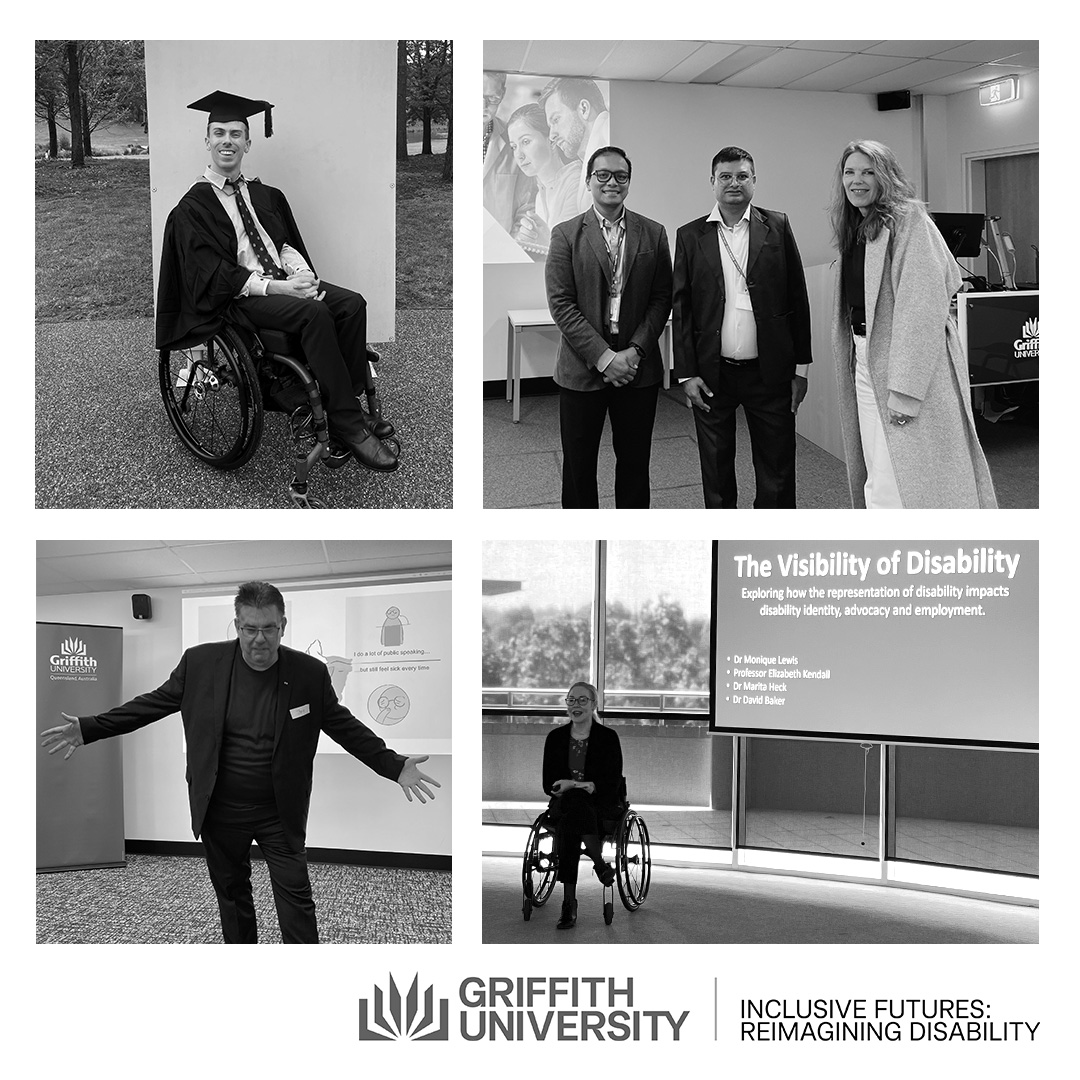 Griffith University HDR Students with Disability (Clockwise from top left) - Daniel Clark; Pallav Pant together with his supervisors Dr Feb Dwirahmadi and Dr Monique Lewis; Lisa Cox; and Jim Hogan.
 We’re also excited to offer HDR Disability Scholarships for future students. These scholarships provide financial support, research allowances, and flexibility for candidates with a permanent disability who demonstrate exceptional research potential. Multiple scholarships will be available in 2026, with announcements coming at the end of the year. It’s one more way we’re ensuring talented researchers have the opportunity to thrive and lead change.
If you’re a person with disability interested in pursuing higher degree research, we’d love to hear from you. Join a growing network of passionate scholars who are shaping the future of inclusive research.
📩 Contact us: inclusivefutures@griffith.edu.au
🌐 Follow us on LinkedIn, subscribe to our eNews or become a member of our Inclusive Futures community to stay updated on scholarship announcements, research highlights, codesign and citizen science opportunities and upcoming events.