Category Emily Bray   Show all

  • Disability Action Week 2025: Communicate. Connect. Create.

    supporting image

    Disability Action Week 2025 promotional graphic. A large central circle reads ‘Disability Action Week 2025, Sunday 23 November to Sunday 30 November’. Surrounding the circle are icons representing accessibility features, including Auslan, Easy Read, captions, hearing access, communication, and inclusive participation. Along the bottom, diverse illustrated figures stand together, including people with a guide dog, a wheelchair user, and families. The tagline reads ‘Communicate. Connect. Create.’ Logos for Delivering for Queensland and the Queensland Government appear at the bottom.

    Disability Action Week is a statewide celebration of accessibility, inclusion and the simple actions we can all take to make Queensland a place where everyone can participate fully. This year’s theme — Communicate. Connect. Create.— encourages all of us to put accessible communication into practice and recognise its role in building stronger, more inclusive communities.

    Small changes matter. By making information easier to understand, offering alternative formats, improving event accessibility, or taking the time to ask someone about their communication preferences, we help create environments where everyone feels welcome, respected and supported.

    Shining a Spotlight on Hopkins Research

    The Hopkins Centre is a leading translational research centre in disability and rehabilitation, based at Griffith University and Princess Alexandra Hospital. Our work focuses on finding practical solutions to complex challenges through interdisciplinary, collaborative and responsive research that is embedded directly in practice.

    While disability and rehabilitation research rarely makes headlines in the same way that medical breakthroughs do, it is essential work. Because we work alongside people with disability, their families, clinicians, policymakers and service organisations, we see firsthand where innovation is needed — and we act on it.

    We are committed to valuing the voice of people with disability in every stage of decision-making and discovery. Their insights shape our research, guide our priorities and ensure we develop solutions that genuinely improve quality of life.

    We regularly produce accessible and alternative-format resources, co-design tools with end users, and embed accessibility in all engagement — from Easy Read and plain language materials to inclusive events, captioning, Auslan, and culturally appropriate communication approaches.

    This year, we are highlighting three impactful projects: co-designing communication tools for people with spinal cord injury, developing accessible sleep resources for people with SCI, and strengthening mental health support pathways for PhD students through inclusive, evidence-based approaches.

    We need your support to continue designing high-quality solutions, services and systems that make a real difference.

    To get involved or explore current research opportunities, visit
    hopkinscentre.edu.au/participate-research or email hopkinscentre@griffith.edu.au.

    SPOTLIGHT PROJECTS FOR DISABILITY ACTION WEEK

    1. Co-designing Communication Tools in the Spinal Injuries Unit

    Clear and respectful communication is essential in healthcare, especially for people with complex communication needs. We are partnering with people with spinal cord injury, families, clinicians and lived-experience researchers to co-design a new communication resource for the Metro South Health Spinal Injuries Unit.

    Join our online co-design workshops (Microsoft Teams):

    • Patients & Families: Thursday 4 December, 12pm
    • Staff: Monday 8 December, 10am

    Register your interest: https://inclusivefutures.griffith.edu.au/siu-info

    Contact: Dr Kelsey Chapman (Research Fellow) – dignityproject@griffith.edu.au
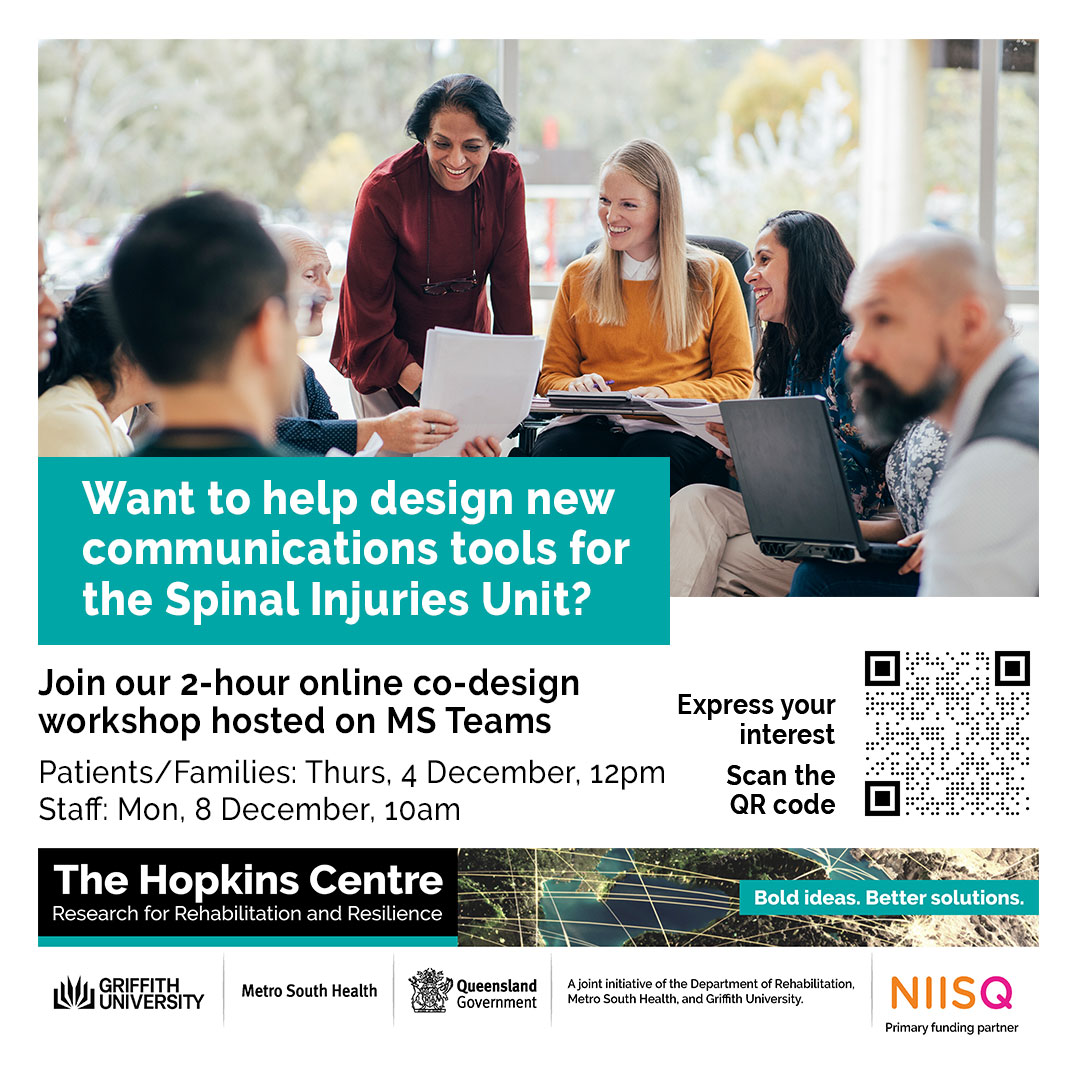
    A group of people smiling and discussing papers around a table, promoting a co-design workshop to help create new communication tools for the Spinal Injuries Unit. Join our 2-hour online co-design workshop hosted on Microsoft Teams. Patients/families: Thurs 4 December, 12pm. Staff: Mon 8 Dec 10am. Register: https://inclusivefutures.griffith.edu.au/siu-info. Logos: The Dignity Project, Griffith University, Metro South Health, Queensland Government, NIISQ.

    2. Sleep and Spinal Cord Injury

    Poor sleep affects two in three people with spinal cord injury, yet many do not receive the support they need. Dr Emily Bray and her team at The Hopkins Centre, together with Spinal Life Australia, the Institute for Breathing and Sleep and QSCIS, have co-designed new evidence-based resources to help people understand sleep changes and explore strategies that support better rest and wellbeing.

    Communicate: This project aims to raise awareness of sleep issues following SCI and to share the best ways to manage them from the perspectives of people with SCI and healthcare professionals.

    Connect: Researchers, clinicians, and people with SCI collaborated through a series of co-design workshops to identify how to address SCI-specific sleep issues and their preferred approaches to managing them.

    Create: The main result of this project has been the creation of co-designed sleep management resources tailored to the needs and preferences of people with SCI.

    Key findings and solutions include:

    Sleep issues following SCI emerge early after the injury and persist throughout life. It is crucial to raise awareness among people with SCI and clinicians about the harmful effects of poor sleep quality, the causes of sleep disturbances, and possible solutions. Participants suggested various solutions, including early and routine assessments, as well as educational resources that researchers and clinicians could explore to address these issues.

    Learn more and access the resources:
    https://www.hopkinscentre.edu.au/project/seed-project-sleep-disturbances-following-spinal-163

    Contact Dr Emily Bray:
    https://www.hopkinscentre.edu.au/people-view/emily-bray-177
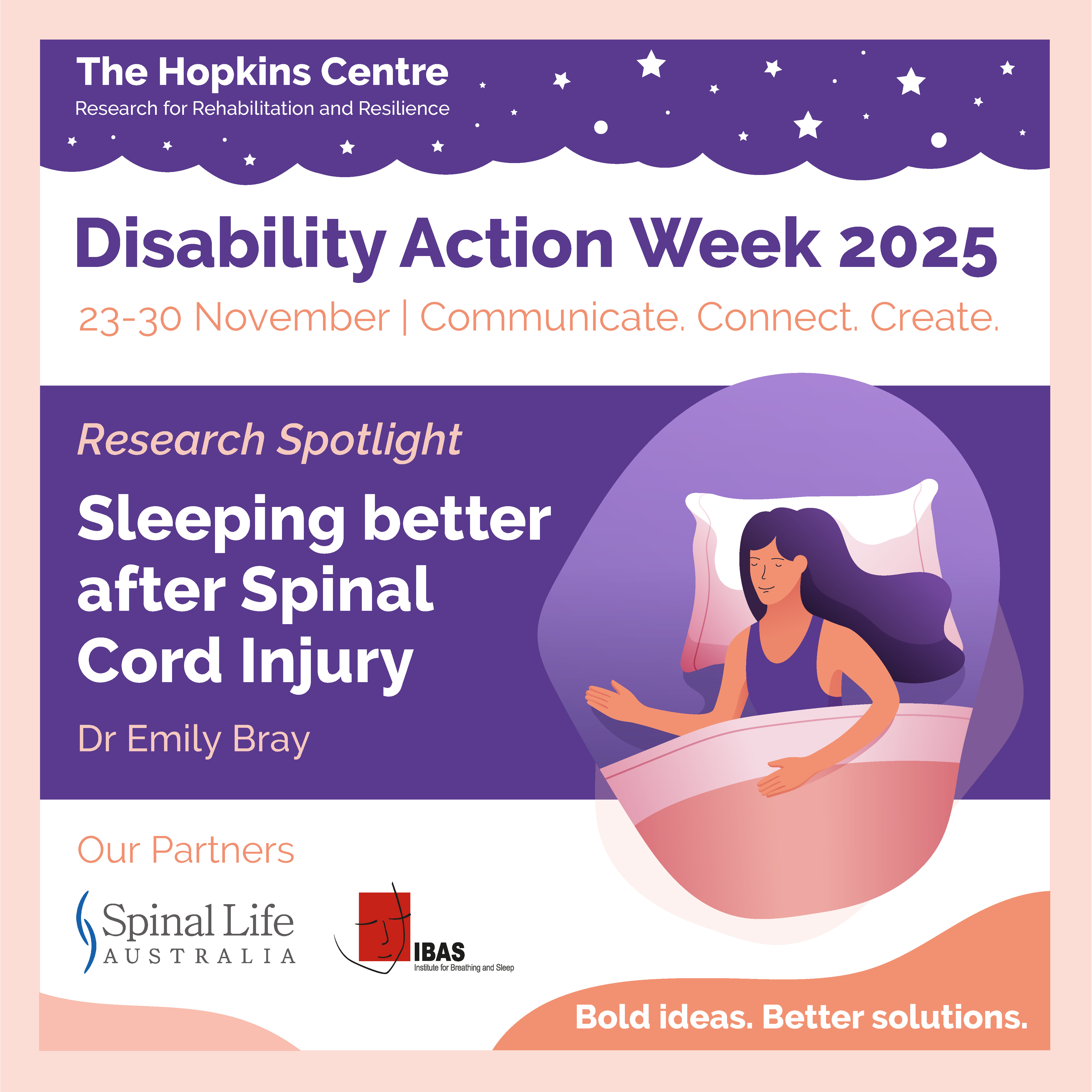
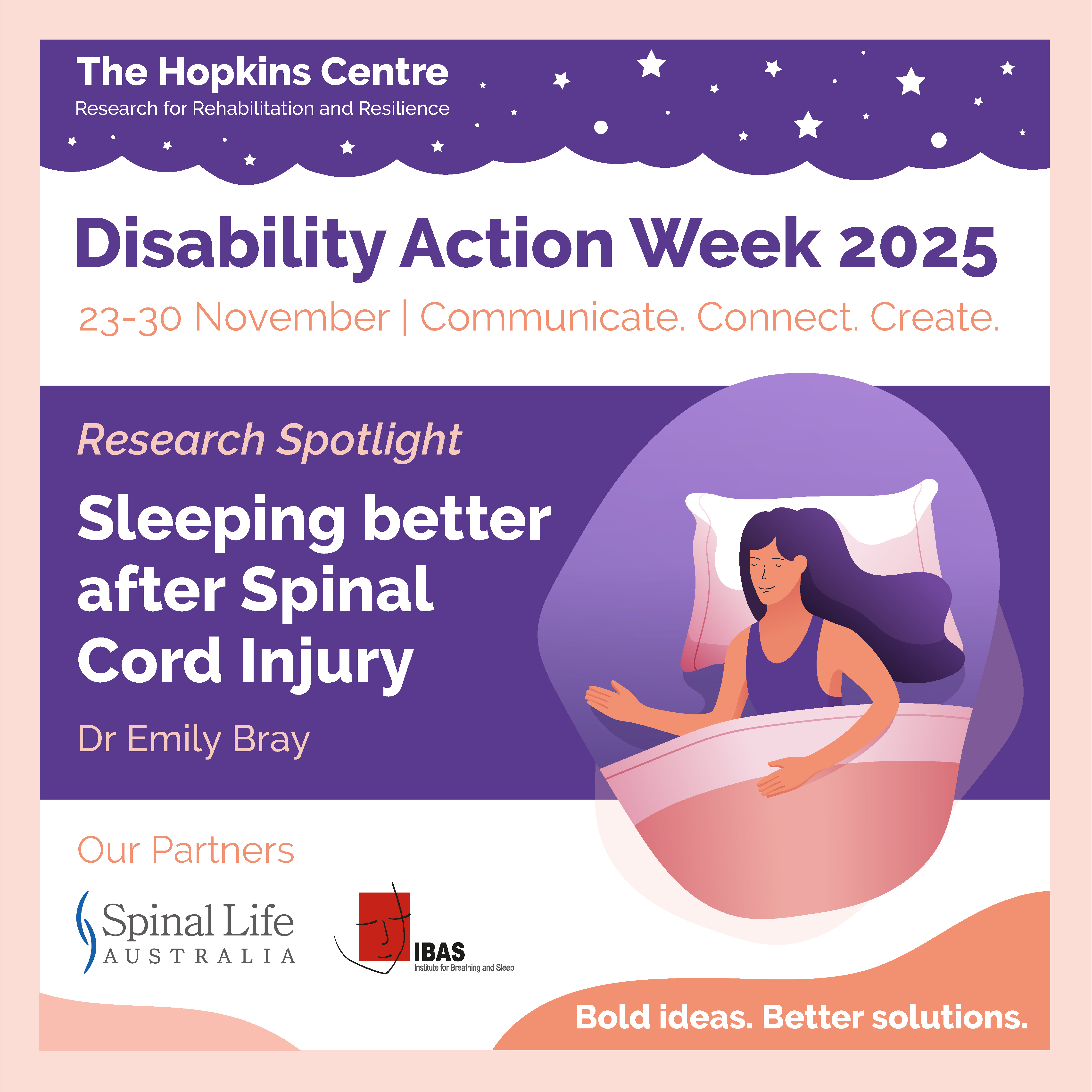
    Social media tile for The Hopkins Centre - Disability Action Week 2025: 23-30 November | Communicate. Connect. Create. Research Spotlight: Sleeping better after Spinal Cord Injury – Dr Emily Bray. Vector illustration of a woman with long hair asleep in a bed with her head resting on the pillow. Footer: Our partners Spinal Life Australia and the Institute of Breathing and Sleep. Tagline: Bold ideas. Better solutions.

    3. Creating Supportive Pathways for PhD Student Mental Health

    Behind the prestige of a PhD lies a hidden mental health crisis. Many candidates face severe distress, driven by isolation, financial pressure, and perfectionism, with research suggesting up to one-third meet suicide-risk criteria. PhD researcher Ali Khan at The Hopkins Centre focuses on better mental health support and adjustments for PhD students, particularly those with psychosocial disabilities.

    Communicate: The project aims to break the silence around PhD mental health, fostering open communication between students, supervisors, and institutions to remove bureaucratic barriers to support.

    Connect: By bringing together all the key stakeholders, the research builds connections to combat isolation and create a collaborative, supportive academic community.

    Create: The goal is to create practical, systemic solutions and more inclusive policies that support the mental well-being and academic success of all PhD students.

    Key findings and solutions include:

    • Key Risks: Loneliness, impostor syndrome, financial instability, and supervisor-student misalignment are major predictors of distress.
    • Effective Strategies: Digital mental health tools, peer financial mentoring, and therapeutic approaches like music therapy show significant promise as accessible, low-cost interventions.

    Learn more and access resources:

    The Research Project: Improving Mental Health Accommodations for PhDs

    Contact Ali Khan: ali.khan3@griffithuni.edu.au
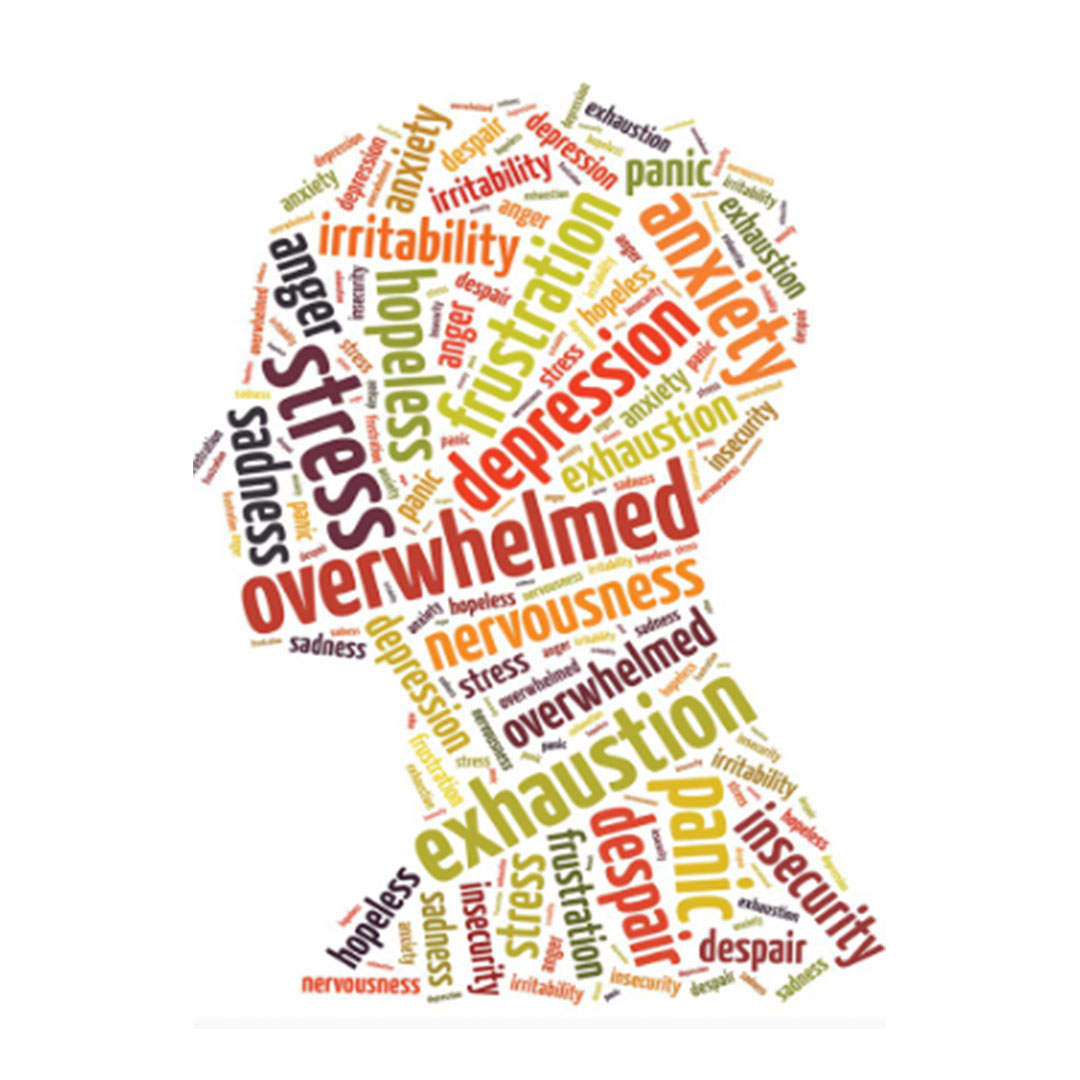
    Word jumble in the shape of a persons head with a range of words describing mental health ie: Stress, Overwhelmed, Exhaustion, Anxiety, Panic, Despair. etc.

  • Disability Action Week: Sleep and Spinal Cord Injury: What You Need to Know

    supporting image

    Social media tile for The Hopkins Centre - Disability Action Week 2025: 23-30 November | Communicate. Connect. Create. Research Spotlight: Sleeping better after Spinal Cord Injury – Dr Emily Bray. Vector illustration of a woman with long hair asleep in a bed with her head resting on the pillow. Footer: Our partners Spinal Life Australia and the Institute of Breathing and Sleep. Tagline: Bold ideas. Better solutions.

    Good sleep is vital for health and wellbeing—yet research shows that two in three people living with a spinal cord injury (SCI) experience poor sleep, and most haven’t sought support.

    As part of Disability Action Week, we’re highlighting important work led by Dr Emily Bray and her team at The Hopkins Centre, who have partnered with clinicians, researchers, and people with lived experience to explore this issue and bridge the information gap.

    Together, they’ve co-developed new, evidence-based resources to help people with SCI better understand sleep changes and find strategies that work for them.

    View the graphics below to learn more about this important research and how it supports the SCI community.

    We would like to thank our partners Spinal Life Australia, Institute for Breathing and Sleep and the Queensland Spinal Cord Injuries Service (QSCIS) for their support.

    Contact Dr Emily Bray for more information:
    https://www.hopkinscentre.edu.au/people-view/emily-bray-177

    Visit our website to find out more: https://www.hopkinscentre.edu.au/project/seed-project-sleep-disturbances-following-spinal-163


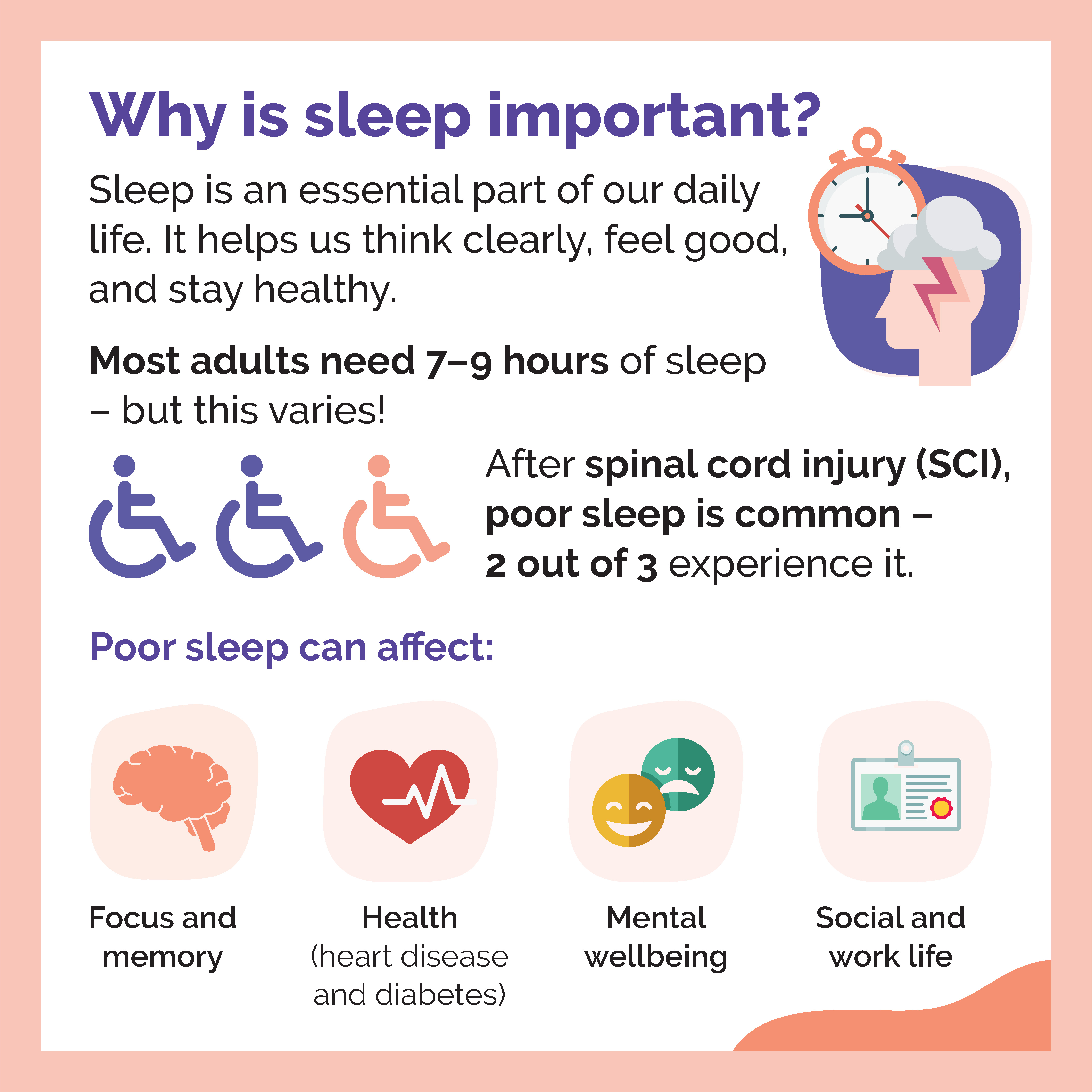
    Infographic titled “Why is sleep important?” It explains that sleep helps us think clearly, feel good, and stay healthy. Most adults need 7–9 hours of sleep, but this varies. After spinal cord injury (SCI), poor sleep is common — 2 out of 3 experience it. Poor sleep can affect focus and memory, health (heart disease and diabetes), mental wellbeing, and social and work life.

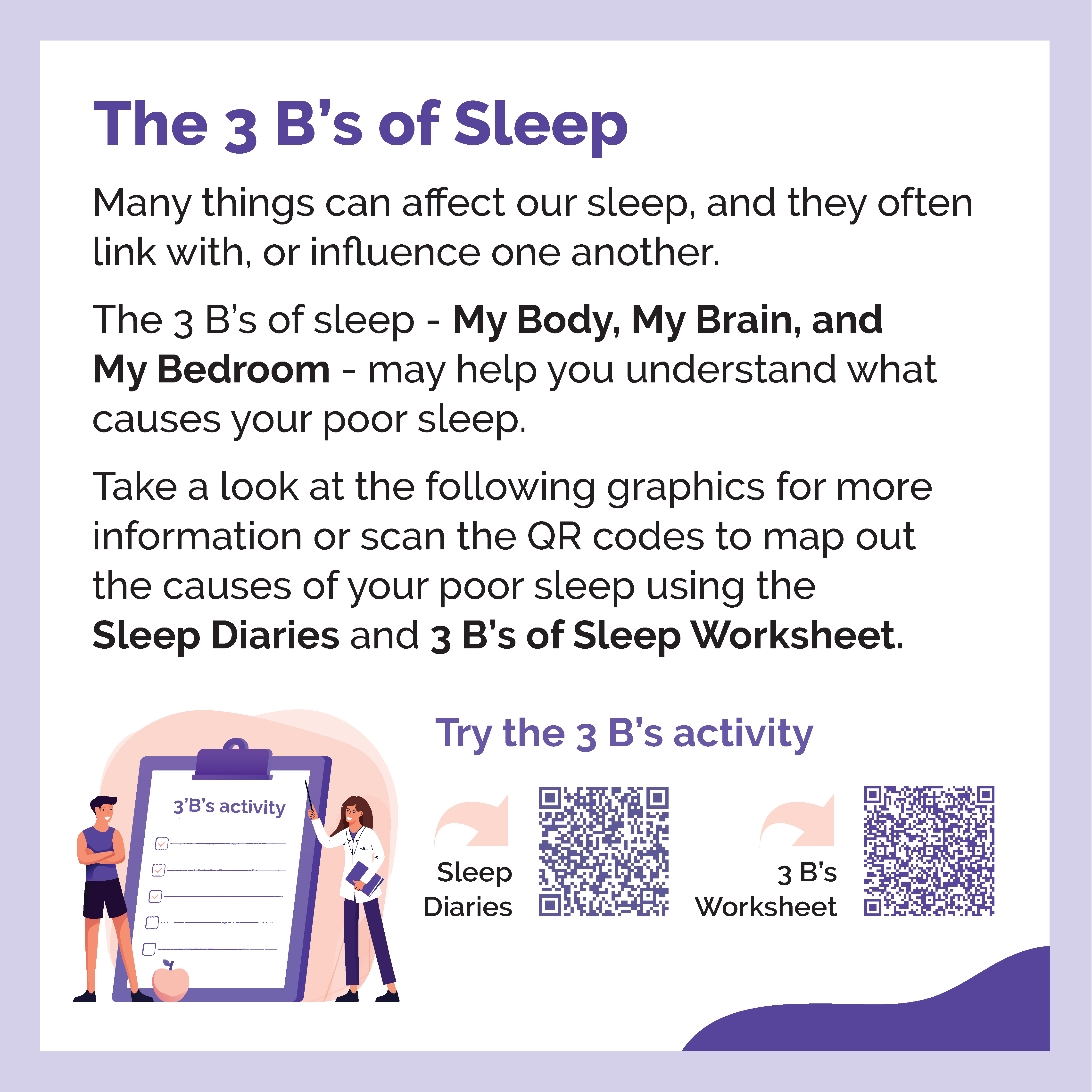
    Infographic titled “The 3 B’s of Sleep.” It explains that many factors can affect sleep and influence one another. The 3 B’s — My Body, My Brain, and My Bedroom — may help identify causes of poor sleep. The text encourages readers to explore more graphics or scan QR codes to complete the Sleep Diaries and 3 B’s of Sleep Worksheet. At the bottom, there’s an illustration of two people beside a large clipboard labelled “3 B’s activity” and two QR codes labelled “Sleep Diaries” and “3 B’s Worksheet.”

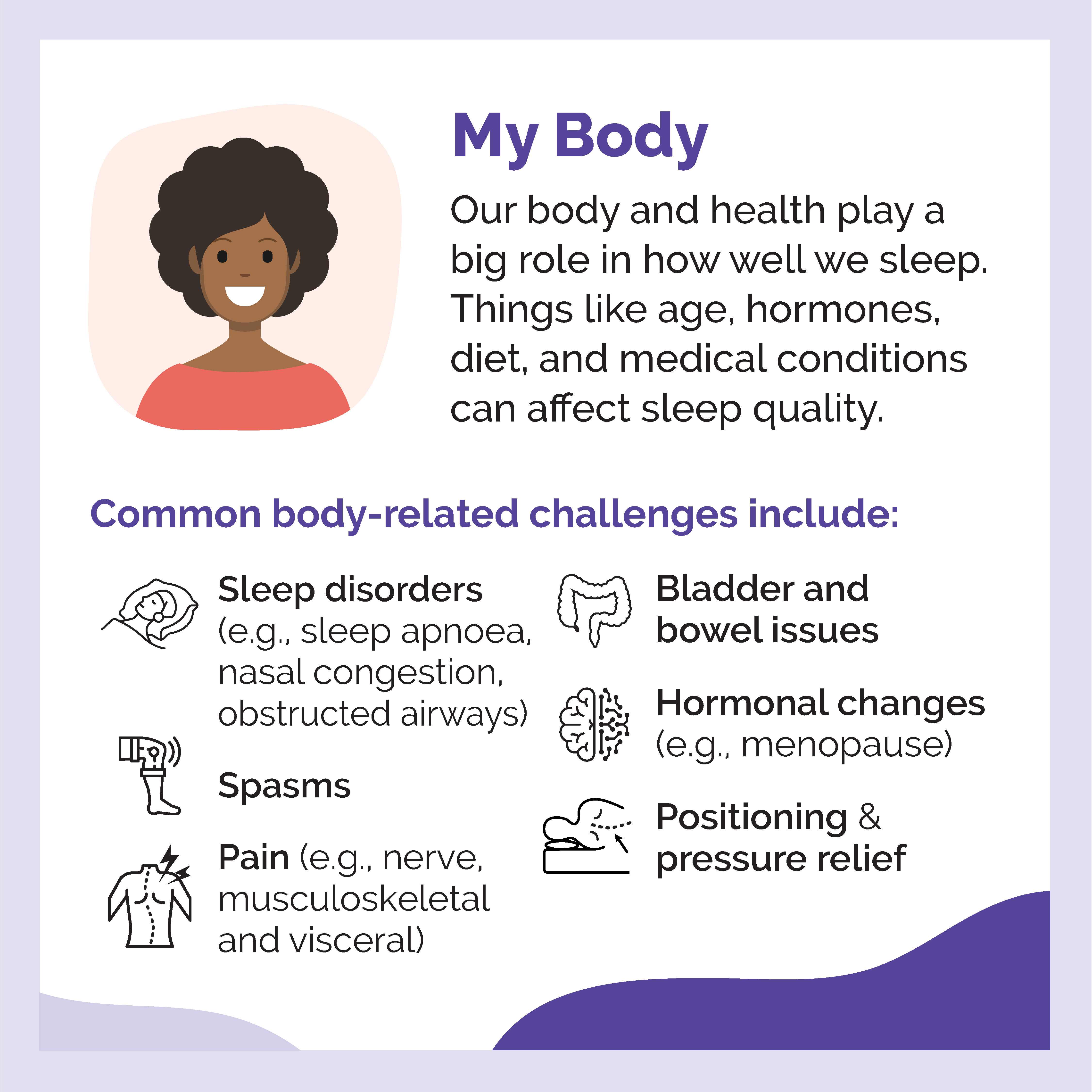
    Infographic titled “My Body.” It explains that our body and health play a big role in how well we sleep. Factors such as age, hormones, diet, and medical conditions can affect sleep quality. Common body-related challenges include sleep disorders (e.g., sleep apnoea, nasal congestion, obstructed airways), spasms, pain (nerve, musculoskeletal, visceral), bladder and bowel issues, hormonal changes (e.g., menopause), and positioning and pressure relief. The design features a smiling person illustration and icons beside each challenge.

    Infographic titled “My Bedroom.” It explains that a calm, safe bedroom helps your mind and body relax for better sleep. Things to check within your sleep environment include: Bright lights and loud noises, equipment comfort (e.g., bed, mattress, pillows, splints), room temperature (too hot or cold), Distractions (screens and devices), physical safety, overnight help and support, family routines (e.g., co-sleeping, shift work). The design features an illustration of a bed and icons beside each point.

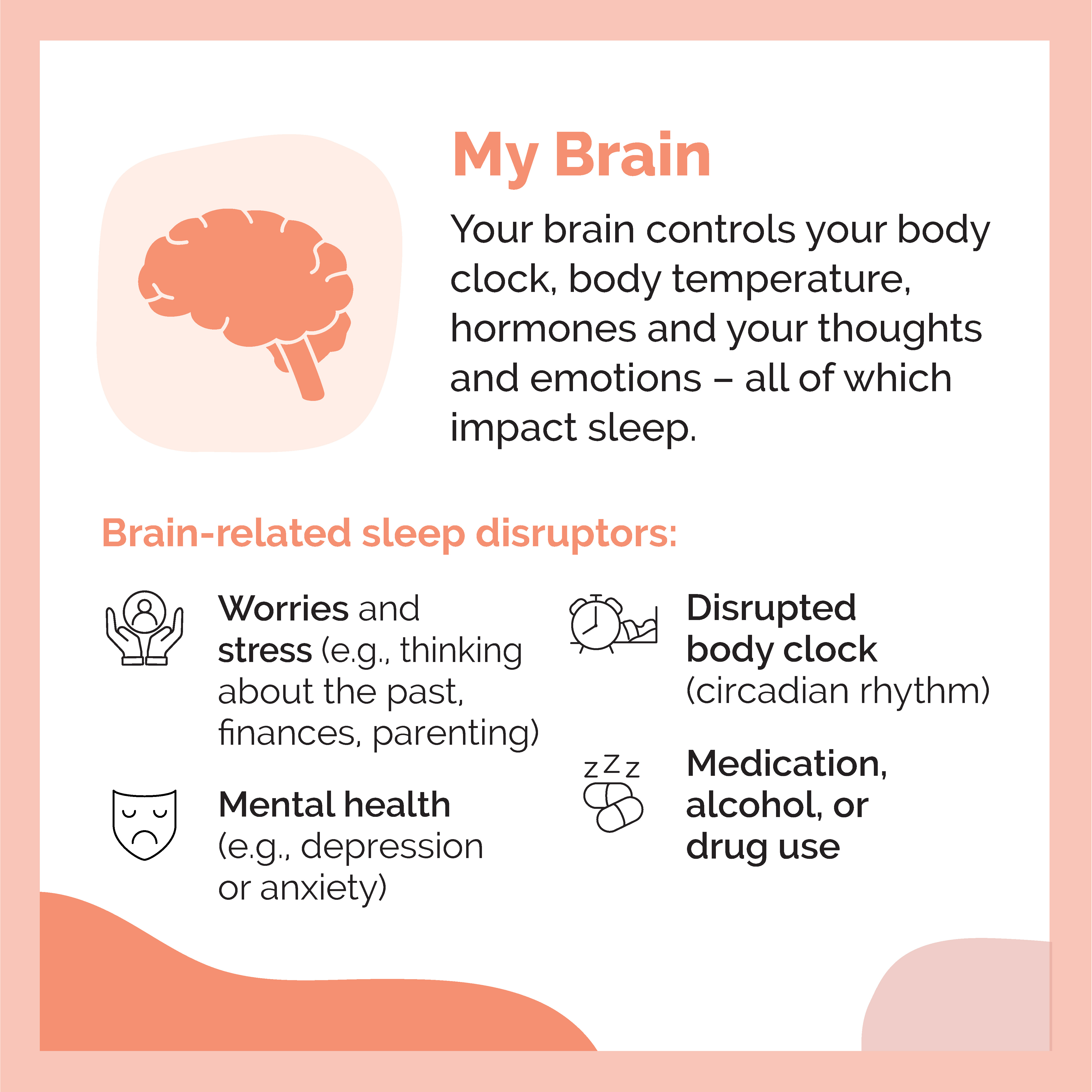
    Infographic titled “My Brain.” It explains that your brain controls your body clock, body temperature, hormones, thoughts and emotions – all of which impact sleep. Brain-related sleep disruptors include - Worries and stress (e.g., thinking about the past, finances and parenting), mental health (e.g., depression or anxiety), disrupted body clock (circadian rhythm), and medication, alcohol or drug use. The design features an illustration of a brain and icons beside each point.

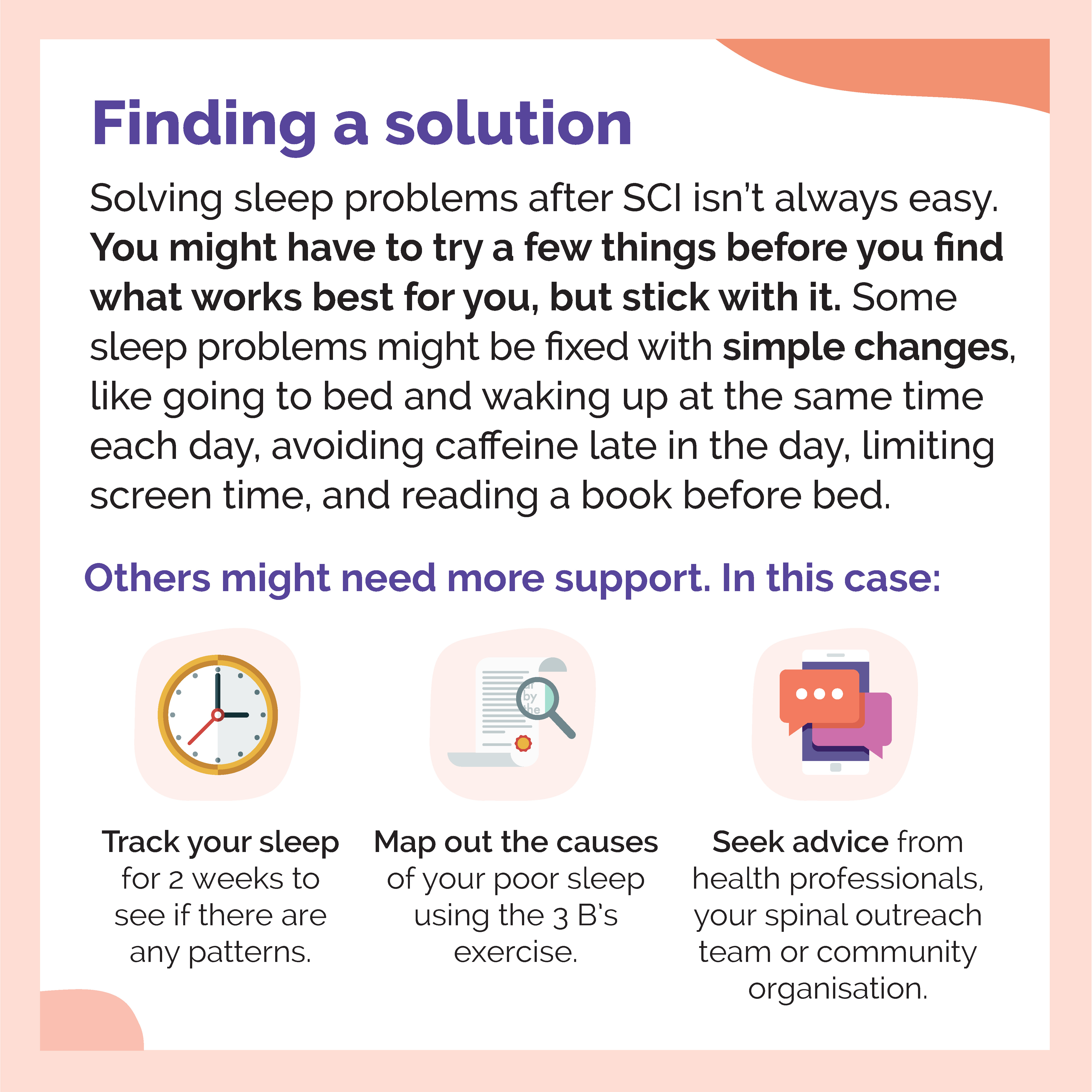
    An infographic titled: Finding a solution. Solving sleep problems after SCI isn’t always easy. You might have to try a few things before you find what works best for you, but stick with it. Some sleep problems might be fixed with simple changes, like going to bed and waking up at the same time each day, avoiding caffeine late in the day, limiting screen time, and reading a book before bed. Others might need more support. In this case: Track your sleep for 2 weeks to see if there are any patterns; map out the causes of your poor sleep using the 3 B’s exercise; seek advice from health professionals, your spinal outreach team or community organisation. The design features illustrations of a clock, document with a magnifying glass and a mobile device with speech bubbles.

    More information: Dr Emily Bray, Research Fellow, The Hopkins Centre. Email: Emily.bray@griffith.edu.au or visit our website http://www.hopkinscentre.edu.au – Scan the QR code or visit our project page at https://shorturl.at/zcF1i.The design features an illustration of a woman with long hair sleeping with her head on a pillow.