Today is Global Accessibility Awareness Day — a day to reflect on digital access, inclusion, and what it really means to make spaces welcoming for everyone.
To mark the occasion, Inclusive Futures: Reimagining Disability is proud to share our Inclusive and Accessible Events Checklist — a practical resource designed to help organisations plan, deliver and evaluate accessible events.
Co-designed with people with disability and refined over five years through real-world event delivery, the checklist is a living resource, regularly updated as technologies and best practices evolve.
Below, we walk through the key elements of inclusive and accessible event planning.
 AccessibilityContinue reading
Today is Global Accessibility Awareness Day — a day to reflect on digital access, inclusion, and what it really means to make spaces welcoming for everyone.
To mark the occasion, Inclusive Futures: Reimagining Disability is proud to share our Inclusive and Accessible Events Checklist — a practical resource designed to help organisations plan, deliver and evaluate accessible events.
Co-designed with people with disability and refined over five years through real-world event delivery, the checklist is a living resource, regularly updated as technologies and best practices evolve.
Below, we walk through the key elements of inclusive and accessible event planning.
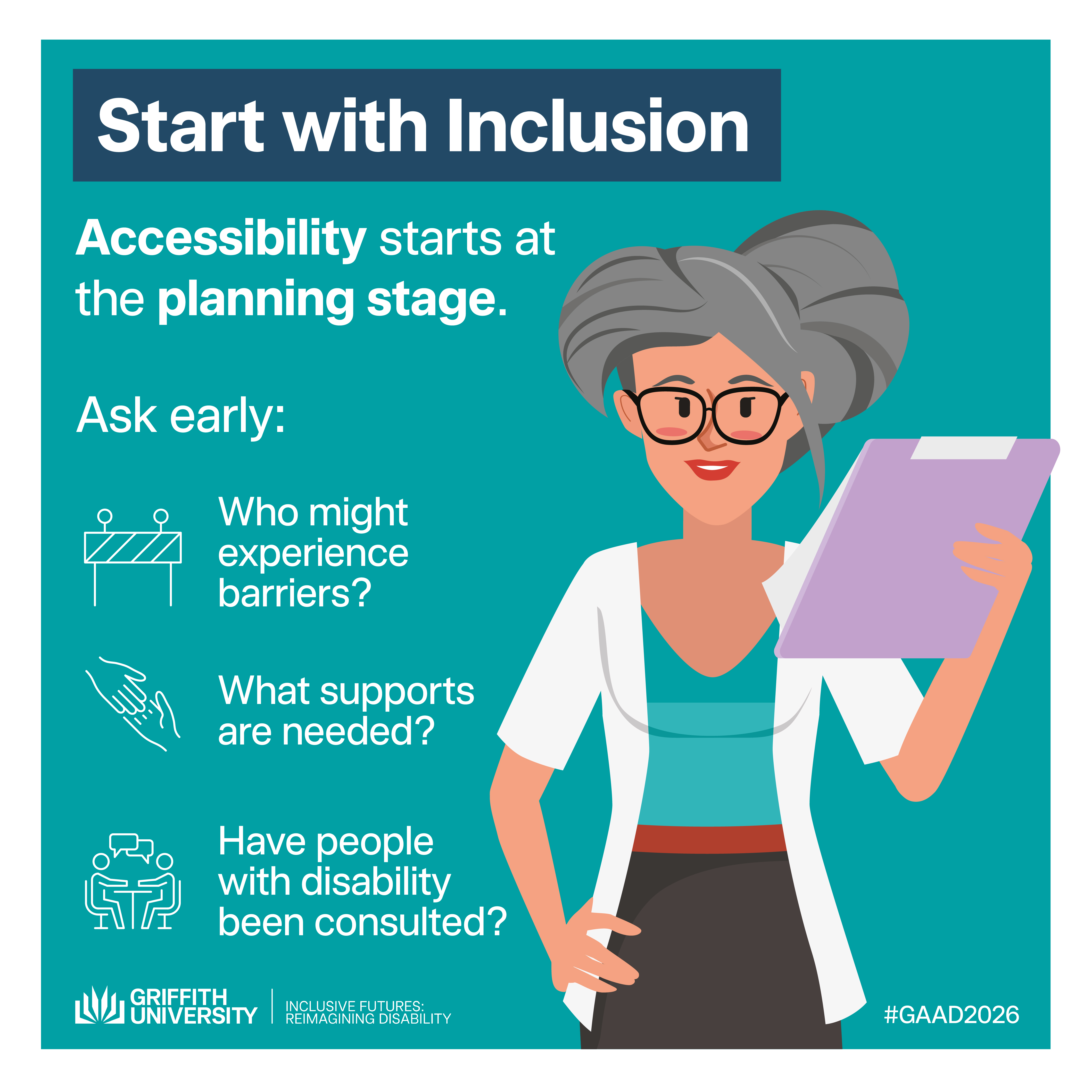
Accessibility isn’t a last-minute add-on — it starts at the planning stage. Ask the right questions early and you’ll save yourself a lot of scrambling later.
Start with Inclusion
Accessibility starts at the planning stage.
Ask early:
• Who might experience barriers?
• What supports are needed?
• Have people with disability been consulted?
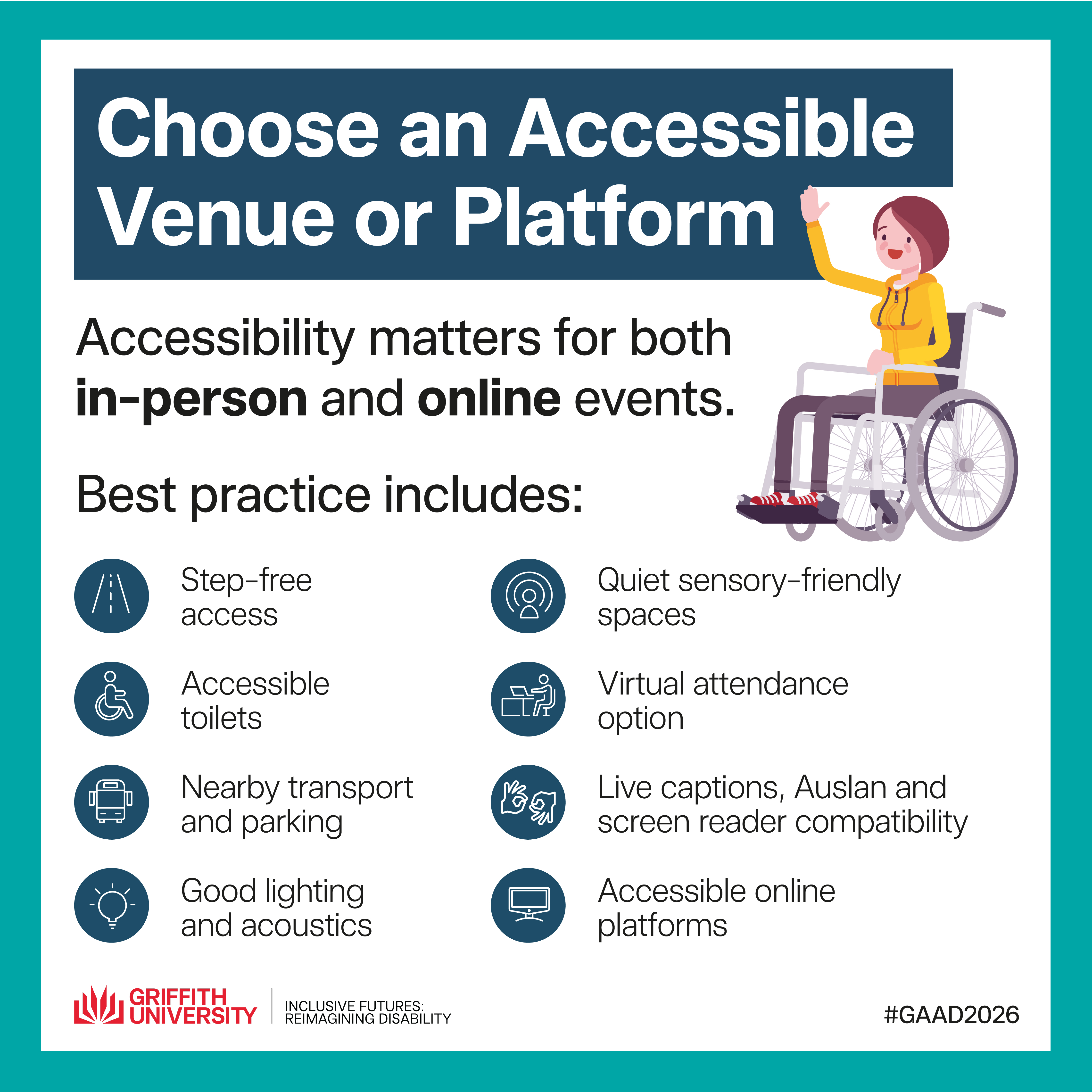 Not sure if your venue is accessible? Here's your starting checklist — for in-person and online events.
Choose an Accessible Venue or Platform
Accessibility matters for both in-person and online events.
Best practice includes:
• Step-free access
• Accessible toilets
• Nearby transport and parking
• Good lighting and acoustics
• Quiet sensory-friendly spaces
• Virtual attendance option for those who cannot attend in person
• Live captions, Auslan and screen reader compatibility
• Accessible online platforms
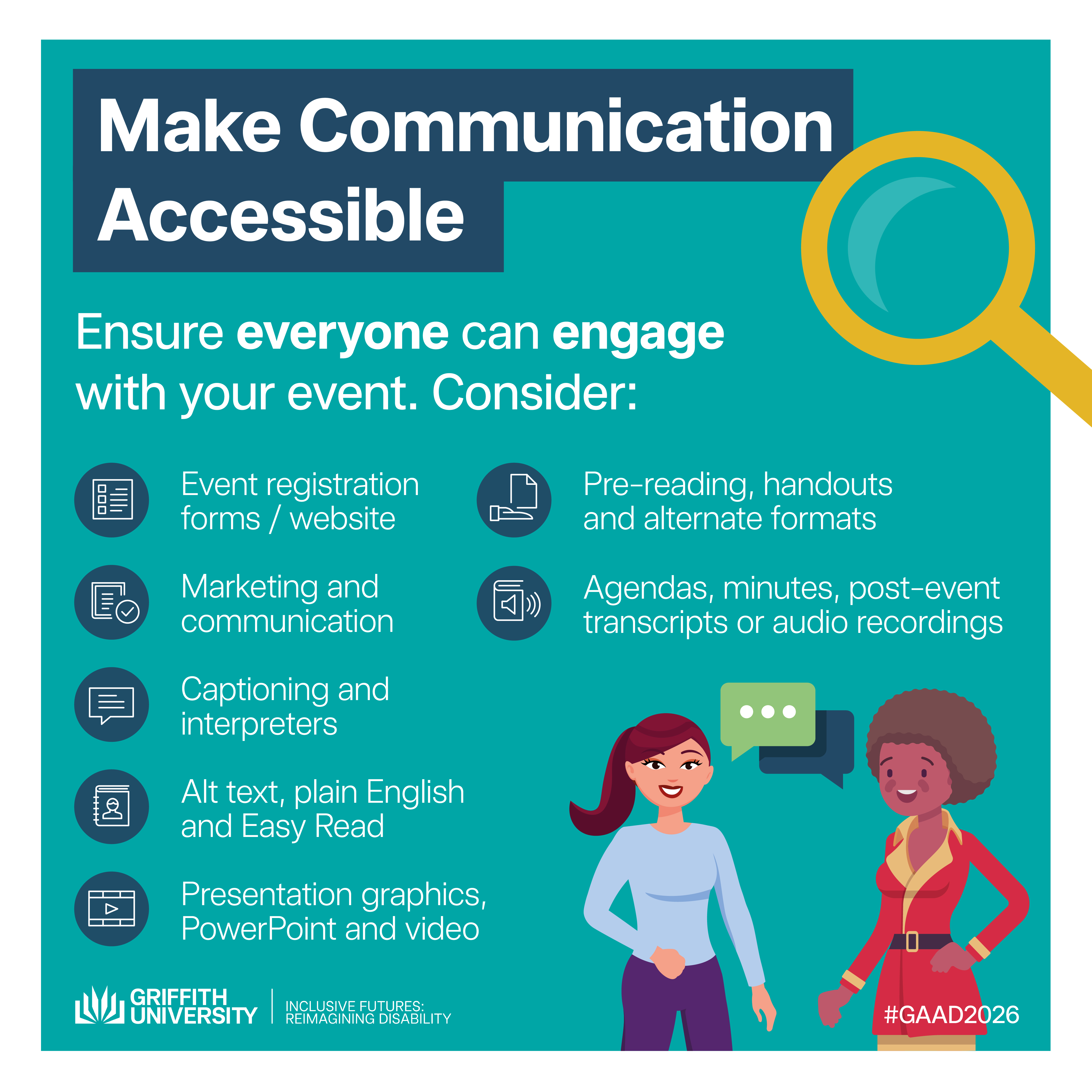 An accessible event isn't just about the physical space, it's about whether everyone can actually engage with the information. Before, during, and after.
Make Communication Accessible
Ensure everyone can engage with your event.
Consider:
• Accessible event registration forms and websites
• Marketing/communication materials in accessible formats
• Live captioning
• Auslan interpreters
• Alt text, Plain English and/or Easy Read materials
• Accessible presentation graphics
• Video/audio with captions/audio descriptions
• Pre-reading and accessible handouts in alternate formats
• Agendas, minutes, transcripts post event (if applicable)
• Audio recordings with speaker attribution and descriptive overviews for persons who are blind or have low vision.
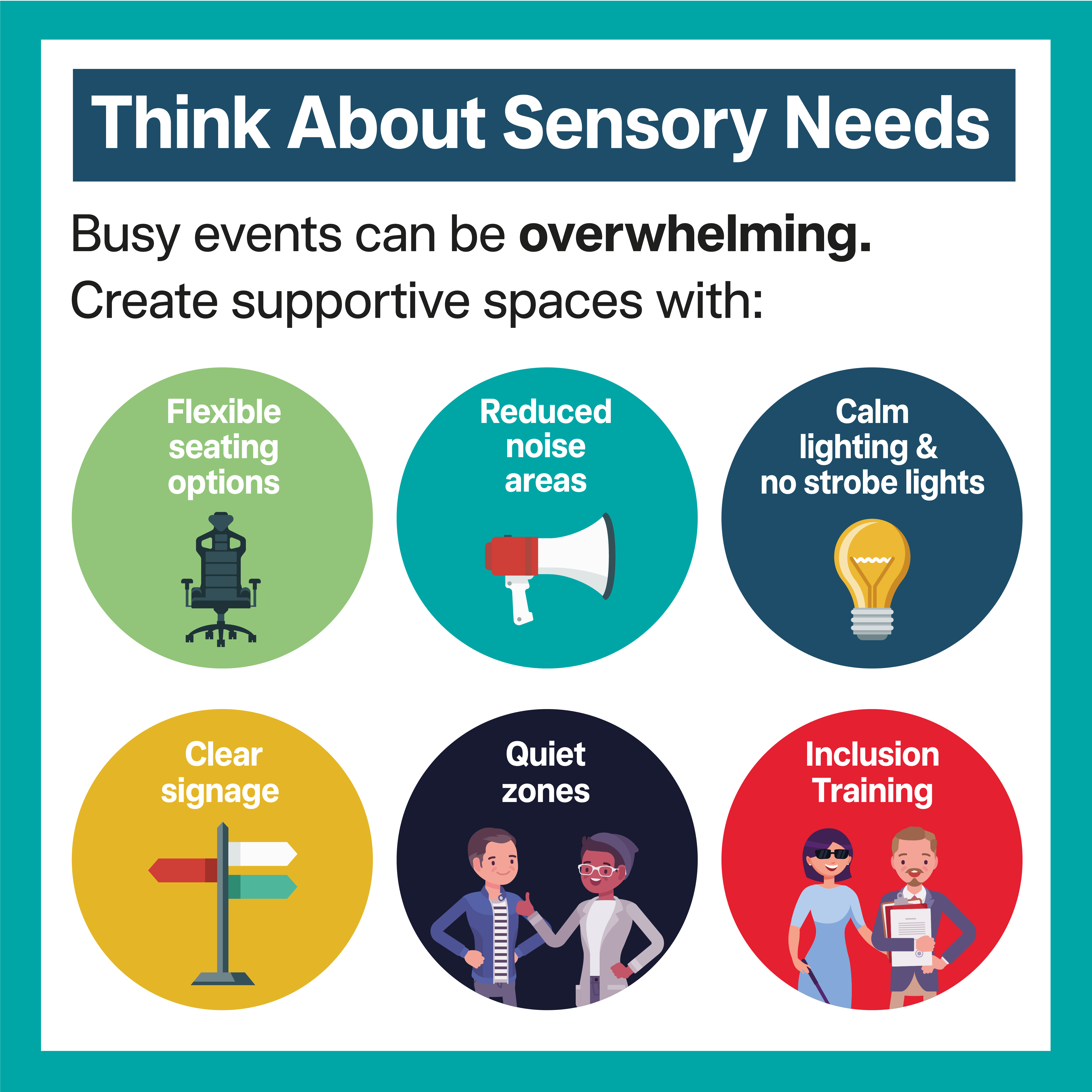 Not every barrier is visible. Sensory overwhelm is real and preventable. Think About Sensory Needs
Busy events can be overwhelming.
Create supportive spaces with:
• Quiet zones
• Reduced noise areas
• Calm lighting, no strobe lights or flashing lights
• Clear signage
• Flexible seating options
• Inclusion training
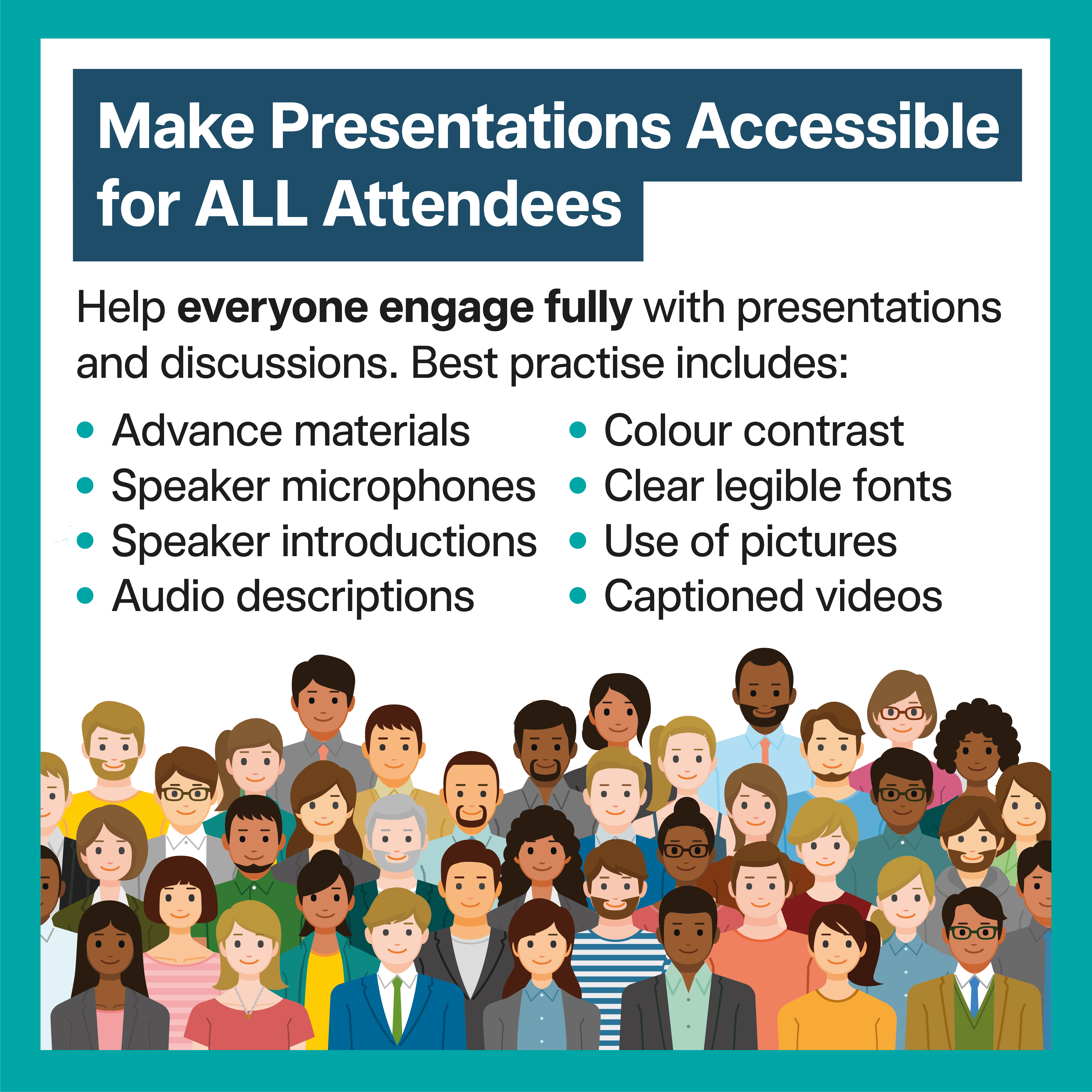 If your presenter can see it, but your attendees can't access it — it's not accessible. Here's how to close that gap.Make Presentations Accessible for ALL Attendees
Help everyone engage fully with presentations and discussions
Best practice includes:
• Accessible presentation materials shared in advance
• Speakers introducing themselves before speaking
• Verbal descriptions of images, charts and videos
• Reading visual content aloud
• Use of large clear fonts
• Strong colour contrast
• Microphones (handheld or lapel) for all speakers
• Captioned videos
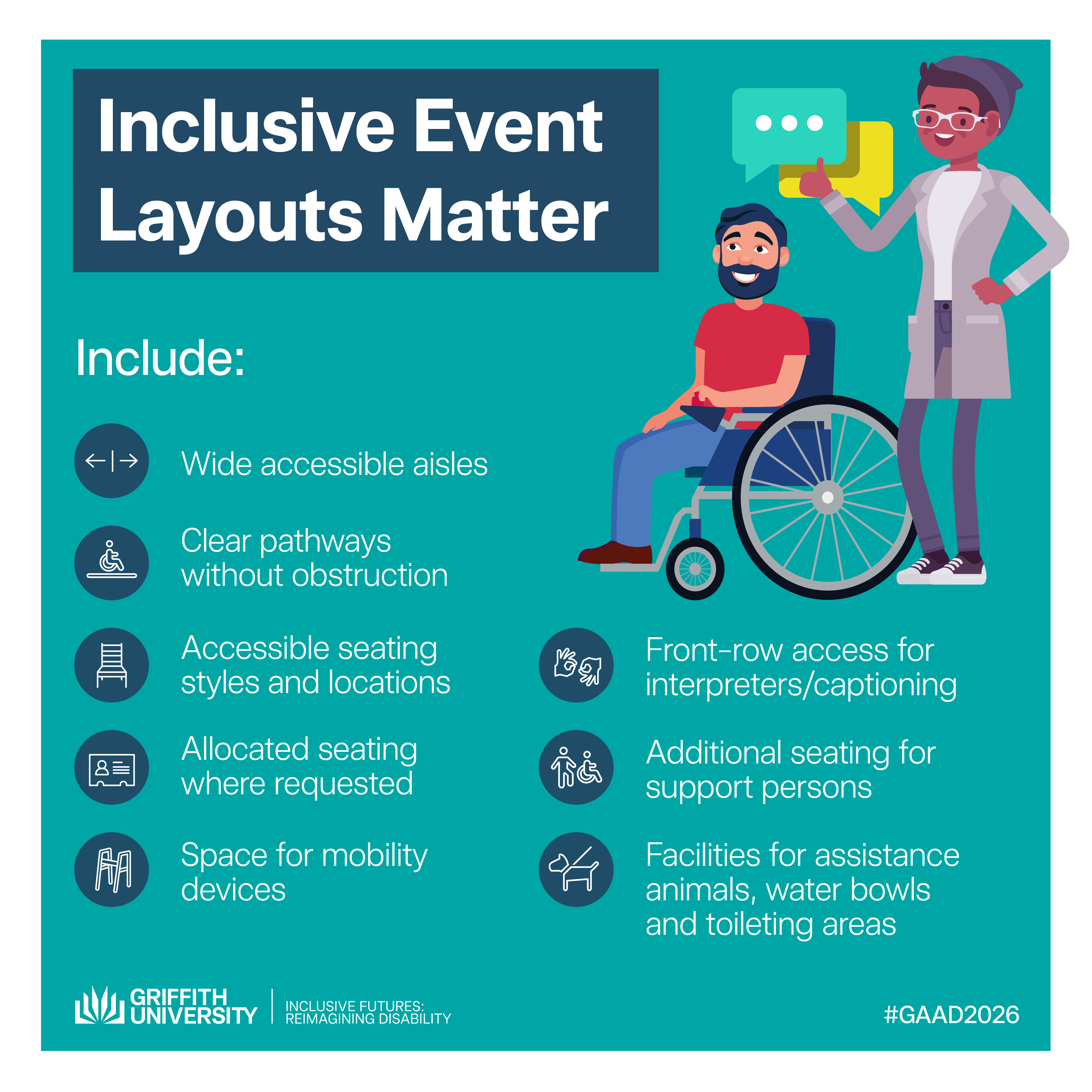
The way you set up a room tells people whether they were an afterthought or part of the plan
Inclusive Event Layouts Matter
Small design choices make a big difference.
Include:
• Wide aisles
• Accessible seating locations
• Clear pathways
• Spaces for mobility devices
• Front-row access for interpreters/captioning
• Facilities for assistance animals, water bowl, toileting area
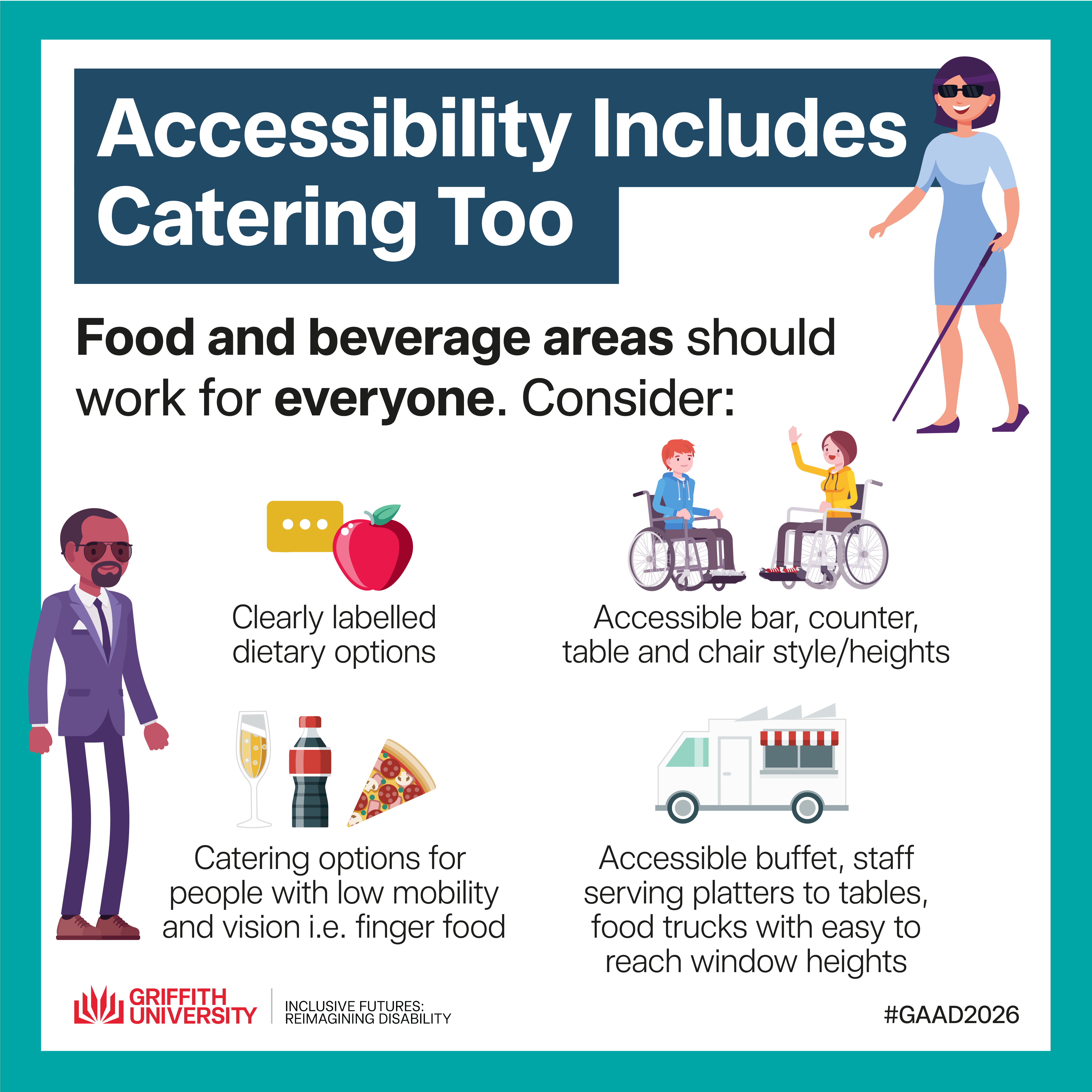 Think about attendees needs and accessibility requirements when arranging catering. Are they a wheelchair user, do they need lowered heights? Will there be assistance animals in attendance?Accessibility Includes Catering Too
Food and beverage areas should work for everyone.
Consider:
• Clearly labelled dietary options
• Accessible table heights
• Seating with backs and armrests
• Accessible buffet, staff serving platters to tables or food truck ordering areas• If there are assistance animals in attendance, provide water bowls with fresh water
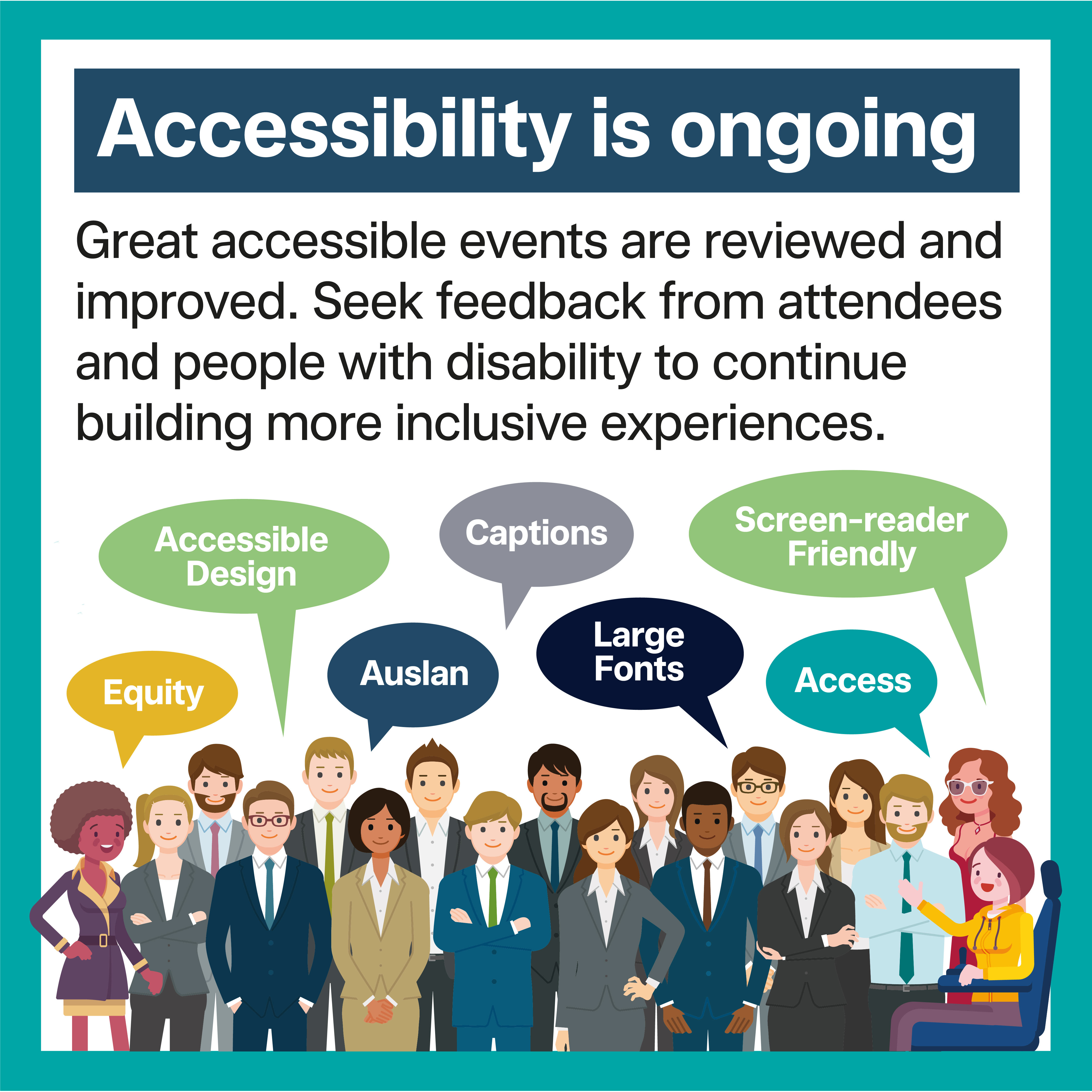 Accessibility is ongoing, seek feedback by way of evaluation forms and surveys and use these to improve your processes for next time.
Accessibility is Ongoing
Great accessible events are reviewed and improved.
Seek feedback from attendees and people with disability to continue building more inclusive experiences.
 Learn more: Download the Inclusive and Accessible Events Checklist to use at your next event.
Download the Inclusive and Accessible Events Checklist
Created by Rebekah Barker and Jo Kek-PamenterInclusive Futures: Reimagining Disability at Griffith University.Access the checklist here: https://inclusivefutures.griffith.edu.au/inclusive-and-accessible-events
Contact us: inclusivefutures@griffith.edu.au